How BYD Builds Electric Cars and Competes with Tesla
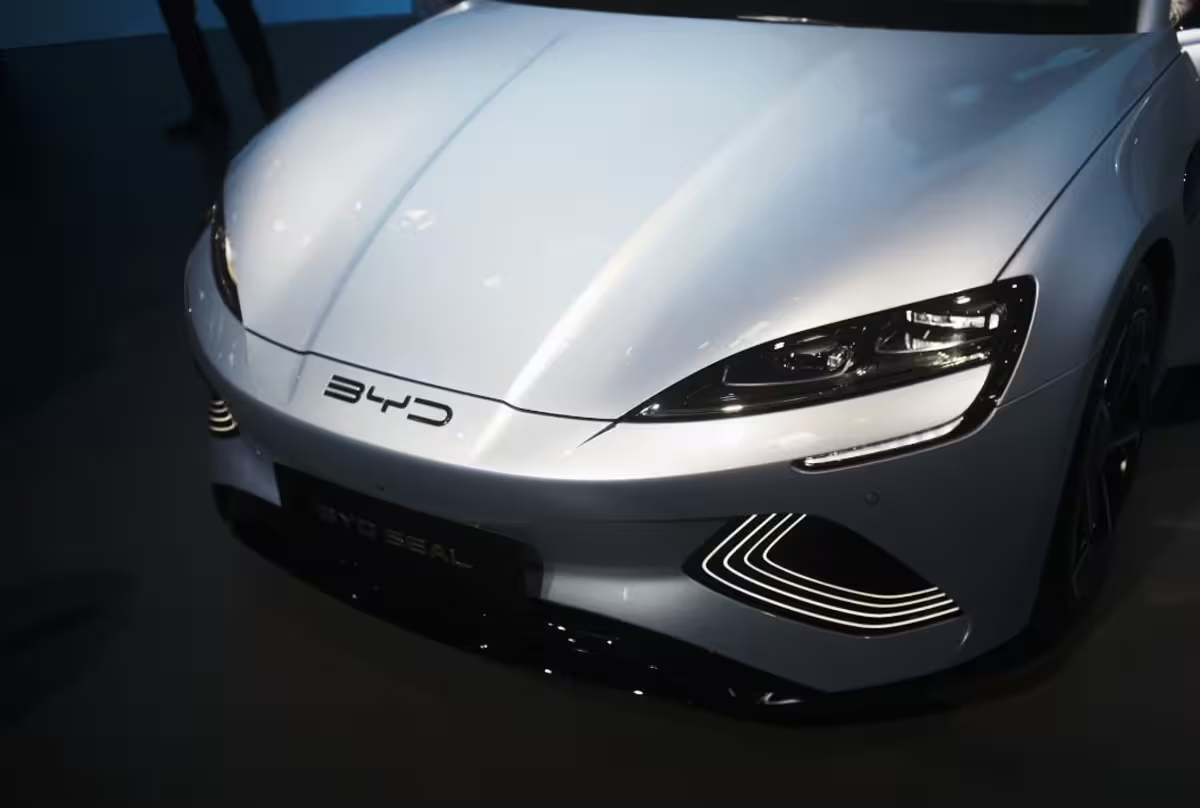
How did BYD become one of the world's largest EV makers? BYD combines in-house batteries, power electronics and vehicle production with a model range that spans battery EVs and plug-in hybrids. It sold 4.60 million new-energy vehicles in 2025, but that total includes both powertrains. A fair BYD vs Tesla comparison must separate battery-only cars from plug-in hybrids.
BYD's Backstory
BYD did not begin as a car company. It began with rechargeable batteries, bought a carmaker in 2003 and gradually pulled more of the electric powertrain inside its own industrial system. That sequence matters. The battery is not a purchased box around which BYD designs a vehicle. Cell chemistry, pack structure, inverter, motor, semiconductor and vehicle package can be traded against one another.
The result is not automatically the best car in every segment. It is a fast learning loop and unusual control over cost. This guide separates the engineering advantage from the sales slogans, including the denominator problem behind claims that BYD has "overtaken Tesla."
What Technological Innovations do BYD Electric Cars Have?
Much of BYD's fast rise comes down to its work on technology. Across all BYD models (from compact city cars to full-size SUVs) BYD technology keeps moving forward, setting these cars apart from competitors.
Hybrid Technology: The Evolution of BYD's DM Series
BYD's hybrid technology has evolved rapidly since its first-generation DM1 system, introduced in 2008. Initially focused on fuel savings, the DM1 system featured multiple driving modes, such as pure electric and hybrid. While it laid the groundwork for future developments, it faced challenges with high costs and moderate performance. Fast forward to the present, and BYD's DM-i and DM-p platforms have reshaped the market, offering superior fuel efficiency and performance.
DM-i is an electric-first plug-in-hybrid architecture. At low and medium load, the engine can generate electricity while the traction motor drives the wheels. A clutch can connect the engine mechanically when that path is more efficient. DM-p uses electrification more aggressively for performance and all-wheel drive. Fuel-consumption headlines are meaningful only when the test starts with a charged battery and the electric distance is stated. Once charge is depleted, the relevant number is charge-sustaining fuel consumption. That distinction also explains the broader hybrid comeback.
What is BYD's Blade Battery?
The Blade Battery is a long, narrow LFP cell used structurally inside a cell-to-pack layout. Removing conventional module hardware improves volume utilisation and creates a stiff array. LFP chemistry also avoids nickel and cobalt and is generally more thermally stable than high-nickel chemistries, at the cost of lower cell-level energy density.
BYD publicises nail-penetration and crush demonstrations, but a dramatic pack test does not prove that every vehicle is immune to thermal events. Real safety also depends on manufacturing defects, cooling, crash intrusion, electrical isolation and the battery-management system. The defensible advantage is integration: BYD can tune cell geometry, pack structure, body package and production together. Our battery-manufacturer comparison shows how that differs from the supplier model used by most carmakers. The guides to solid-state batteries and battery degradation put the LFP tradeoff in a wider context.
Software & Electronics: The Future of Smart Driving
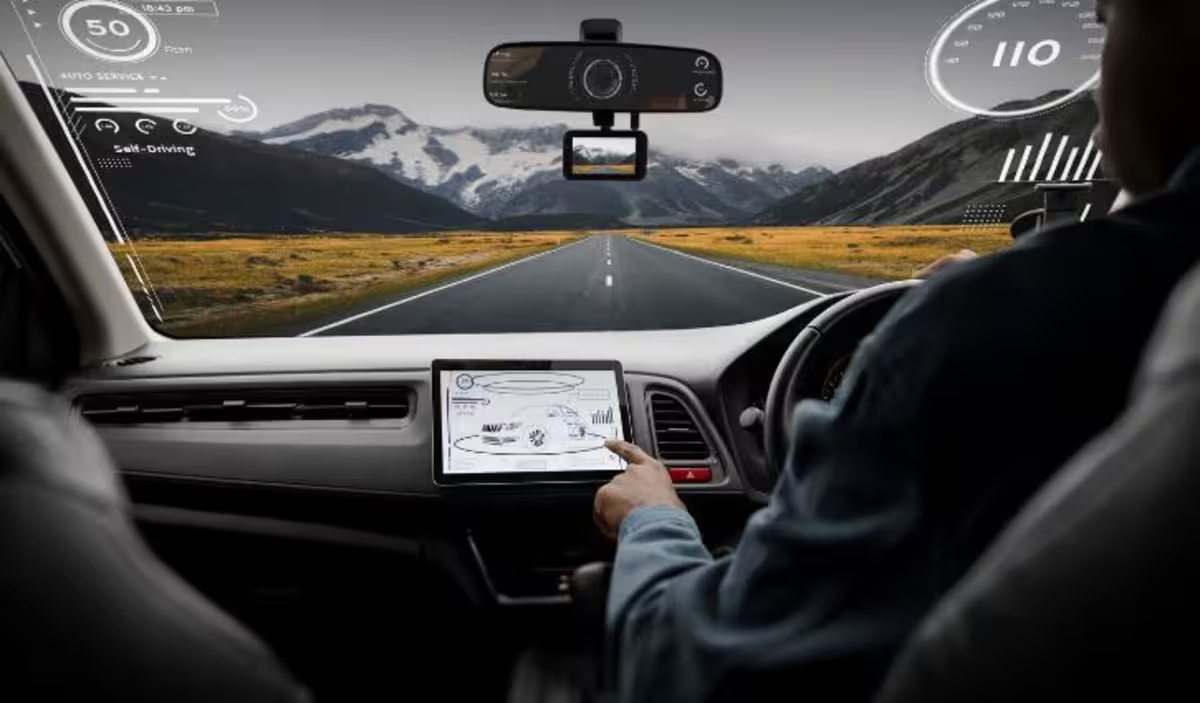
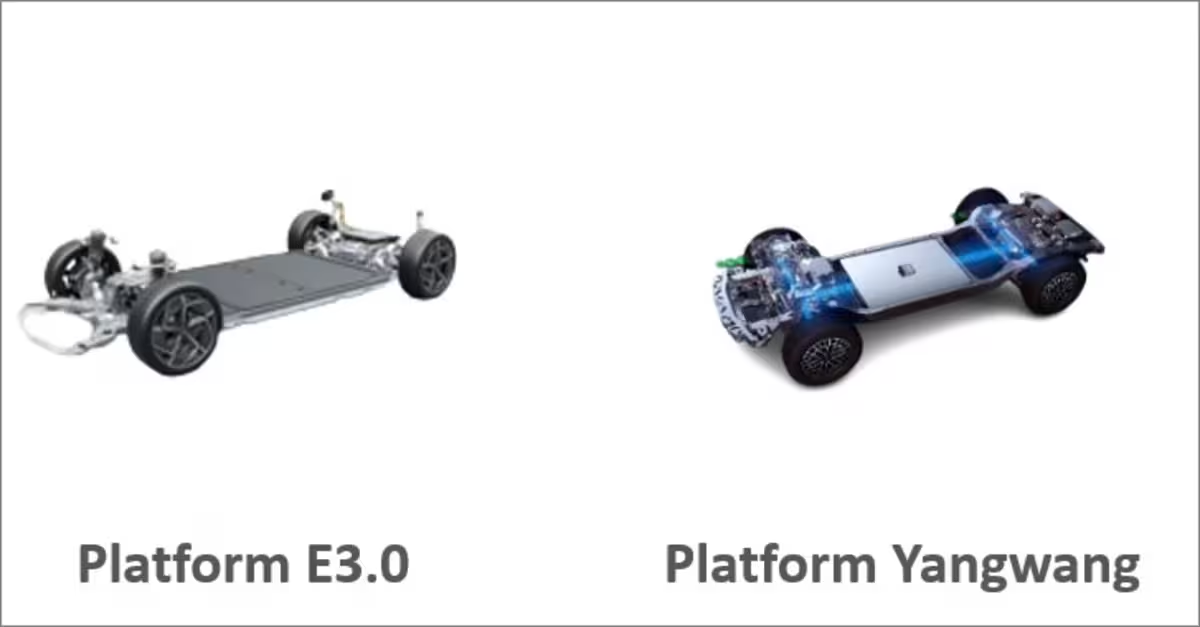
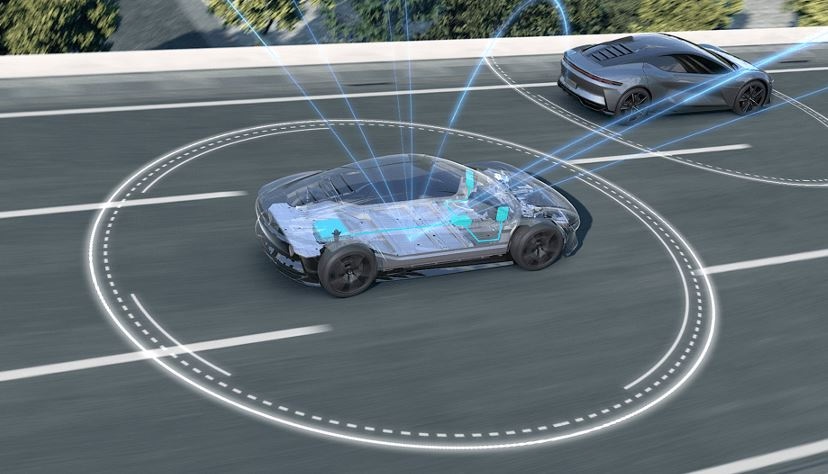
BYD electric vehicles deliver power and efficiency, and they are packed with advanced electronics and smart systems. The Yi Sifang platform, for example, offers four-motor independent control, allowing each wheel to be powered separately. This enables precise handling and safety features, such as in-place turning and advanced anti-slip control, ideal for luxury models and off-road capabilities.
Similarly, BYD's Yunnian Intelligent Body Control System dynamically adjusts the suspension and rigidity of the car based on driving conditions, ensuring a smooth and safe ride. This advanced system rivals luxury brands like Mercedes-Benz, showing BYD's ability to innovate at the highest level.
How is BYD Expanding Globally?
BYD Auto is not just making waves domestically in China, it's aggressively expanding into international markets, particularly in regions like Southeast Asia, Latin America, and Europe. With affordable pricing and advanced technology, BYD electric vehicles are becoming increasingly popular as the demand for EVs surges worldwide.
The 2025 sales numbers, with the right denominator
BYD reported 4,602,436 new-energy-vehicle sales in 2025, including passenger cars and commercial vehicles, and said overseas sales exceeded one million. Tesla delivered 1,636,129 battery-electric vehicles in the same year. Those totals answer different questions because BYD's figure combines battery EVs and plug-in hybrids. Use total NEVs to judge BYD's electrified scale, and battery-only sales to compare it directly with Tesla.
Strategic Market Focus
The overseas push is no longer just exports from China. Regional assembly reduces freight and tariff exposure, while local sales and service networks make the brand easier to buy and repair. The hard part is consistency. A product range that moves quickly in China must still support local homologation, software languages, parts supply, residual values and dealer competence across very different markets.
How is BYD reinventing Manufacturing?
To reduce dependency on exports and further strengthen its foothold globally, BYD is investing in overseas manufacturing. In countries like Thailand and Indonesia, BYD is building factories with capacities of up to 150,000 units annually. These local production facilities cut costs and serve regional demand more efficiently.
Local plants do more than avoid import cost. They force BYD to industrialise the same product across different suppliers, labour systems and regulatory regimes. That is where vertical integration meets its limit: even a company that makes batteries and power electronics still depends on thousands of local process controls. The APQP and PPAP chain and the start-of-production ramp determine whether global capacity becomes good cars.
BYD vs Tesla Sales and Other Car Manufacturers
BYD and Tesla are not the same business model. Tesla concentrates on battery EVs, software, charging and a relatively narrow vehicle range. BYD covers battery EVs, plug-in hybrids, batteries, semiconductors, buses and many more price segments. BYD's breadth spreads technology and factory cost across more products. Tesla's narrower architecture can simplify fleet software and brand positioning. Sales rank alone cannot decide which system is stronger. Our focused BYD vs Tesla analysis compares the product strategies rather than mixing their totals.
Toyota's Global Expansion Playbook
Like Toyota during the 1970s oil crisis, BYD is benefiting from a global shift in consumer preferences, in this case, toward electric vehicles. Toyota's emphasis on fuel-efficient cars helped it dominate North American markets, and BYD is aiming to replicate that success by offering affordable, high-efficiency EVs to a global audience.
While BYD's overseas sales currently account for just 8% of its total, compared to Toyota's 77%, the potential for growth is undeniable, given the accelerating demand for electric vehicles worldwide.
Volkswagen's Profit Stratification Strategy
Volkswagen's tiered brand approach (spanning mainstream, luxury, and ultra-luxury segments) has proven highly profitable, and BYD is taking notes. With its Dynasty and Ocean series catering to the mainstream market, and luxury brands like Denza and Yangwang targeting high-end customers, BYD is poised to increase profitability and brand prestige. By diversifying its product line-up, BYD can cater to a wide range of consumers, from eco-conscious budget buyers to luxury enthusiasts.
The EV-Global verdict: BYD's real advantage
BYD's advantage is not one miracle battery or one record-selling model. It is the ability to move a cost, package or supply problem across the boundaries between cell, pack, power electronics, motor and vehicle. Competitors that buy those systems from separate suppliers negotiate across contracts. BYD can negotiate inside one engineering organisation.
The cost is complexity. A huge portfolio can dilute software quality, service capability and brand clarity, while overseas factories must reproduce a manufacturing system built at Chinese scale. BYD has already proved volume. The next test is whether product quality, residual values, software support and repair networks mature as quickly as its sales footprint. Scale also does not settle the lifecycle sustainability question, which needs model-level material and energy data.
Primary sources, checked July 24, 2026: BYD's 2025 global sales summary and December 2025 sales filing; Tesla's 2025 delivery release. Manufacturer claims are identified as such.
BYD explained: frequently asked questions
What does BYD stand for?
The company brands it as 'Build Your Dreams'. It began in 1995 as a battery maker before moving into cars in the early 2000s.
Is BYD a Chinese company?
Yes, it is based in Shenzhen, China, and is now the world's largest maker of new-energy vehicles. It sells cars, buses and batteries, and even makes its own chips.
Are BYD cars any good?
Reviews praise their value, strong batteries and rapid improvement in quality and design, with the Blade battery a particular highlight. Critics note that software and brand polish still trail the best European makers.
Does BYD sell more electric cars than Tesla?
BYD sells more new-energy vehicles when battery EVs and plug-in hybrids are combined. For a direct comparison with Tesla, use BYD's battery-only sales because Tesla does not sell plug-in hybrids.