Scout EV: The Traveler, Terra and the Harvester Range-Extender
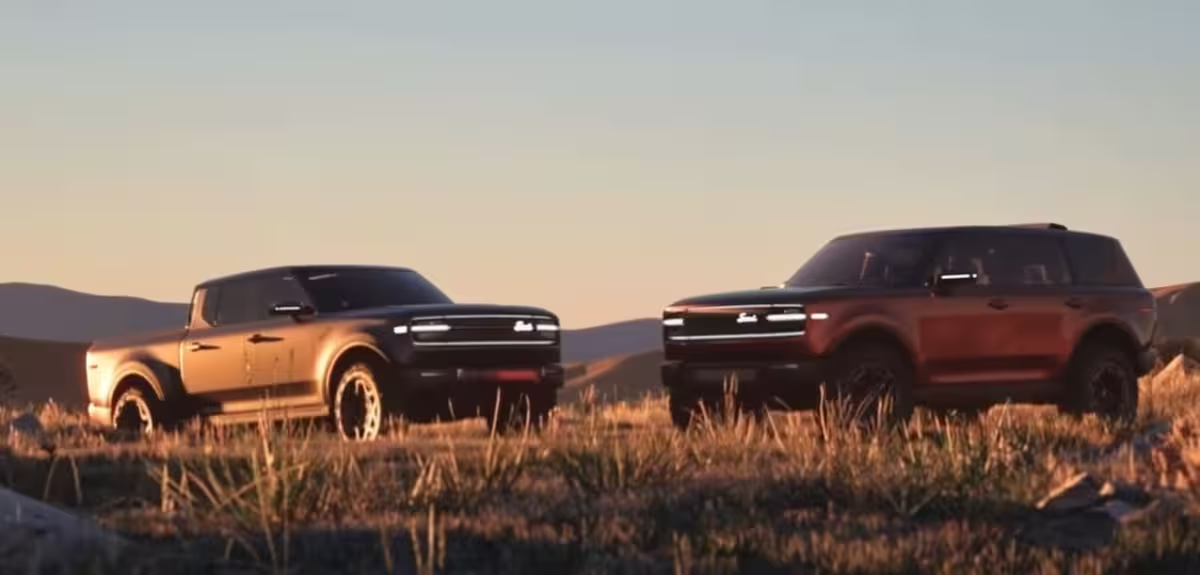
What is Scout Motors, and what is it building? Scout Motors is a revived American off-road brand, now owned by Volkswagen, building two rugged EVs: the Traveler SUV and the Terra pickup. Both offer an optional Harvester petrol range-extender for buyers nervous about charging, pushing total range toward 800 km. Production is targeted for 2027, aimed squarely at Rivian, Ford and Jeep.
Volkswagen is breathing new life into the Scout brand with an all-electric lineup that aims to capture the spirit of rugged, all-American vehicles while integrating the EV trend. Originally known for its durability and off-road ability, the Scout EV revival is more than nostalgia: it is a move by Volkswagen Scout Motors to compete in the growing electric off-road SUV and truck market. Scout was originally produced from 1960 to 1980 by International Harvester, and is now being reborn as the Scout Traveler (SUV) and Scout Terra (truck), designed to blend rugged off-road capability with advanced electric technology. Volkswagen's vision for Scout is to craft a brand with a distinct American identity, with an emphasis on adventurous, rugged driving.
The Scout EV is being positioned as a Rugged Utility Vehicle (RUV), engineered for off-road enthusiasts. Unlike many electric vehicles that emphasize urban efficiency, Scout retains its roots in outdoor, adventurous driving. The body-on-frame chassis design, developed in partnership with Magna, ensures that the Scout can handle tough terrains while delivering the durability necessary for work and recreation.
What Makes Scout Special: Advanced Tech with a Rugged Touch
A key differentiator for the Scout EV is its balance between rugged practicality and modern electric technology. One of the most compelling features is vehicle-to-load (V2L) capability, which allows users to power equipment, tools, or even another EV from the truck's battery. This is particularly appealing for off-road enthusiasts and professionals who might find themselves far from the grid.
Scout will feature rear-wheel steering, enhancing maneuverability in tight spaces, an essential for off-road conditions. Unlike many of its competitors, Scout also promises more traditional physical controls. This blend of tactile buttons and knobs appeals to drivers who prefer simplicity, functionality, and the tactile feel of mechanical controls.
Buyers also get a genuine choice of powertrain: a pure-electric setup, or the Harvester range-extender for longer trips (more on that below). It is clear that Scout is prioritizing range flexibility and real-world usability, the things that actually matter to truck and off-road buyers rather than headline tech for its own sake.
Scout EV Range, Battery and Charging
Rather than borrow a Volkswagen car platform, Scout engineered its own body-on-frame architecture from scratch, the kind of rugged base a real truck needs. The all-electric Traveler and Terra target up to 350 miles of range from a large battery pack of roughly 120 to 130 kWh, putting them right among the longest-range electric trucks. The electrical system runs at 800 volts and charges at up to 350 kW on a fast charger, so a short stop adds a big chunk of range, and it uses the North American Charging Standard (NACS) plug that opens up Tesla's Supercharger network. Bidirectional charging means a Scout can even power your home during an outage.
Free calculatorEstimate your real-world rangeAdjust for cold weather, motorway speed and driving style to see the range you will really get.Scout Traveler vs Scout Terra: Which One Fits You?
Scout is launching two vehicles on the same platform. The Traveler is a boxy three-row SUV for families who still want to leave the pavement, while the Terra is a midsize pickup built for work and weekend hauling. They share their powertrains, their look and most of their off-road hardware, so the real split is body style and how much they can pull. Both are quick for something this size, with a targeted 0-60 mph of about 3.5 seconds and close to 1,000 lb-ft of torque through four-wheel drive, and both are built to go off-road with up to 35-inch tires, around a foot of ground clearance, front and rear lockers and a disconnecting front sway bar.
| Scout Traveler | Scout Terra | |
|---|---|---|
| Body style | Three-row SUV | Midsize pickup |
| Electric range | Up to 350 miles | Up to 350 miles |
| Harvester range | 500+ miles | 500+ miles |
| 0-60 mph | ~3.5 s | ~3.5 s |
| Towing | 7,000 lb | 10,000 lb |
| Payload | ~2,000 lb | ~2,000 lb |
| Teased price (with credit, now ended) | ~$50,000 | ~$51,500 |
Harvester: The Range-Extender That Flips the Script
The feature everyone is talking about is the optional Harvester. It turns the Scout into an extended-range EV (EREV): a smaller 63 kWh battery is good for around 150 miles on its own, and when it runs low a compact four-cylinder petrol engine fires up purely as a generator to top the battery back up. That engine never drives the wheels, so the Scout always feels like an EV, but the combination is good for more than 500 miles between stops and removes the range anxiety that puts rural and back-country buyers off electric trucks. The demand signal has been striking: of the roughly 150,000 refundable reservations Scout has taken, about 85% chose the Harvester over the pure-electric version, and Scout has hinted the range-extended models may even reach customers first.
American Manufacturing for an American Icon
Volkswagen's revival of Scout is deeply rooted in American manufacturing. The company is investing $2 billion into a dedicated Scout Motors facility in South Carolina, which will handle all production of Scout EVs for the U.S. market. With an annual production capacity of over 200,000 vehicles, the factory symbolizes VW's commitment to building vehicles in the U.S. for U.S. buyers.
This factory will also generate around 4,000 permanent jobs, contributing to the local economy and reinforcing Scout's image as a homegrown brand.
Production is scheduled to start in late 2027, with the first deliveries arriving as 2028 models. That is later than Scout first promised, a reminder of Volkswagen's habit of slipping timelines, but it also gives the brand room to get a brand-new platform right.
Sold Direct, Not Through Dealers
Scout plans to sell straight to buyers online at fixed prices, with its own showrooms for test drives and service, in the style of Tesla and Rivian rather than a traditional dealer network. It is a customer-friendly idea that has started a real fight: in February 2025 the National Automobile Dealers Association sued Volkswagen and Scout, and dealer groups in California and Florida have filed their own challenges, arguing the direct model breaks state franchise laws. How that plays out could shape not just how you buy a Scout, but how legacy carmakers are allowed to sell EVs across the US.
How Much Will the Scout EV Cost?
Scout has said both models will start under $60,000. Those numbers were pitched around the old federal EV tax credit, which once brought the Traveler near $50,000 and the Terra near $51,500, but that credit ended in September 2025 (see our EV tax credit 2026 guide), so US buyers should now budget closer to the pre-credit sticker for a capable electric off-roader. Reservations are open now for a refundable $100 deposit, though that does not lock in a price. It is a sharp pitch against pricier rivals like the Tesla Cybertruck and the Rivian R1T, and it lines up almost exactly with the cheaper Rivian R2 that reaches buyers first.
The EV-Global Verdict
It is still early, and with production not due until late 2027, plus Volkswagen's history of slipping timelines, patience will be required before Scouts are a common sight. The early signs are strong, though: around 150,000 reservations before a single truck has shipped says the appetite is real. This is a serious play to win the American market with a genuinely American brand, not a nostalgia exercise. With its focus on durability, a purpose-built platform, the Harvester's range insurance and pricing that undercuts the obvious rivals, Scout could become a real contender in the electric truck space, especially for buyers who value rugged capability over sleek, futuristic design. It will also face newer low-cost entrants competing for the same wallet, among them the bare-bones Slate Truck, which targets a starting price well under $30,000.
Scout Motors EV: frequently asked questions
What is Scout Motors?
Scout is a revived American off-road brand, backed by the Volkswagen Group, building rugged electric SUVs and trucks in the US. It draws on the classic International Harvester Scout name from the 1960s and 1970s.
When will the Scout EV be available?
Scout has revealed the Traveler SUV and Terra truck and is targeting the start of production in late 2027 at its new South Carolina factory, with first deliveries as 2028 models. Reservations are open now.
How much will the Scout EV cost?
Both the Traveler and Terra are set to start under $60,000. Scout pitched prices near $50,000 by relying on the old federal EV tax credit, but that credit ended in September 2025, so US buyers should now expect prices closer to the under-$60,000 sticker.
How far can the Scout EV go?
The all-electric versions target up to 350 miles of range. The optional Harvester range-extender, which adds a small petrol generator, pushes total range past 500 miles.
What is the Scout Harvester?
Harvester is Scout's extended-range option. A 63 kWh battery covers about 150 miles on electricity alone, and a small four-cylinder petrol engine acts only as a generator to recharge it on the move, never driving the wheels. About 85% of early reservations chose it.