BYD vs Tesla: How the Two EV Giants Compare
BYD or Tesla: who is winning? It depends on the scoreboard. BYD now outsells Tesla on total electrified vehicles and wins on price, battery safety (its Blade LFP cells) and sheer model range. Tesla still leads on software, its charging network, brand and pure-EV focus. Globally BYD has the momentum; in the premium and software race, Tesla is still ahead.
Introduction to BYD
There's a new player reshaping the EV market, and it's not who you might expect. BYD has moved fast on both technology and price. It is winning over customers, and most rival OEMs are worried about how quickly it gets new models out the door, thanks to short development cycles. Founded in the Shenzhen tech cluster, BYD has climbed the ranks quickly. So what is BYD, and why does it matter? Here is our read.
A Bold Entry
BYD did not enter the EV market quietly. Its lineup spans sedans, SUVs and commercial vehicles, so it covers most segments at once. The BYD Tang is a good example: a dual-motor setup and a 0-60 mph time of 4.3 seconds put it among the quicker mid-size SUVs. The styling is clean and modern rather than gimmicky, which has helped it sell outside China.
Technological Marvels: The BYD Blade Battery
The technology is where BYD gets interesting. Its Blade Battery is a lithium iron phosphate (LFP) pack built from long, blade-shaped cells. The design improves safety, with a lower fire risk than many rival packs, and packs more cells into the same space, which helps cut cost. It charges from 30% to 80% in about 30 minutes. We think this battery is a big part of why BYD can price its cars the way it does.
The Blade is a lithium iron phosphate cell, which is exactly why it tolerates daily 100% charging and why it charges slower in the cold; the trade-offs are laid out in LFP vs NMC batteries. BYD also builds those cells itself, which puts it second only to CATL among EV battery manufacturers.
Performance and Driving
On performance, BYD holds its own. The BYD Han is a good example: a range of over 300 miles and a top speed that keeps up with rival sedans. It clearly borrows from the Tesla approach, but the handling is precise and the acceleration is immediate, so it stands on its own merits rather than as a copy.
Sustainability and Innovation
BYD's reach goes beyond passenger cars. The company works on recyclable materials and solar energy, and its electric buses are already a common sight in cities around the world. That commercial side, buses and trucks as well as cars, is part of what makes the business hard for rivals to match.
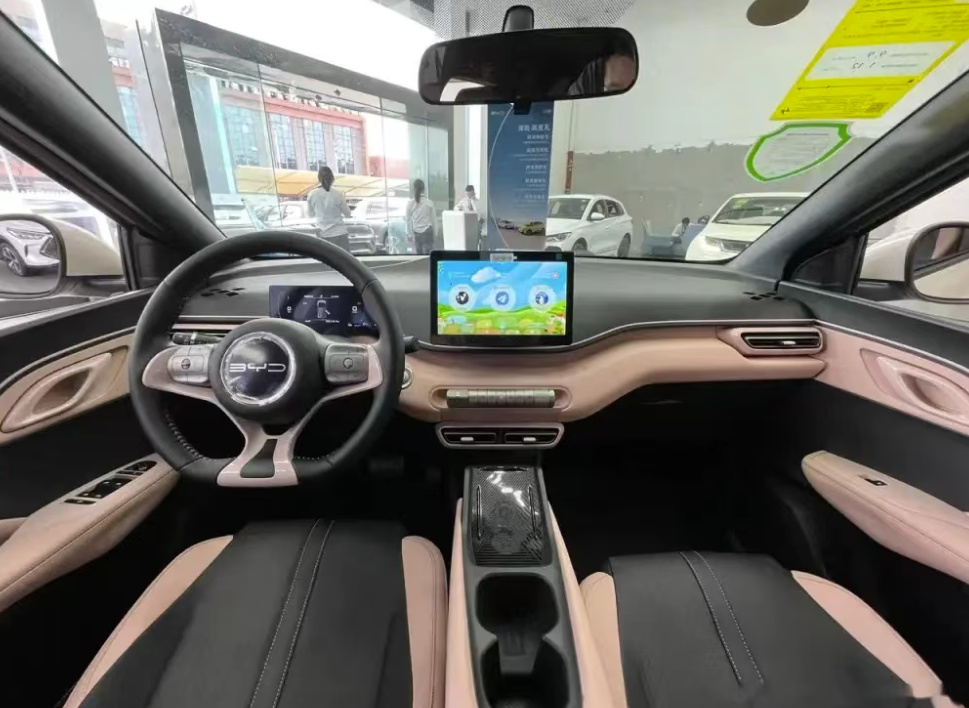
Market Impact: BYD Electric Cars Go Global
The market response has been strong. BYD's sales have grown sharply, led by models like the Seal, Dolphin, Tang and Han. In markets where EV adoption is rising, the brand is becoming widely recognised. BYD is also building out charging infrastructure, which makes ownership easier in regions where public charging is still thin.
The wider story of how BYD, Geely, Xiaomi and the rest got this fast is in the China shock, and the Xiaomi SU7 shows what happens when a phone maker enters the race.
BYD vs Tesla: The 2025 Scorecard
For years the two traded blows quarter by quarter. In 2025 the gap opened up. BYD sold about 2.25 million pure-electric cars, up nearly 28%, while Tesla delivered around 1.64 million, down roughly 9%. That made BYD the world's biggest maker of battery-electric cars by more than half a million units, and far ahead once its plug-in hybrids are counted too. BYD's total revenue also passed Tesla's, though Tesla still earns more per car and stays more profitable. Here is how the two line up on the things buyers actually weigh.
For the model-by-model detail, our BYD explainer covers the line-up from Seagull to Yangwang, and the Tesla Model 3 business case explains why Tesla's margins held as long as they did.
| BYD | Tesla | |
|---|---|---|
| Pure-electric sales (2025) | ~2.25 million | ~1.64 million |
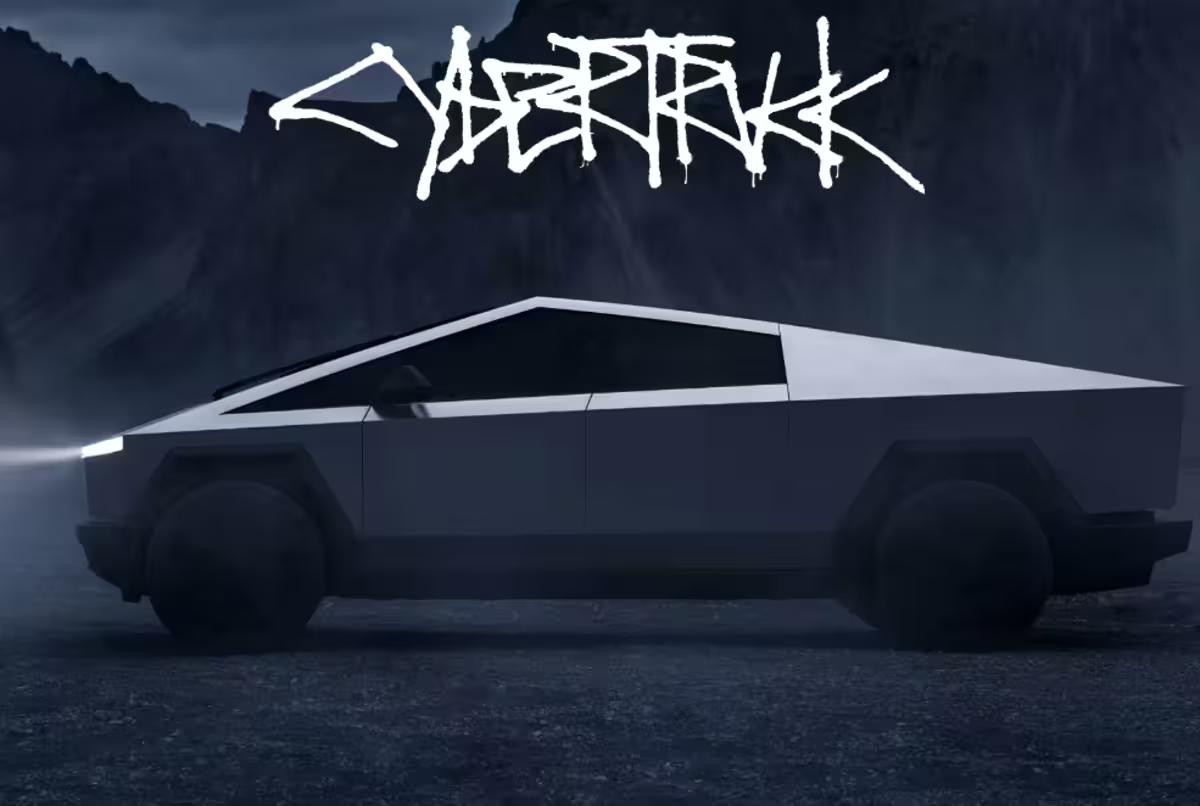
| Line-up | Economy to luxury, plus buses and trucks | Model 3, Y, S, X, Cybertruck |
| Entry price | from ~$15,000 (market dependent) | from ~$37,000 (Model 3) |
| Driver assistance | God's Eye, included free | Full Self-Driving, ~$8,000 option |
| Peak fast charging | up to 1,000 kW (Super e-Platform) | up to 500 kW (V4 Supercharger) |
| Sold in the US? | No (tariffs) | Yes |
Where BYD Wins, and Where Tesla Still Leads
BYD's edge is price, batteries and breadth. It builds its own Blade batteries and even its own chips, which lets it undercut Tesla by more than $10,000 in many markets and cover everything from a sub-$20,000 city car to six-figure luxury. Its new Super e-Platform charges at up to a megawatt, adding around 400 km in five minutes, roughly double Tesla's quickest charger, and it includes its God's Eye driver assistance for free where Tesla asks thousands for Full Self-Driving.
Tesla's edge is software, network and polish. Full Self-Driving is more capable than God's Eye, which has drawn complaints over reliability, and Tesla's Supercharger network is still the most mature in the West while BYD's megawatt chargers are only now rolling out. Tesla also holds a stronger brand in Europe and North America and makes far more profit per car. And in the United States a 100% tariff on Chinese-built EVs keeps BYD out of showrooms entirely, so on home turf Tesla has no BYD to fight at all.
BYD vs Tesla: Challenges and Future Outlook
BYD still faces real challenges. It competes with established brands and newer startups, most directly Tesla, and the BYD vs Tesla contest is now one of the defining storylines of the EV market. Its fast product cycles and low costs are its main advantages, and its presence in both consumer and commercial vehicles gives it a broader base than most rivals. The open question is whether it can hold its quality and margins as it expands abroad.
EV-Global Verdict
So has BYD caught Tesla? On volume and value, yes: it now sells more electric cars, charges faster and undercuts Tesla on price almost everywhere it is sold. Tesla keeps the lead on software, its charging network in the West and brand pull, and it still has the US market largely to itself thanks to tariffs. For buyers outside the US, the honest answer is that BYD is the better value while Tesla is the more polished package, and the gap is now small enough that it usually comes down to price and which models you can actually buy where you live. Either way, BYD has gone from challenger to co-leader, and that is the real story of the EV market in the 2020s.
For more information, visit the official BYD EV page or other trusted sources like Autoblog, CarExpert, and MotorTrend.
BYD vs Tesla: frequently asked questions
Is BYD bigger than Tesla?
On total new-energy vehicles, yes. BYD outsells Tesla overall because it counts both pure electric cars and plug-in hybrids, and it has rivalled Tesla on pure EVs in several recent quarters.
What is the BYD Blade Battery?
It is BYD's lithium iron phosphate (LFP) battery built in long, blade-shaped cells. It is cheaper, more space-efficient and harder to set alight than many rival packs, which helps BYD price its cars low.
Can you buy a BYD outside China?
Yes, across Europe, Latin America, Southeast Asia and Australia, with the range growing quickly. BYD is not sold as a passenger-car brand in the US, where tariffs make imports expensive.
Is BYD cheaper than Tesla?
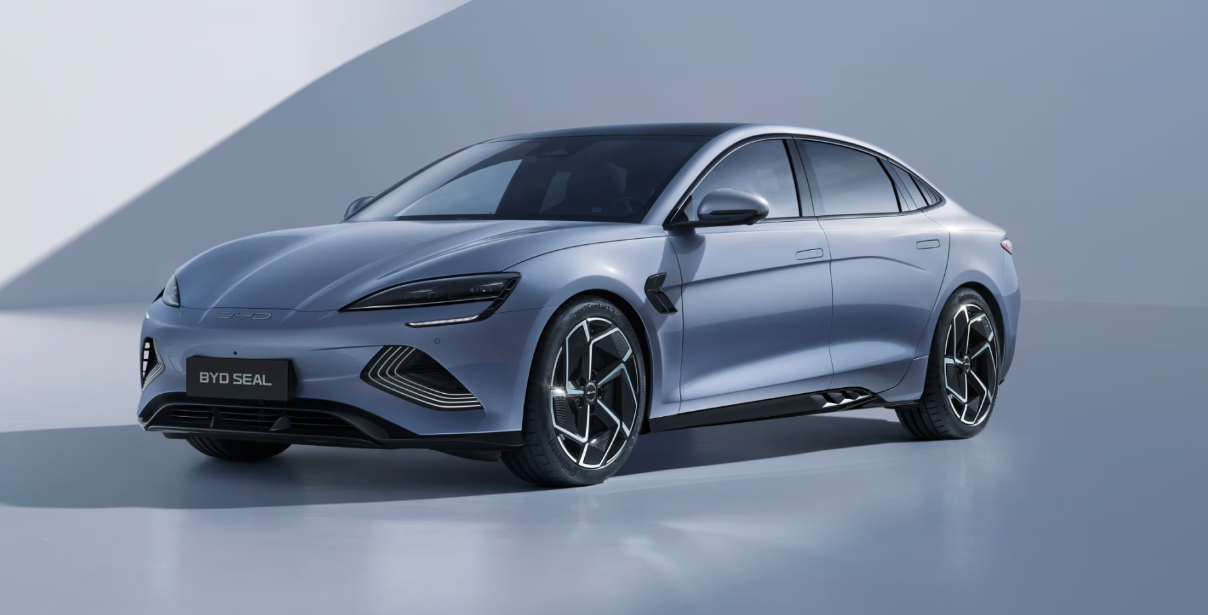
Almost everywhere it is sold, yes. BYD's mass-market models often cost more than $10,000 less than the closest Tesla, and its cheapest cars start near $15,000 where Tesla's range begins around $37,000. The BYD Seal is the closest rival to the Tesla Model 3.
Is BYD or Tesla better?
It depends on what you want. BYD wins on price, charging speed and choice of models, while Tesla wins on software, its Supercharger network in the West and brand. Outside the US the two are now closely matched; inside the US, tariffs keep BYD out, so Tesla has no direct BYD rival there.