Porsche Macan Electric Review 2026: Range, Price and Which Trim to Buy
Is the Porsche Macan Electric worth buying in 2026? As a car, yes: it is the best-driving electric SUV in its class, with up to 315 miles of EPA range, 800-volt charging that refills from 10 to 80% in 21 minutes and four trims from 335 to 576 hp. As a purchase, be careful. It starts at $80,350 in the US and 81,200 euros in Germany before Porsche's option list, and residual values on early cars have been soft. The rear-drive Macan or the Macan 4 is the sweet spot, and leasing is still the smarter way to own one.
Two years ago the Macan Electric was the car we were most curious about, partly for personal reasons: having been closely involved in the development of the Premium Platform Electric (PPE), I wanted to see how the first Porsche on a dedicated electric platform would land. The answer, after two model years, a price shuffle and a rear-drive entry model, is that the engineering landed better than the business case. It is the one electric SUV that drives like the badge promises. It is also expensive, option-hungry and, like every electric Porsche so far, hard on the first owner's wallet at resale time. This review covers what has changed for 2026, the real range and charging numbers, the trim to pick, and the buy-or-lease question that matters more here than on any other car in our best EVs ranking.
What the Macan Electric is
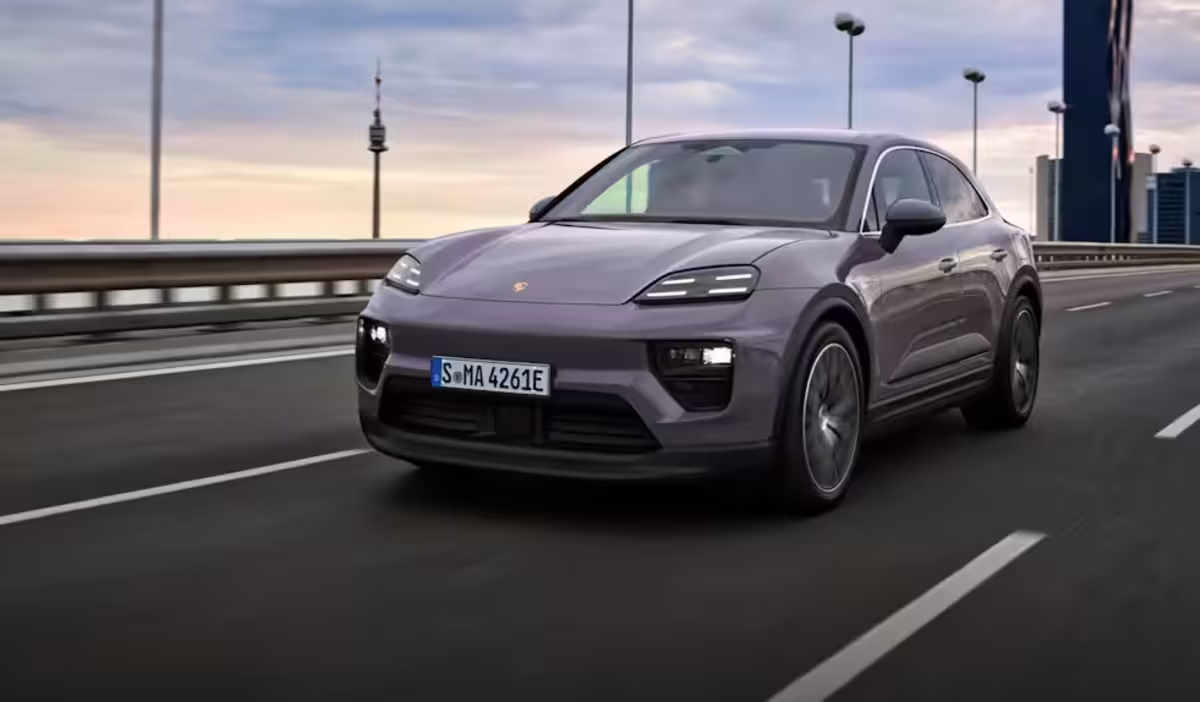
The Macan Electric shares the PPE platform with the Audi Q6 e-tron: an 800-volt architecture, a 100 kWh gross (95 kWh usable) battery under the floor, and a rear-mounted permanent-magnet motor on every version with a second motor up front from the Macan 4 upward. It is 4.78 m long, slightly bigger than the petrol Macan that Porsche keeps selling alongside it, and it carries the Taycan's three-screen cabin and its charging hardware. The petrol and electric cars are different vehicles with the same name, which confuses dealers as much as buyers.
The range opened with the Macan 4 and Turbo in 2024, added the rear-drive Macan and the 4S in 2025, and for the 2026 model year gained upgraded driver assistance, a faster infotainment processor and a revised options structure. The rear-drive car is the one to know about: lighter, cheaper and the longest-legged of the four.
| Trim | Power (overboost) | 0-60 mph | EPA range | WLTP range | US price | German price |
|---|---|---|---|---|---|---|
| Macan (RWD) | 335 hp | 5.4 s | 315 mi | 641 km | $80,350 | 81,200 € |
| Macan 4 | 402 hp | 4.9 s | 308 mi | 613 km | $83,950 | 85,300 € |
| Macan 4S | 509 hp | 3.9 s | 288 mi | 606 km | $90,350 | 92,700 € |
| Macan Turbo | 630 hp | 3.1 s | 288 mi | 591 km | $111,850 | 115,500 € |
Starting prices for the 2026 model year before destination and options; power figures are Porsche's launch-control overboost values. Base-model EPA ratings are 335, 382, 442 and 576 hp continuous.
Range and charging in the real world
Porsche's efficiency work shows in the numbers. The rear-drive Macan is rated at 315 EPA miles, and on a mixed 70 mph test loop a 4S returned about 250 miles with the heat pump working, which is honest for a 2.3-tonne SUV on 21-inch wheels. Winter costs 20 to 25% as it does for every EV, and the standard heat pump keeps the Macan among the better performers in the cold; our winter range guide explains why that matters more than the headline figure.
Charging is the car's party piece. On an 800-volt charger it peaks at 270 kW and holds a flat curve long enough to go from 10 to 80% in 21 minutes, roughly 200 miles of range in the time it takes to buy a coffee. On an older 400-volt charger the pack splits into two halves and charges at up to 135 kW, which is still respectable. US cars get Supercharger access through Porsche's NACS adapter as part of the industry-wide switch to Tesla's plug; at home, the 11 kW onboard charger fills the battery overnight on any wallbox. The nickel-rich battery chemistry is the right choice for a car that will be driven hard and far, as our LFP vs NMC guide explains.
How it drives
This is where the Macan earns its badge. The rear-biased torque split, the low battery and the optional rear-axle steering make it change direction like something a size smaller and several hundred kilograms lighter. Air suspension with Porsche Active Suspension Management is standard on the Turbo and worth having on every trim: it flattens the ride in Normal and tightens it in Sport without the crashiness that spoils rivals on big wheels. The steering is the best in the segment by a distance. The Turbo is absurdly quick, but the 4S is the enthusiast's pick and the rear-drive car is the one that feels most like a sports car on a mountain road, because it is the lightest.
Cabin, space and the screens
Inside, the Macan borrows the Taycan's architecture: a curved driver display, a 10.9-inch centre screen and an optional passenger screen, all running Porsche's Android Automotive-based system with native apps and an augmented-reality head-up display that projects navigation arrows onto the road. The 2026 processor update fixed most of the lag that annoyed early owners. Space is good rather than vast: the longer wheelbase gives adults real rear legroom, the boot holds 540 litres and there is an 84-litre frunk. Material quality is Porsche-grade, and so is the options list, which can add $20,000 to a 4S before you notice.
Prices, options and the residual-value problem
The sticker is only the start. A sensibly specified Macan 4 lands around $95,000 in the US and 100,000 euros in Germany once air suspension, the Premium package, rear-axle steering and decent wheels are added. That would be fine if the car held its value like a 911. It does not. Electric Porsches have depreciated faster than their petrol siblings, two-year-old Macan Electrics already trade well below their original list price, and the end of the US federal credit in September 2025 removed the discount that propped up lease payments. For a buyer that cuts both ways: it makes a new one a poor cash purchase and a lightly used one a genuine bargain, which is exactly how our used EV buying guide would approach it.
Leasing solves most of this. Porsche Financial Services absorbs the residual risk, the three-year term matches the warranty and the technology cycle, and the monthly payment is where the brand's incentives show up. Our buy versus lease analysis walks through the arithmetic; for a Macan Electric it comes out on the lease side more clearly than for any mainstream EV.
Macan Electric versus the rivals
| Car | From (US) | Best EPA range | Charging | Where it beats the Macan |
|---|---|---|---|---|
| Porsche Macan Electric | $80,350 | 315 mi | 800 V, 270 kW | Benchmark for steering and body control |
| BMW iX3 50 xDrive | $61,500 | 434 mi | 800 V, 400 kW | Range, charging speed, price, newest tech |
| Audi Q6 e-tron | $65,800 | 321 mi | 800 V, 270 kW | Same platform, more space, $15,000 less |
| Tesla Model Y Performance | $57,990 | 306 mi | 400 V, 250 kW, Superchargers | Price, software, network |
| Lucid Gravity Touring | $81,550 | 337 mi | 900 V, 400 kW | Seven seats, efficiency |
The uncomfortable comparison is the one inside the Volkswagen Group. The Audi Q6 e-tron is the same platform with a bigger boot for $15,000 less, and the BMW iX3 on its Neue Klasse platform now beats the Macan on range, charging speed and price by margins Porsche cannot explain away with steering feel. The Macan's case rests on the drive and the badge, and both are real.
Which Macan Electric to buy
- Best value: the rear-drive Macan. Lightest, longest range, and the purest to drive. Add air suspension and rear-axle steering.
- Best all-rounder: the Macan 4 for all-wheel drive in a wet or snowy climate, at a $3,600 premium.
- Enthusiast's pick: the 4S, which has the Turbo's chassis hardware at $21,500 less.
- Skip unless money is irrelevant: the Turbo. Quicker than you can use, and the heaviest hit at resale.
The EV-Global verdict
The Macan Electric is the electric SUV we would most like to drive and the one we would least like to buy outright. The PPE platform delivered, the 800-volt charging is still best in class two years on, and nothing at the price steers like it. But the value equation has moved against it: the iX3 and Q6 e-tron undercut it badly, the credit that softened US lease deals is gone, and residuals have been unkind. So our 2024 recommendation stands, with more evidence behind it. Lease a rear-drive Macan or a 4 with the suspension options, enjoy the best three years of electric driving available, and let somebody else own the depreciation. If you must buy, buy a two-year-old one.
Porsche Macan Electric: frequently asked questions
How far can the Porsche Macan Electric go on a charge?
The rear-drive Macan is EPA-rated at 315 miles (641 km WLTP), the Macan 4 at 308 miles, and the 4S and Turbo at 288 miles. Expect roughly 250 miles at a steady 70 mph in mild weather and 20 to 25% less in winter.
How fast does the Macan Electric charge?
On an 800-volt charger it peaks at 270 kW and goes from 10 to 80% in about 21 minutes. On a 400-volt charger the pack splits into two halves and charges at up to 135 kW. The 11 kW onboard charger fills it overnight at home.
How much does the Porsche Macan Electric cost in 2026?
From $80,350 in the US and 81,200 euros in Germany for the rear-drive Macan, rising to $111,850 and 115,500 euros for the Turbo, before destination and options. A typically specified Macan 4 lands around $95,000.
Is the Macan Electric better than the petrol Macan?
It is quicker, quieter and far cheaper to run, with better handling thanks to the low battery. The petrol Macan wins only on refuelling time and purchase price. They are different cars on different platforms sold side by side.
Should I buy or lease a Macan Electric?
Lease, in most cases. Electric Porsches have depreciated faster than petrol ones and the US federal credit that supported lease pricing ended in September 2025. Leasing caps the residual risk; if you want to own one, a two-year-old car is the better value.
Which Macan Electric trim is best?
The rear-drive Macan for range, weight and value, or the Macan 4 if you need all-wheel drive. The 4S is the enthusiast's choice; the Turbo is quicker than most owners will use and loses the most value.
Photo: EV-Global archive, resized and converted to AVIF. Prices and ratings are 2026 model-year figures as of October 2026; options and incentives change, confirm with Porsche before you order.