How Long Do EV Batteries Really Last?
How long do EV batteries really last? Longer than most people fear. Real-world data points to a useful life of roughly 12 to 20 years or 200,000-plus km, with batteries losing only about 1 to 2% of capacity a year, and most are covered by an 8-year or 160,000 km warranty. Heat and constant fast charging age them faster, so charging mostly at home and keeping the battery between about 20 and 80% helps it last.
This article contains affiliate links. As an Amazon Associate, EV-Global earns from qualifying purchases.
The question everyone asks first
It is the first thing almost every EV-curious buyer wants to know, usually in a slightly nervous voice: what happens when the battery wears out, and will it cost more than the car is worth? It is a fair worry. We have all watched a three-year-old phone struggle to last until lunch, and it is natural to assume a car battery will do the same, only with a far scarier repair bill. The good news, backed by years of real-world data, is that an electric car battery behaves almost nothing like the one in your pocket.
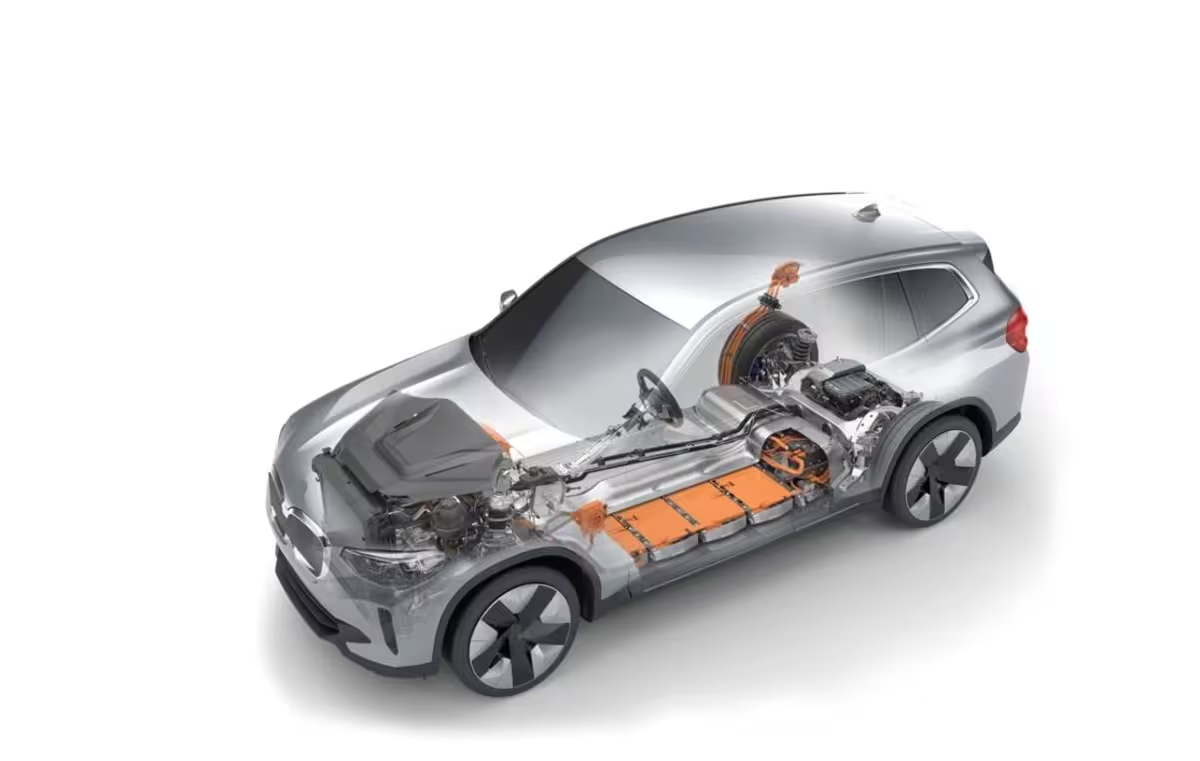
Modern EV packs are engineered to last the life of the car and then some. They are actively cooled, deliberately kept away from the extreme charge levels that kill small electronics, and managed by software whose entire job is to protect them. The result is a part that fades slowly and predictably rather than failing one bad morning. Here is what the numbers actually say, what shortens a battery's life, what a replacement really costs, and how to make yours last.
So how long do EV batteries actually last?
The honest headline: most modern EV batteries will comfortably outlast the rest of the car. Industry consensus and warranty design point to a useful life of roughly 12 to 20 years, or somewhere between 100,000 and 200,000 miles, and often a good deal more. Telematics firm Geotab, which has tracked the health of more than 22,000 electric cars, found average capacity loss of about 2.3 percent a year. Do that arithmetic and a typical pack still holds around 80 percent of its original capacity after eight years, and roughly three-quarters after twelve.
At the durable end, Tesla has reported that its packs retain 70 to 80 percent of capacity after 300,000 to 500,000 miles, which for most drivers is fifteen to twenty years of motoring. Put bluntly, the battery is far more likely to see the car to the scrapyard than to die during your ownership. The fear is real; the failure, for the vast majority of drivers, is not.
Degradation is slow, and it is front-loaded
Battery ageing is not a straight line to zero. Most packs lose a little capacity relatively quickly in the first year or two as the cells settle, then enter a long, gentle plateau where the decline almost flattens out. The dramatic "knee" in the curve, where capacity finally falls off a cliff, sits well beyond the mileage almost anyone will ever reach.
Chemistry matters here too. The lithium iron phosphate (LFP) packs now common in cheaper EVs and most battery chemistries from China are especially tough: real-world data shows them holding 90 percent or more of capacity after eight years and 100,000 miles in mild climates. They also tolerate being charged to 100 percent far better than the older nickel-based chemistries, which is why many LFP cars actually recommend it. If you want the deeper story on who makes these cells, our guide to the EV battery makers covers it.
Free calculatorProject your battery in 8 yearsSee how capacity and range fade over time, and how your charging habits change it.What actually wears a battery down
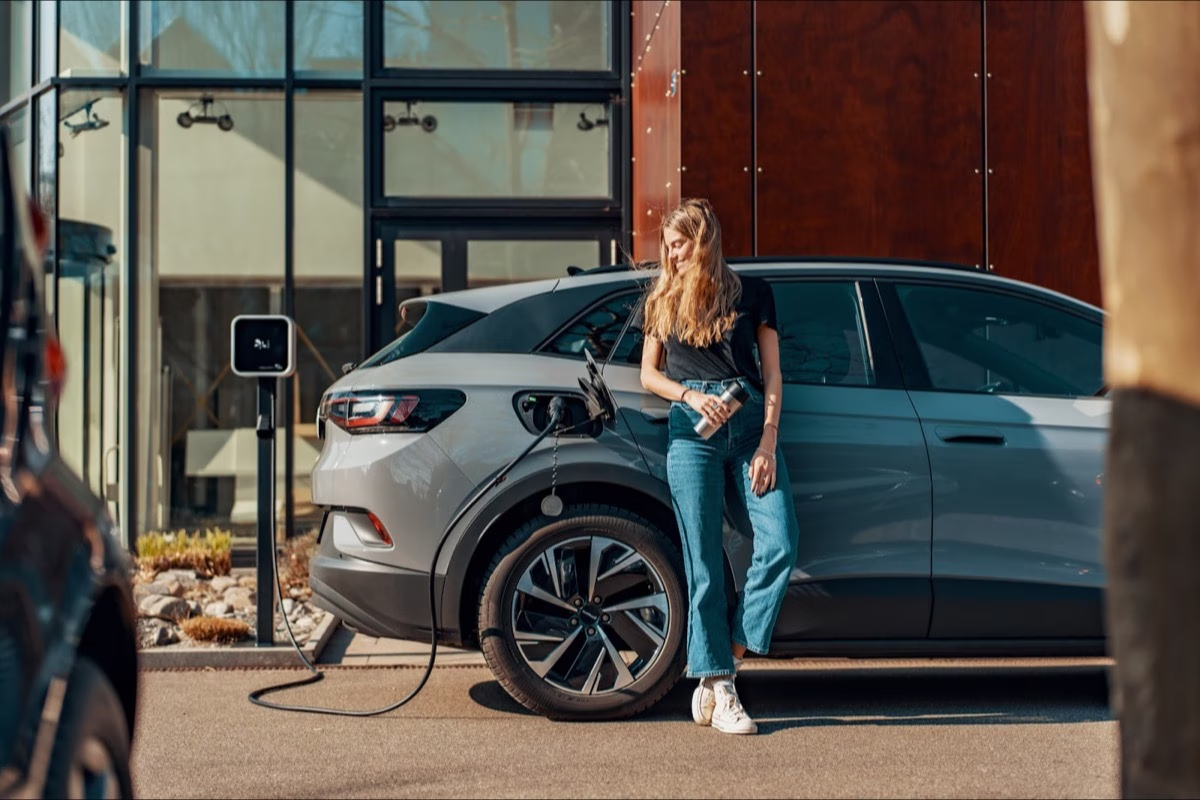
If degradation has a villain, it is heat and hard charging, not mileage itself. The same Geotab analysis found that charging behaviour is now the single biggest controllable influence on battery health ↗. Cars that lean heavily on high-power DC fast charging degraded at up to about 3 percent a year, roughly double the 1.5 percent seen on cars that mostly charge gently at home.
Climate plays a smaller part, with hot regions adding roughly 0.4 percent a year, and time itself causes slow "calendar ageing" whether you drive or not. Cold weather works the other way around: it does not degrade the cells, but it does temporarily reduce usable range, something we explain fully in our guide to cold weather range in electric cars. The other quiet stressor is leaving the battery sitting full or nearly empty for long stretches. Here is how the main factors stack up.
| Factor | Effect on yearly wear | What to do about it |
|---|---|---|
| Heavy DC fast charging | up to ~3.0%/yr | Charge at home day to day; fast-charge for trips |
| Mostly gentle AC charging | ~1.5%/yr | The easy, battery-friendly default |
| Hot climate | +~0.4%/yr | Park in shade or a garage; use pre-conditioning |
| Sitting at 100% or near 0% | accelerates wear | Keep it roughly 20–80% for daily use |
| Calendar age (time) | slow, unavoidable | Nothing; it is gradual and built into the warranty |
Degradation figures are drawn from Geotab's real-world fleet analysis and vary by model and climate.
Warranties: a safety net you probably will not use
Even in the rare case something does go wrong, you are well covered. In the United States, federal rules require carmakers to warranty the battery for at least 8 years or 100,000 miles, and to replace it if capacity falls below 70 percent within that window. California goes further for 2026 cars, demanding 70 percent retention for 10 years or 150,000 miles, and several makers match that voluntarily. Tesla's battery warranty even transfers to the next owner, which quietly props up used values.
What is striking is how seldom these warranties are claimed. Across modern EVs, documented pack-replacement rates run well under a couple of percent. And a large share of what owners report as "lost range" turns out to be a software calibration quirk rather than a worn-out battery, fixed with an update rather than a new pack. Range that drifts back after a few full charge cycles was never really gone.
What a replacement actually costs
Let us address the number that scares people. Out of warranty, a full pack replacement typically runs from about 5,000 to 20,000 dollars including labour, scaling with the size of the battery. A premium long-range car sits at the top end; a small city EV is near the bottom.
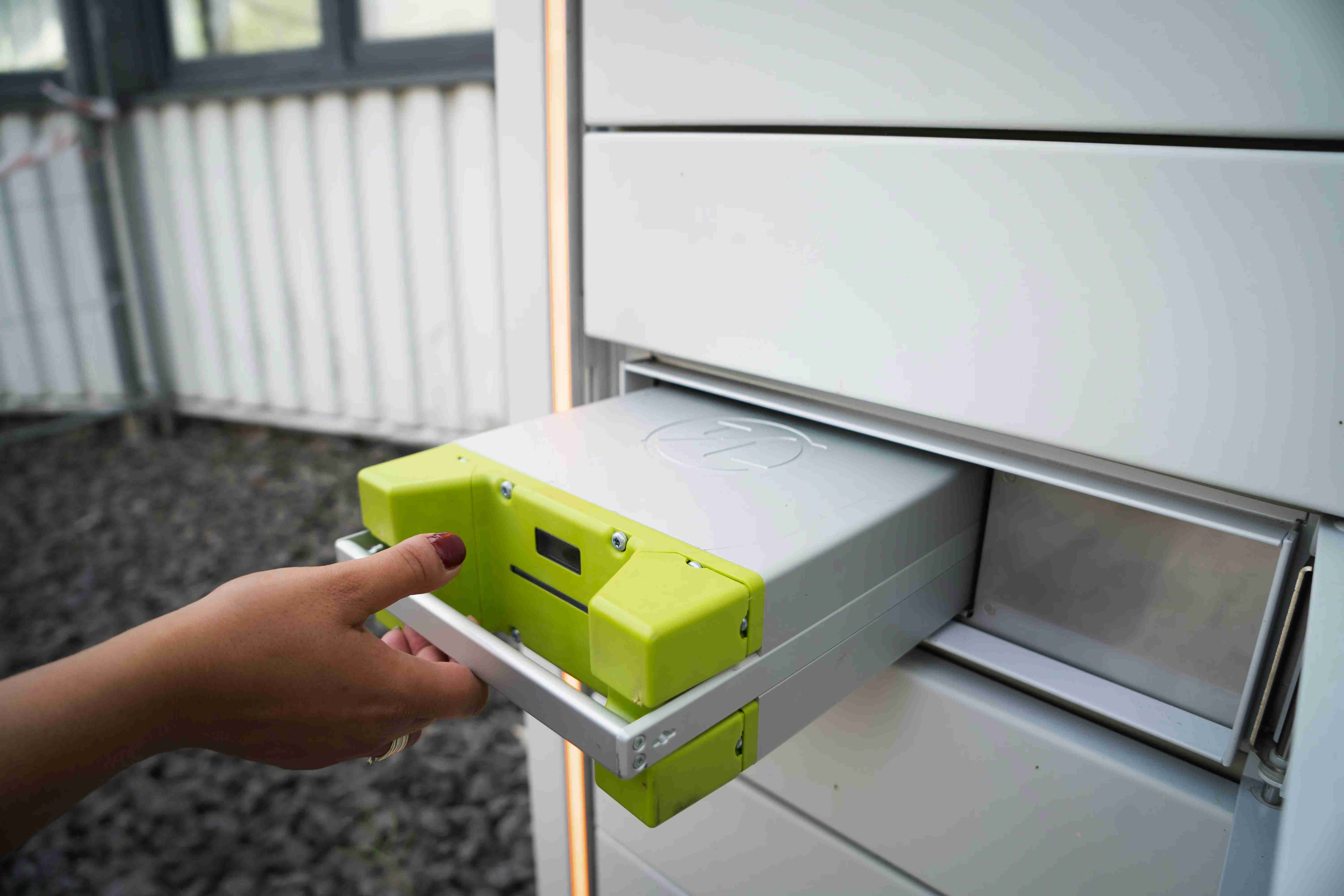
Three things soften that blow. First, you rarely need the whole pack: most makers allow individual modules to be replaced, often for one or two thousand dollars. Second, a growing market in remanufactured packs undercuts dealer prices by 30 to 50 percent. Third, raw battery costs keep falling, from roughly 110 dollars per kilowatt-hour today toward an expected 60 by 2030, dragging replacement prices down with them. The replacement you are dreading is both rarer and cheaper than the headline suggests, and it gets cheaper every year.
How to make your EV battery last longer
You do not need to baby an EV, but a few easy habits stack the odds in your favour:
- Keep it in the sweet spot. For daily use, charge to around 80 percent ↗ and try not to run down to zero. Most cars let you set this once and then forget about it.
- Save full charges for trips. Topping up to 100 percent now and then is fine, just avoid leaving it sitting there for days. LFP cars are the happy exception and like a regular full charge.
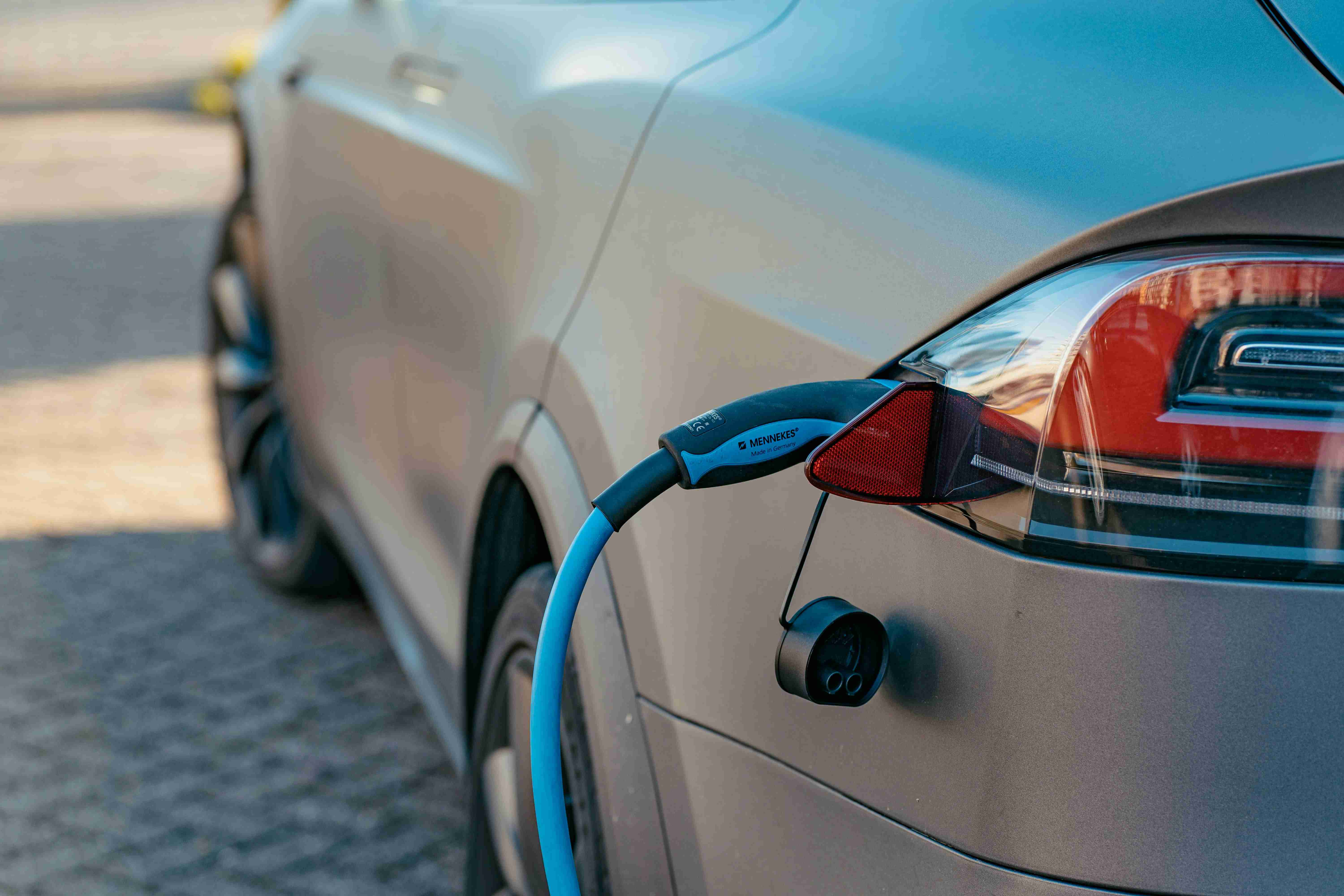
- Lean on slow charging. Home or AC charging is gentler than repeated high-power fast charging, which is best saved for road trips and longer journeys.
- Mind the heat. Park in shade or a garage in hot climates, and use the car's pre-conditioning so the battery can manage its own temperature.
- Then relax. The single biggest mistake is overthinking it. These cars are built to be driven, not nursed.
The EV-Global Verdict
The dead-battery bogeyman is, for the overwhelming majority of drivers, a myth. The data is now clear and consistent: EV batteries degrade slowly, predictably and far less than the fear suggests, and they are overwhelmingly likely to outlast the car they came in. The replacement bill that haunts forum threads is a genuinely rare event, increasingly cushioned by module repairs, remanufactured packs and falling cell prices.
If you are buying new, pick the chemistry to suit your life, LFP for worry-free daily charging, nickel-based for maximum range, and otherwise stop fretting about the battery. If you are buying used, the only homework that really matters is a quick battery-health check, which any reputable seller can provide. Treat range loss the way you treat tyre wear: a slow, manageable fact of ownership, not a financial cliff waiting to swallow you.
EV battery lifespan: frequently asked questions
How long do electric car batteries last?
Most modern EV batteries last between 12 and 20 years, or roughly 100,000 to 200,000 miles, and frequently outlast the car. Real-world data shows about 2.3 percent capacity loss a year, so a typical pack still holds around 80 percent of its capacity after eight years.
Do I need to replace an EV battery like a phone battery?
Almost never. Unlike a phone, an EV pack is liquid-cooled and kept away from the extreme charge levels that wear cells out, and documented replacement rates are under a couple of percent. Much of what owners call lost range is just a software calibration that an update fixes.
Does fast charging ruin an EV battery?
Occasional fast charging is harmless. Relying on high-power DC charging for most of your top-ups roughly doubles yearly degradation, to about 3 percent versus 1.5 percent for gentle home charging. Use AC charging day to day and save fast charging for trips.
How much does it cost to replace an EV battery?
Out of warranty, a full pack typically costs between 5,000 and 20,000 dollars depending on its size, but you rarely need the whole pack. Module-level repairs and remanufactured packs cost far less, and cell prices keep falling year after year.
What is the best way to make an EV battery last longer?
Keep it around 20 to 80 percent for daily use, avoid leaving it full or empty for long, park out of extreme heat, and lean on slower home charging. Beyond that, just drive it, because the cars are built to be used.
Photo via Unsplash. Resized and converted to AVIF.