Level 2 vs Level 3 Autonomous Driving: Who Drives?
What is the difference between Level 2 and Level 3 autonomous driving? At SAE Level 2, the human drives and must watch the road continuously while the system controls steering and speed. At Level 3, the automated driving system drives within a defined operating domain and monitors the road, but the user must remain available to take over when requested. The boundary is responsibility, not simply better hardware.
Level 2 and Level 3 can look similar from the passenger seat. Both can steer, accelerate and brake. The engineering and legal handoff underneath is radically different because only one lets the human stop supervising the road while the system is engaged.
The one difference that matters: who is driving?
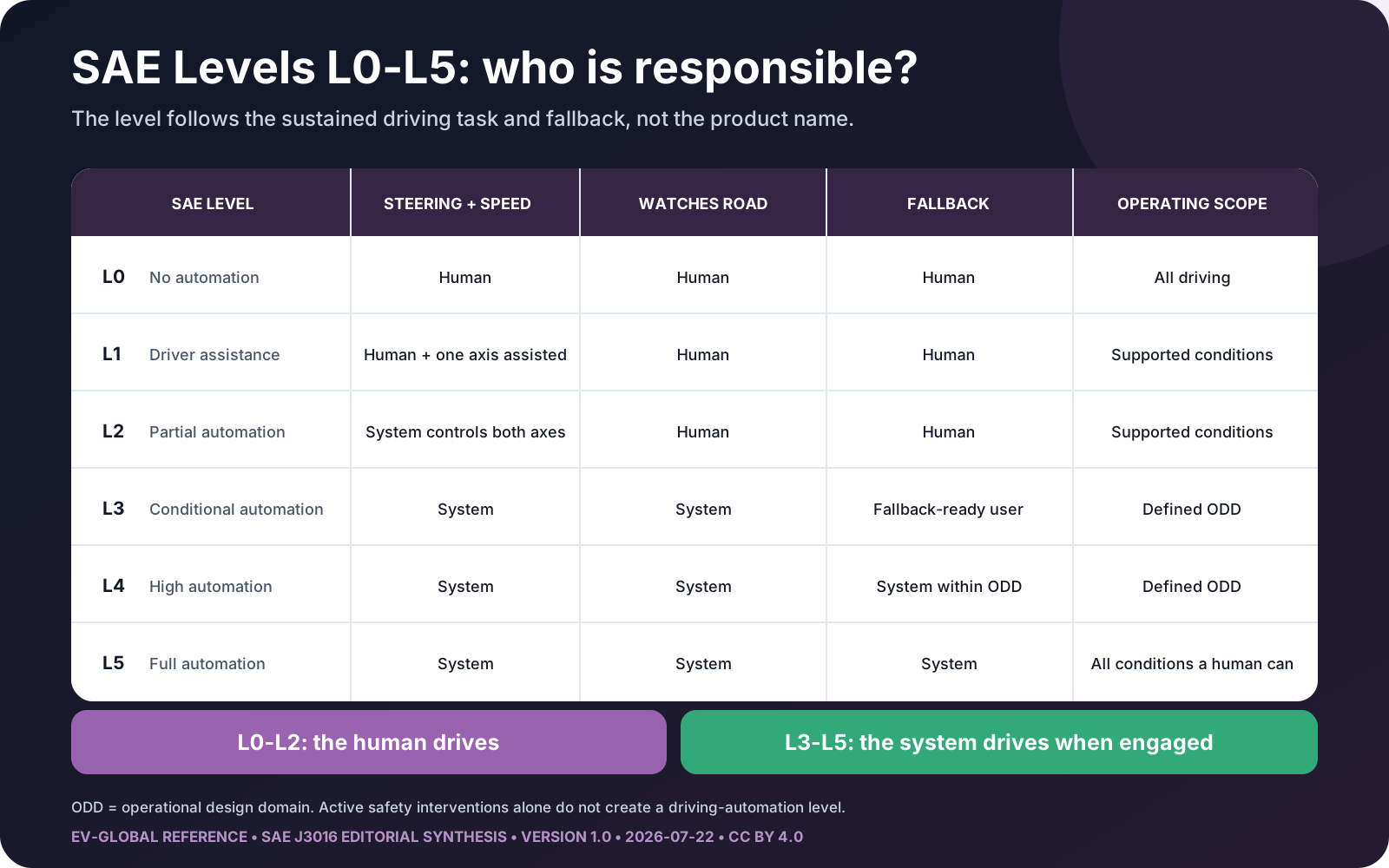
At SAE Level 2, the human driver performs the fallback and supervises the road even while the system controls steering and speed. At Level 3, the automated driving system performs the entire driving task inside its operational design domain. The user may stop supervising continuously but must be available to respond to a takeover request. Marketing labels do not change that allocation.
| Question | SAE Level 2 | SAE Level 3 |
|---|---|---|
| Who drives while engaged? | The human, assisted by the system | The automated driving system |
| Who watches the road? | The human continuously | The system while within its ODD |
| Who handles fallback? | The human immediately | The user responds when requested; system manages the transition |
| Where can it operate? | Only within stated support conditions | Only within a defined operational design domain |
| Can the user ignore the system? | No | No, the user must remain takeover-receptive |
What is SAE Level 2?
Level 2 combines lateral and longitudinal control, such as lane centring plus adaptive cruise control. The system may feel capable, but the human still drives in the legal and technical sense of SAE J3016. Tesla Full Self-Driving (Supervised), GM Super Cruise and Ford BlueCruise are examples of Level 2 systems. Their operating conditions and monitoring approaches differ.
What is SAE Level 3?
Level 3 is conditional driving automation. The system drives within a narrow ODD, which may specify mapped roads, speed, weather, traffic, lighting and sensor availability. When a limit approaches, it requests that the user resume the task. The handover must allow time to reorient, which makes the human-machine interface and fallback strategy central engineering problems.
Why the Level 2 to Level 3 jump is so hard
The hardware can look similar, but the safety case changes completely. A Level 2 system assumes the human detects what it misses. A Level 3 system must monitor its own limits, recognise when the ODD is ending, request takeover, maintain a safe transition and handle a user who does not respond as designed. Redundant sensing, power, braking, steering, localisation and fault management become more demanding.
A Level 3 takeover is a timed state machine
Takeover is not one warning chime followed by instant human control. The system first detects that a known ODD boundary or fault is approaching. It issues a transition demand through more than one sensory channel, keeps driving during the transition, monitors whether the user has responded, and only hands back the task when the handover criteria are satisfied. If the user does not respond, the vehicle needs a fallback sequence rather than blind disengagement.
That sequence exposes the central Level 3 problem. A person who has correctly stopped watching the road needs time to understand the scene, place their hands and feet, and decide what to do. Too little warning makes the permission to disengage attention meaningless. Too much dependence on a perfect human response makes the system brittle. The transition therefore belongs in the safety concept, human-factors work, interface design and validation scenarios from the beginning.
Transition demand, fallback and minimal-risk manoeuvre
These terms describe different moments. A transition demand asks the user to resume driving. Fallback is the response when the automated system cannot continue the task as intended. A minimal-risk manoeuvre is the vehicle action used to reduce risk, which may involve slowing in lane or reaching a safer stopping condition depending on the system and traffic situation. The exact behaviour is part of the approved design, not a universal move shared by every Level 3 car.
Driver monitoring at Level 2 and Level 3
Level 2 driver monitoring checks that the human remains engaged with the road. Level 3 monitoring checks a different state: whether the user remains available and capable of taking over when requested. Neither level makes sleeping safe. If a system allows other activities, its approved conditions and user instructions define what is permitted.
Level 2, Level 3 and Level 4 examples
Mercedes-Benz DRIVE PILOT is a production Level 3 example only in approved markets and conditions. Waymo's ride-hail system is Level 4 because it completes the driving task and fallback inside its service ODD without a fallback-ready passenger. Level 4 is not simply Level 3 with better sensors; it removes the expectation that the rider takes over.
What drivers should check before using an automated system
- Read the exact automation level and operating conditions, not the product name.
- Know whether continuous road supervision is required.
- Understand how the car confirms attention or takeover readiness.
- Learn the disengagement, warning and minimum-risk behaviour.
- Keep software and sensors maintained as the manufacturer specifies.
Build the full autonomy picture
Compare all SAE driving automation levels L0-L5, see how Waymo's Level 4 system works, and follow the computing chain through Nvidia DRIVE, the software-defined vehicle and the automotive E/E architecture.
For the physical baseline, return to how a car steers, brakes and moves. Then separate vehicle autonomy from network support in the 5G and automated-driving explainer, or use the automotive engineering hub to trace the complete system.
Primary sources, checked July 24, 2026: SAE J3016 defines the driving task, supervision and fallback roles. SAE's consumer chart shows the Level 2 and Level 3 responsibility boundary. UN Regulation No. 157 provides a production regulatory example for automated lane keeping, transition demands, driver availability and fail-safe response.
For the complete ladder, the downloadable SAE L0-L5 responsibility matrix shows precisely where control, monitoring and fallback move from human to system.
Level 2 vs Level 3: frequently asked questions
What is the main difference between Level 2 and Level 3?
At Level 2 the human drives and supervises continuously. At Level 3 the system drives and monitors the road within its ODD, while the user remains available for a takeover request.
Do you have to watch the road at Level 2?
Yes. The human must continuously supervise the environment and system, even when steering and speed control are active.
Can you stop watching the road at Level 3?
Only while the approved Level 3 system is engaged within its stated conditions. The user must remain takeover-receptive and follow the manufacturer's instructions.
Is Tesla FSD Level 2 or Level 3?
Tesla Full Self-Driving (Supervised) is Level 2. Its name does not change the requirement that the human watches the road and remains responsible.
Is Mercedes DRIVE PILOT Level 3?
DRIVE PILOT is an SAE Level 3 system where approved and only within its defined operating conditions. Outside them, the human drives.
Is Waymo Level 3?
No. Waymo operates a Level 4 ride-hail system within defined service areas. It handles the driving task and fallback there without expecting the passenger to take over.
Original EV-Global illustration, created for this Level 2 and Level 3 comparison.