EV Charging Time Calculator
Enter your battery size, your start and target charge level and the charger power, and this tool shows how long a charge takes, the energy it adds and the range you gain.
Estimate. DC fast charging slows down (tapers) as the battery fills, so real fast-charge times past about 80% are longer than a flat calculation suggests.
How it works
How EV charging time is worked out
Charging time comes down to two numbers: how much energy you need to add, and how fast the charger can deliver it. The energy to add is the battery size times the share of the pack you are filling, so going from 20 percent to 80 percent of a 60 kWh battery means adding 36 kWh. Divide that by the charger power and you have a rough time. A little energy is always lost as heat, so this tool builds in a small charging loss. Most people charge from about 10 to 80 percent rather than empty to full, because that covers normal driving and keeps the slow top end out of the equation. To see what that energy costs, use the EV charging cost calculator.
AC versus DC: why fast charging slows down
Home and workplace charging is AC, where the car's onboard charger sets the pace, usually up to 7.4 or 11 kW. Public fast charging is DC, where the charger feeds the battery directly and can run from 50 kW to 350 kW. DC charging does not hold its peak the whole time. To protect the cells, the car accepts the most power when the battery is low, then tapers as it fills. That is why the 10 to 80 percent window is quick and the last stretch to 100 percent is slow, and why a flat calculation looks optimistic at the top end. Our guide to the state of the charging network covers where fast charging is heading.
Charger types and how fast they are
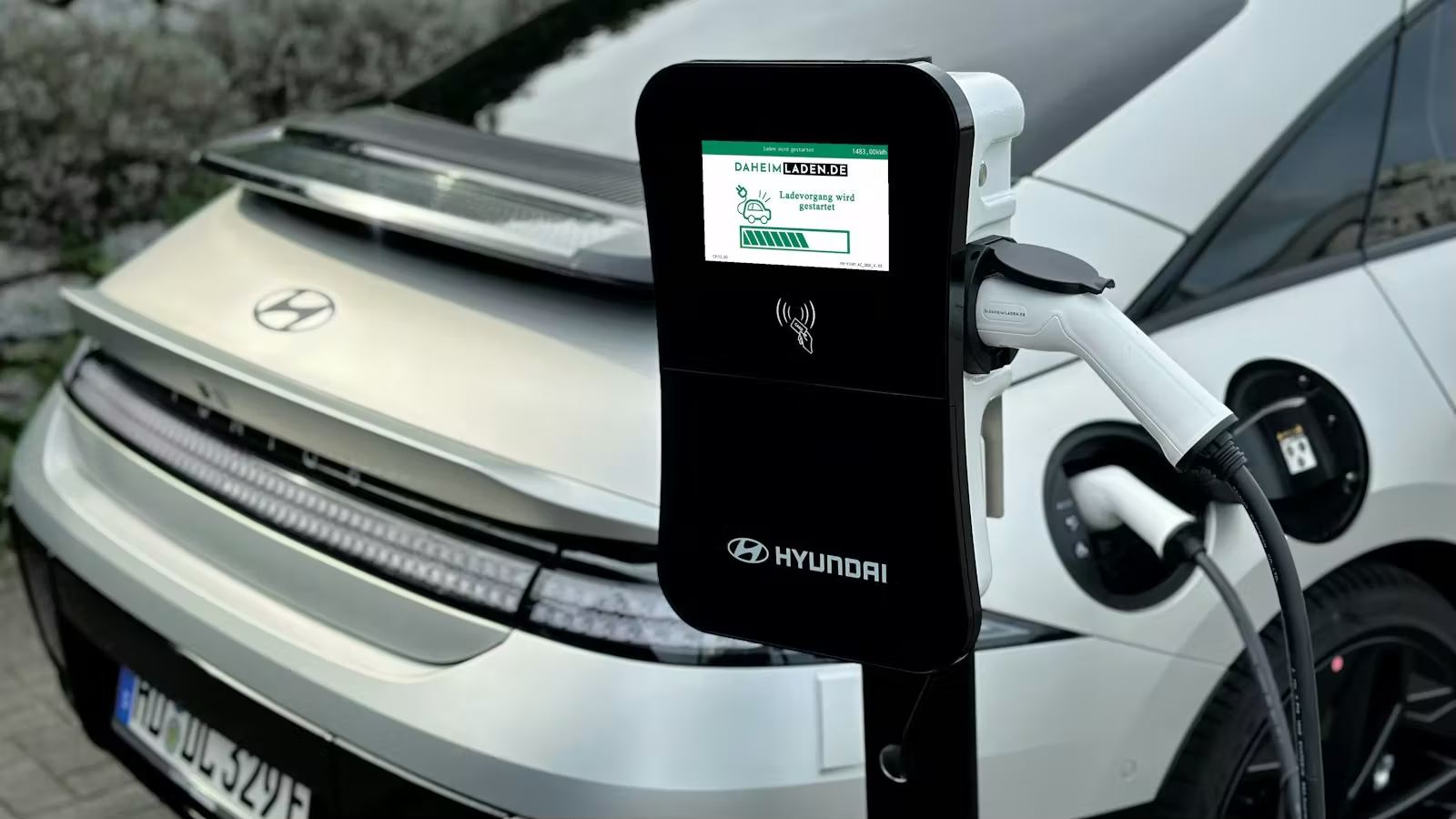
A standard home socket delivers about 2.3 kW, which is slow but fine for an overnight top-up. A home wallbox at 7.4 kW or 11 kW is the sweet spot for most owners and refills a normal day's driving in a few hours. Public AC tops out around 22 kW, while DC fast chargers start at 50 kW and rapid and ultra units reach 150 kW to 350 kW for a short stop on a longer trip. Pick the charger power above that matches where you charge most. For the bigger picture on costs and plugs, see how much it costs to charge an electric car and the full EV charging guide.
Frequently asked questions
How long does it take to charge an EV at home?
On a 7.4 kW home wallbox, a typical 60 kWh battery charged from 20 percent to 80 percent takes around 5 hours. On a slow 2.3 kW socket the same charge takes well over 15 hours, which is why most people fit a wallbox. Charging overnight means the car is full by morning either way.
Why does DC fast charging slow down as the battery fills?
To protect the cells, the car limits how fast it accepts power as the battery fills. A charger pulls its highest power when the battery is low, then tapers as it nears full. This is why the 10 to 80 percent window is fast while the last 20 percent is slow, and why a flat calculation overstates how quick the top end is.
Is it bad to charge to 100% every time?
For daily driving most makers suggest keeping a lithium-ion battery between about 20 and 80 percent, since sitting at a full charge adds stress over time. Charging to 100 percent now and then, such as before a long trip, is fine. Some batteries with LFP chemistry are happy being charged to full regularly.
Keep reading
EV Charging Cost Calculator
Once you know how long a charge takes, see what that energy costs per 100 miles, per month and per year.Open tool
EV Charging Stations: The State of the Network
How good the public fast-charging network really is, and where charging speeds are heading.Read guide