NACS: How Tesla's Plug Won the North American Charging War
What is NACS, and why did Tesla's plug win? NACS, now standardised as SAE J3400, is Tesla's charging connector, which has become the de facto standard in North America. It won because it is smaller and easier to use than the old CCS plug, and because Tesla opened up its large, reliable Supercharger network. Ford broke ranks first in 2023, and almost every major automaker followed.
This article contains affiliate links. As an Amazon Associate, EV-Global earns from qualifying purchases.
A standards war that ended before most people noticed
In November 2022, Tesla did something it almost never does: it gave away its homework. The company published the design of its charging connector, renamed it the North American Charging Standard, and invited every other carmaker to use it. At the time it looked like a publicity move. Eighteen months later it had quietly rewritten how an entire continent charges its cars. For an industry that fights over wheel-bolt patterns, that is close to a miracle.
The backdrop matters. For years North America ran two incompatible fast-charging systems. Tesla owners had the Supercharger network, which mostly worked. Everyone else had CCS, the Combined Charging System, spread across a patchwork of third-party operators with a well-earned reputation for broken screens, failed handshakes and the dreaded "charger offline" message. Two camps, one frustrated public. Then Tesla opened the door, and the wall came down faster than anyone expected.
The dominoes fell fast
Ford broke ranks first. In May 2023 it announced its EVs would get Supercharger access and, later, a built-in NACS port. That was the moment the dam burst, because Ford is not a startup with nothing to lose. GM followed within weeks. Then Rivian, Mercedes-Benz, Nissan, Honda, Hyundai and Kia, BMW, Toyota, Volkswagen, and Polestar. Rivian drivers got Supercharger access in March 2024, with the company shipping Rivian adapters to owners that spring. GM switched on access for its Chevy, Cadillac and GMC EVs in late 2024, selling an approved adapter through its app.
The last big holdout, Stellantis, the group behind Jeep, Ram, Dodge and Chrysler, confirmed it would adopt NACS for select models with access rolling out in early 2026. At that point the question flipped. It was no longer "who has adopted NACS?" but "is anyone left who hasn't?" In June 2024, SAE International published the standard as J3400, which turned a single company's plug into a documented, open specification any supplier can build to.
 Free calculatorHow long will a charge take?Enter the battery size, charger power and your start and target percent to get the time.
Recommended adapters and cables
Advertising / affiliate links: as an Amazon Associate, EV-Global earns from qualifying purchases. Prices and availability are set by Amazon; links open in a new tab.
Mixed plugs are the reality during the NACS switchover. The right adapter keeps a non-Tesla car charging at Tesla stalls, and the other way round.
On AmazonNACS to CCS adaptersCharge a NACS-port car at CCS fast chargers. On AmazonTesla to J1772 adaptersUse J1772 or Tesla chargers across plug types.Why Tesla's plug won
Three things decided it, and only one of them is the connector itself.
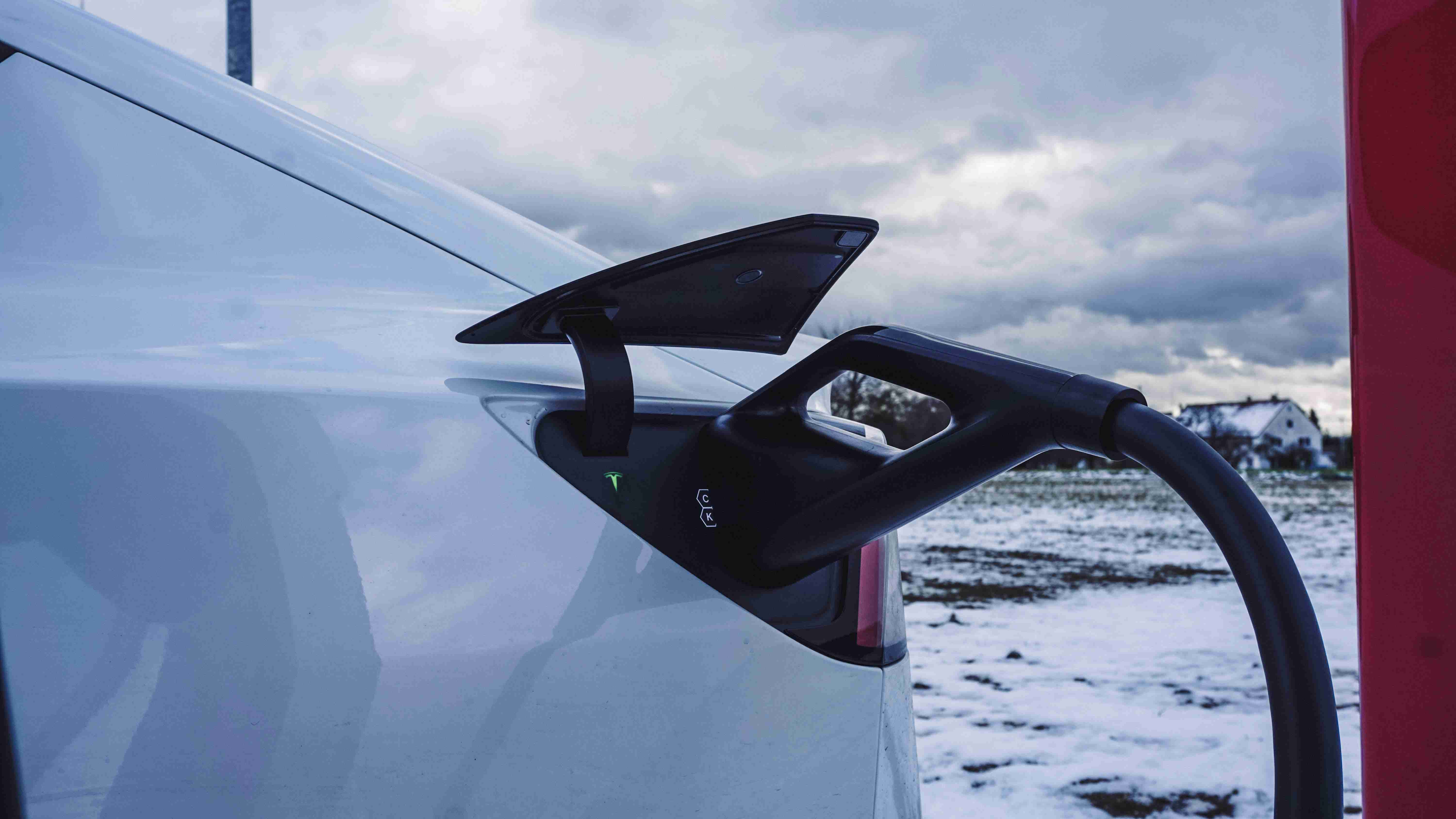
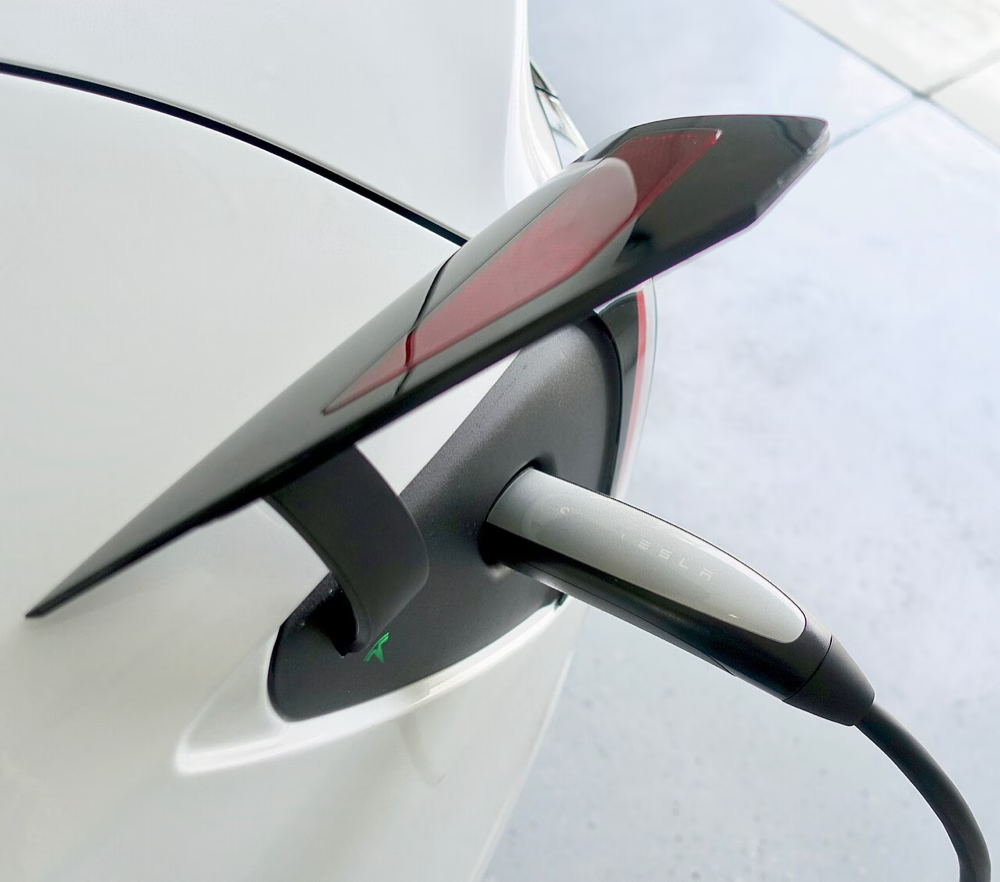
- The hardware is genuinely better. The NACS plug is smaller and lighter than CCS, and it carries both AC and DC charging through a single set of pins. CCS bolts a separate DC section under the AC connector, which is why a CCS plug looks like it brought luggage. A slimmer, one-port design is easier to handle, cheaper to build into a car, and friendlier to a cold hand in a parking lot in January.
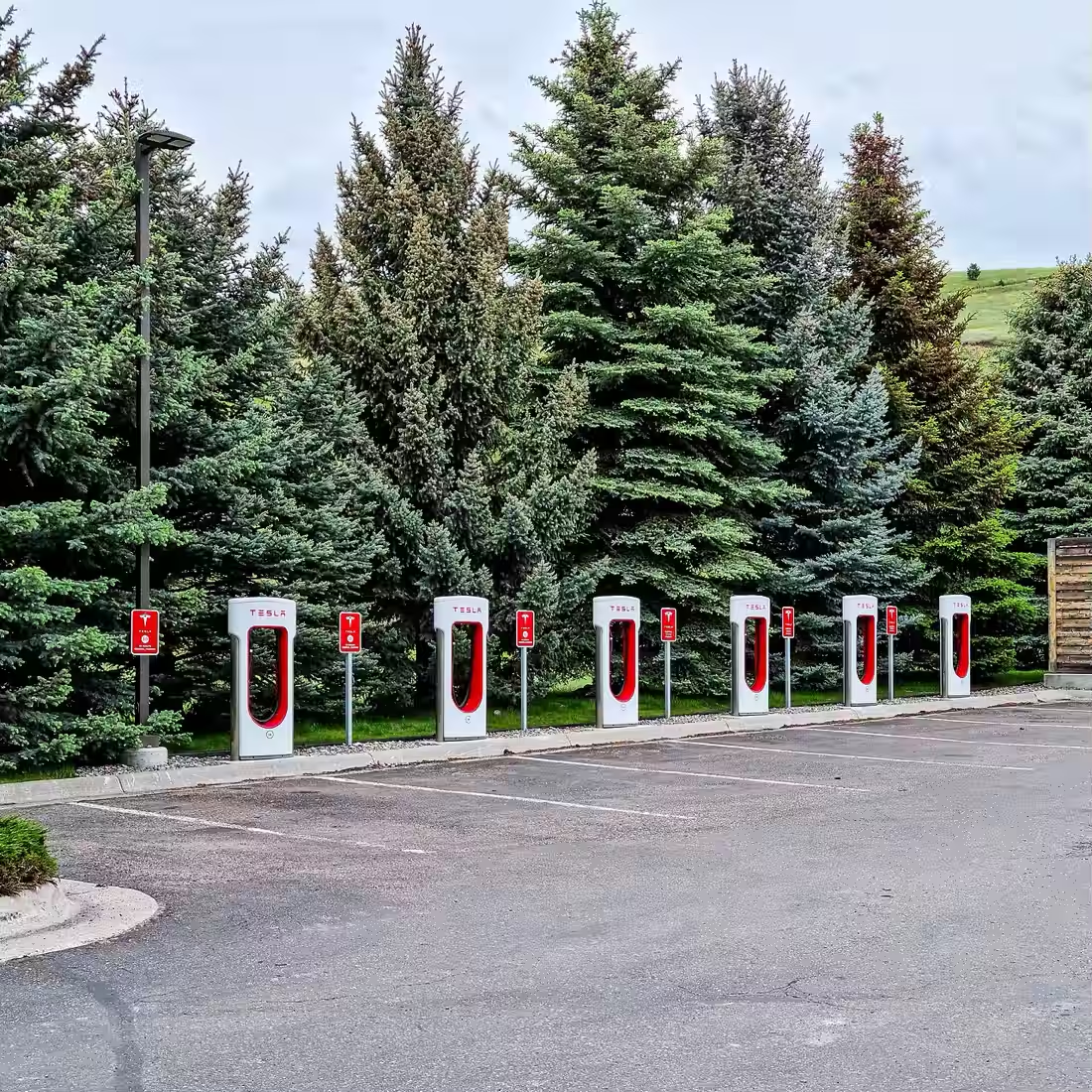
- The network was the real prize. Automakers were not chasing a plug shape. They were chasing the Supercharger network, which is large, dense along the routes people actually drive, and famous for simply working. Plug in, charging starts, you leave. Rival networks have spent years trying to match that reliability and mostly have not.
- Installed base broke the tie. Tesla had sold millions of cars and built thousands of charging stalls before legacy brands shipped their second EV. When one side already owns most of the fast chargers and most of the cars, "let's all standardize" is really "let's standardize on theirs." Everyone knew it.
What it actually means if you drive an EV
The rollout runs in two overlapping phases, and knowing which one your car is in saves a lot of confusion.
Phase one, the adapter era. If you own a non-Tesla EV built with a CCS port, your manufacturer either gives or sells you a NACS adapter. You keep your existing port, clip on the adapter, and plug into a Supercharger. It works, but it is one more thing to carry, store and occasionally lose.
Phase two, native ports. From the 2025 model year onward, more and more new EVs ship with the NACS inlet built in, no adapter required. Many of those cars also pick up Plug & Charge, where the station recognizes your vehicle and bills your account automatically. No app, no tap, no card. That is the experience Tesla drivers have had for a decade, finally arriving for everyone else.
The practical upside is enormous. Overnight, a Ford or Rivian driver gained access to roughly fifteen thousand additional fast-charging stalls, the most reliable ones in the country. Road-trip route planning stopped being a game of "will the only charger in this town be working?"
The catch nobody puts in the press release
Standardizing the plug did not standardize the experience. A few wrinkles are worth knowing before you celebrate.
- 800V cars can charge slower on older Superchargers. Many of the fastest new EVs, including the Hyundai Ioniq 5 and Kia EV6, run an 800-volt battery, while most existing V3 Superchargers were built around 400 volts. The car still charges, just not at its headline speed. Tesla's newer V4 hardware is closing that gap, but coverage is uneven, so an 800V car can sometimes still be quicker on a high-power CCS unit.
- Adapters are a weak link. An adapter is one more connection that can wiggle loose, overheat or simply walk off with the last person who borrowed it. Native ports remove the problem; adapters just defer it.
- Crowding is real. Opening a network built for one brand to a dozen brands does not magically add stalls. Popular sites now see queues that Tesla owners never used to face, which puts pressure on everyone to keep building.
The EV-Global Verdict
Standardization is the rare story in this industry where the customer clearly wins. Fewer plug types, more places to charge, and a billing experience that finally stops treating a fast charge like a parking meter from 2009. Some of the same hardware now being standardized also makes it easier to explore vehicle-to-grid (V2G) bidirectional charging, where your car can push power back to the grid. The messy adapter years are a transition, not the destination, and they will fade as native NACS ports become the default.
Two cautions keep us honest. This is a North American outcome: Europe is staying with CCS2, and China runs its own GB/T standard, so "the standard won" really means "a standard won, on one continent." And a connector is only as good as the network behind it. The plug war is over. The far harder job, building enough reliable chargers to keep up with the EVs now adopting that plug, is the one that still has to be won.
NACS charging: frequently asked questions
Do I need an adapter to use a Tesla Supercharger?
For now, most non-Tesla EVs need an adapter ↗ to use Tesla's NACS plug, usually supplied by the carmaker. Newer cars are starting to ship with the NACS port built in, which removes the need.
What is the difference between NACS and CCS?
CCS was the older, bulkier standard used by most non-Tesla EVs, while NACS is Tesla's slimmer connector that North America has now adopted as the common standard. They are electrically similar, so adapters work both ways.
Can non-Tesla cars use Tesla Superchargers now?
Yes. Most major brands have signed up, and their owners can charge at many Superchargers using an adapter or, increasingly, a built-in NACS port. The network is opening up rapidly.
Photos: Tesla Superchargers via Unsplash; Tesla charging by Steve Jurvetson (CC BY 2.0). Resized and converted to AVIF.