The China Shock: How Chinese EV Newcomers Took On the World
How did Chinese EV brands rise so fast? China's EV newcomers moved fast thanks to a head start in batteries, deep government support, a brutal home price war that forced rapid improvement, and software-first cars tuned to younger buyers. BYD overtook Tesla on electrified sales, and Xiaomi's first car became an overnight hit. Europe is the next battleground, which is why tariffs are now in play.
The year the joke stopped being funny
For most of the last decade, a Chinese car was a punchline in the West, a cheap knock-off you would never actually buy. Somewhere around 2025, people stopped laughing. BYD outsold Tesla in pure electric cars for the first time and finished the year as the planet's biggest seller of electrified vehicles, full stop. A phone company that had never built a car, Xiaomi, sold more than 400,000 of them. And a dozen brands most Westerners still cannot pronounce posted growth numbers that would make any legacy automaker weep.
This is not a story about cheap cars anymore. It is a story about how fast an entire industry can be rebuilt when nobody bothers to tell you it is impossible. China now builds more than half the electric cars on Earth, its home-grown brands hold roughly two-thirds of their domestic market, and the country exported around two million EVs in the first ten months of 2025 alone, up about ninety percent on the year before. The centre of gravity in the car business has moved east, and it happened in about five years.
BYD: the giant that passed Tesla
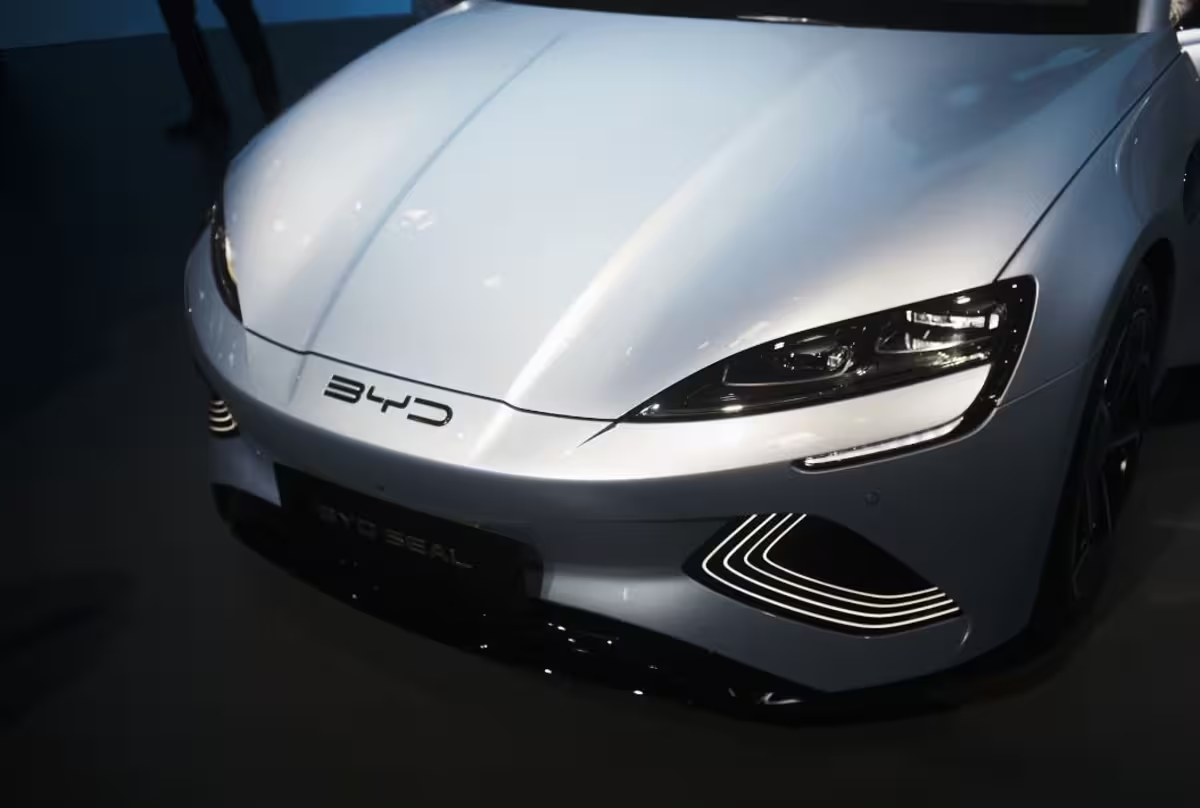
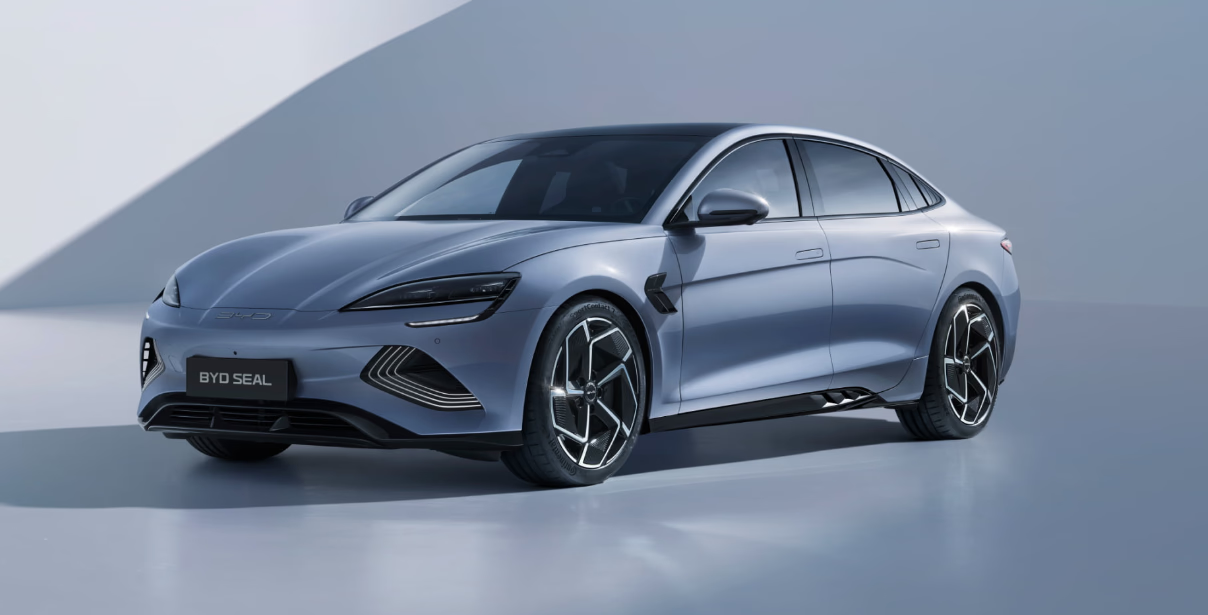
Start with the company that did the unthinkable. In 2025 BYD sold roughly 2.26 million pure-electric cars worldwide, edging past Tesla's 1.64 million, and once you fold in plug-in hybrids its total sailed past 4.5 million vehicles. That is close to one in five electric cars sold anywhere on the planet wearing a BYD badge.
What makes BYD dangerous is not a single hero model; it is what sits underneath all of them. BYD did not start as a carmaker. It began in the 1990s as a battery company, and it still makes its own cells, its own motors, and increasingly its own chips. The Blade battery, its in-house lithium-iron-phosphate pack, lets it build genuinely affordable EVs without depending on anyone else's supply chain or mercy. When you control the single most expensive part of the car, you can start a price war and survive it. Most of BYD's rivals cannot say that.
The newcomers who learned to make money
BYD is the giant, but the more interesting story is the swarm behind it. For years the Chinese EV startups were a punchline of their own at home: clever cars, beautiful showrooms, and balance sheets that bled red ink by the billion. In 2025 that flipped. Four of them (XPeng, NIO, Li Auto and Xiaomi) strung together profitable quarters, a milestone the industry quietly calls "crossing the survival threshold."
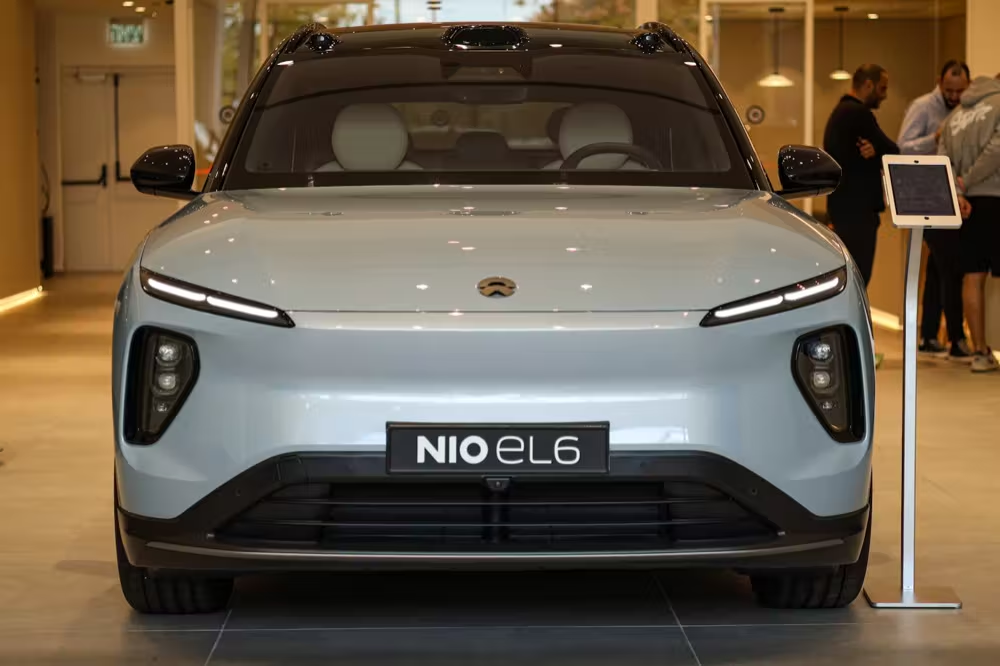
The breakout was Xiaomi. Yes, the phone company. Its SU7 sedan and YU7 SUV helped it sell roughly 412,000 cars in its first full year, a 200 percent jump, and it turned its first quarterly profit before most people had finished doubting it. We tell the full Xiaomi SU7 story in a dedicated deep dive. Founder Lei Jun ran the launch like a smartphone keynote, and YU7 pre-orders reportedly cleared 200,000 in three minutes. Stellantis-backed Leapmotor quietly became the top-selling startup with nearly 600,000 cars. XPeng more than doubled its volume on the strength of cut-price driver-assistance tech. NIO, famous for swapping a depleted battery for a full one in minutes, set a delivery record and finally crossed into the black, even while missing its own ambitious target.
It was not all triumph. Li Auto, the startup that reached profit first, went backwards in 2025, deliveries down nearly nineteen percent as its range-extender formula lost its novelty, and it started shuttering stores. Zeekr, Geely's slick premium brand, missed its target badly and was folded back into its parent. The lesson is brutal and clarifying: in China, being good is no longer enough.
| Brand | 2025 deliveries | vs 2024 | The story in one line |
|---|---|---|---|
| BYD | ≈ 4.5 million* | +5% | World's #1 EV maker; passed Tesla on pure EVs |
| Leapmotor | ≈ 590,000 | +100% | Top-selling startup; Stellantis-backed |
| XPeng | ≈ 430,000 | +125% | Cheap, genuinely good driver assistance |
| Xiaomi | ≈ 412,000 | +200% | Phone giant's blockbuster debut year |
| Li Auto | ≈ 405,000 | −19% | First to profit, then stumbled |
| NIO | ≈ 320,000 | +45% | Battery-swap pioneer; record year, first profit |
| Zeekr | ≈ 220,000 | ≈ flat | Missed its target; folded back into Geely |
*BYD's total includes plug-in hybrids; roughly 2.26 million were pure electric. Figures are rounded full-year 2025 deliveries.
How they got so fast
The number that should worry Detroit and Wolfsburg is not a sales figure. It is the calendar. Chinese brands now design, engineer and launch a new model in roughly half the time a Western automaker takes, sometimes eighteen months against three or four years. They iterate like consumer-electronics firms, partly because many of their engineers came from exactly that world.
Three things make it possible. First, vertical integration: when you own the battery, the software and half the supply chain, you are not waiting on a committee of suppliers to agree on anything. Second, a ferociously deep components ecosystem at home, anchored by battery giant CATL, that can prototype almost anything in weeks. Third, a culture that treats the car as a device to be updated rather than a monument to be perfected. The result is cabins full of screens, sharp voice assistants and driver-assist features that feel a generation ahead, even when the underlying engineering is merely good.
The bloodbath at home
None of this is as healthy as the growth charts suggest. China built far more EV capacity than even China can absorb; by late 2025, estimates of surplus capacity ran as high as twenty million cars a year against domestic demand of roughly half that. More than a hundred EV brands are still scrapping for the same buyers, and the weapon of choice is price.
The discounting has been savage. Industry-wide EV discounts hit record levels, and even BYD slashed prices across two dozen models to clear inventory, dragging everyone's margins down with it. Beijing has openly admitted the market cannot support a hundred brands, which is officialese for "most of you will not be here in five years." A wave of consolidation, quiet bankruptcies and acquisitions is coming. It also explains the export push better than any slide deck: when you have built factories for twenty million cars and your own people will only buy ten, the rest of the world is not an opportunity. It is a pressure valve.
Europe is the next battleground
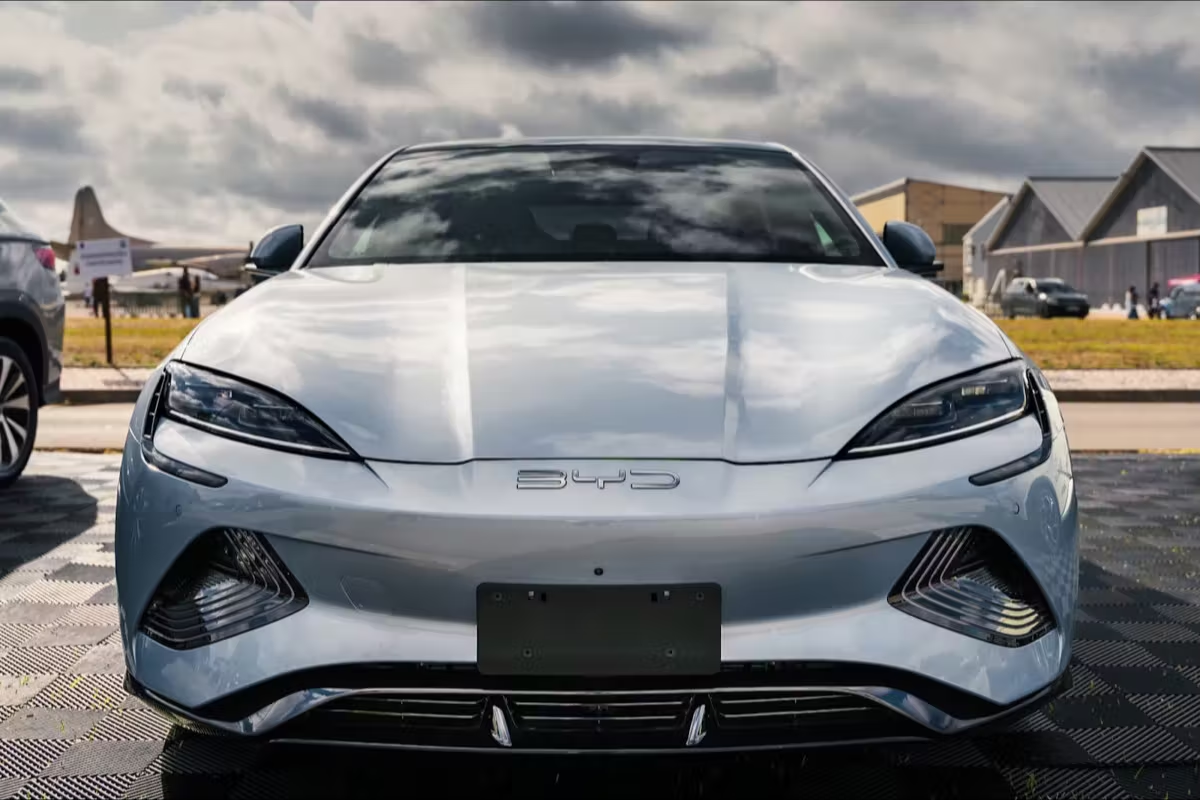
Which brings the story to a parking lot near you. Chinese brands went from about one percent of Europe's EV market at the turn of the decade to nearly ten percent by late 2025, and in some months BYD outsold Tesla on the continent. Brussels noticed. In late 2024 the EU imposed countervailing tariffs on Chinese-built EVs, averaging around twenty-one percent on top of the existing ten, calibrated to how much state help each company was judged to have received, roughly seventeen percent for BYD, more than thirty-five for SAIC's MG.
The tariffs split Europe (only ten of twenty-seven member states actually backed them) and they have not worked the way anyone intended. Chinese brands simply absorbed part of the cost, flooded the market with plug-in hybrids that the duties do not touch, and accelerated the one move that makes the tariffs irrelevant: building factories inside Europe. BYD is pouring billions into a plant in Hungary and fast-tracking another in Turkey, with the stated goal of building every European car locally by the end of the decade. The tariff bought European manufacturers time. It did not buy them safety.
What it means for the rest of us
For buyers, this is mostly very good news. Relentless Chinese competition is the biggest single reason a decent EV now costs what it does, and the pressure is forcing legacy makers to cut prices, simplify their software and stop treating electric cars as luxury science projects. The cars themselves are no longer a compromise; the better Chinese EVs are genuinely excellent, not "good for the money."
There are real caveats, and we will not pretend otherwise. Long-term reliability and resale values for brands that did not exist five years ago are still an open question. There are legitimate concerns about data and security when a connected car phones home to servers under another government's jurisdiction. And a price war this violent always ends with orphaned owners whose brand simply vanished. Buy the company as carefully as you buy the car.
The EV-Global Verdict
The China shock is real, and it is permanent. This is not a subsidy mirage that evaporates the moment the cheques stop; it is a genuine, structural lead in cost, speed and battery supply that the West spent a decade pretending was not happening. Tariffs and security reviews are rational, but they are a delaying tactic, not a strategy. You do not out-legislate a competitor who can build a better car faster and cheaper. You either match them or you cede the volume that funds your own future.
That said, do not mistake the swarm for a hundred winners. The coming consolidation will be merciless, and most of today's logos will be gone or absorbed within a few years. Our advice is the same we would give about any gold rush: admire the energy, buy from the handful with the balance sheet to survive (BYD plainly, a few others probably) and watch the next two years closely. The question is no longer whether China leads the electric car. It is who, in the West, is still standing when the dust settles.
Chinese EVs: frequently asked questions
Are Chinese electric cars any good?
The best now match or beat Western rivals on technology, range and value, which is why they are selling fast in Europe and beyond. Quality has improved dramatically, though long-term reliability records are still young.
Which Chinese EV brands are coming to Europe?
BYD leads the push, joined by names like XPeng, NIO, Leapmotor (with Stellantis) and MG, which is Chinese-owned. They are expanding dealer networks and even building factories inside Europe.
Why are Chinese EVs so cheap?
Massive scale, in-house batteries and a fierce domestic price war let Chinese makers undercut rivals. To protect its industry, the EU has added tariffs on Chinese-built EVs, which is pushing brands to build locally.
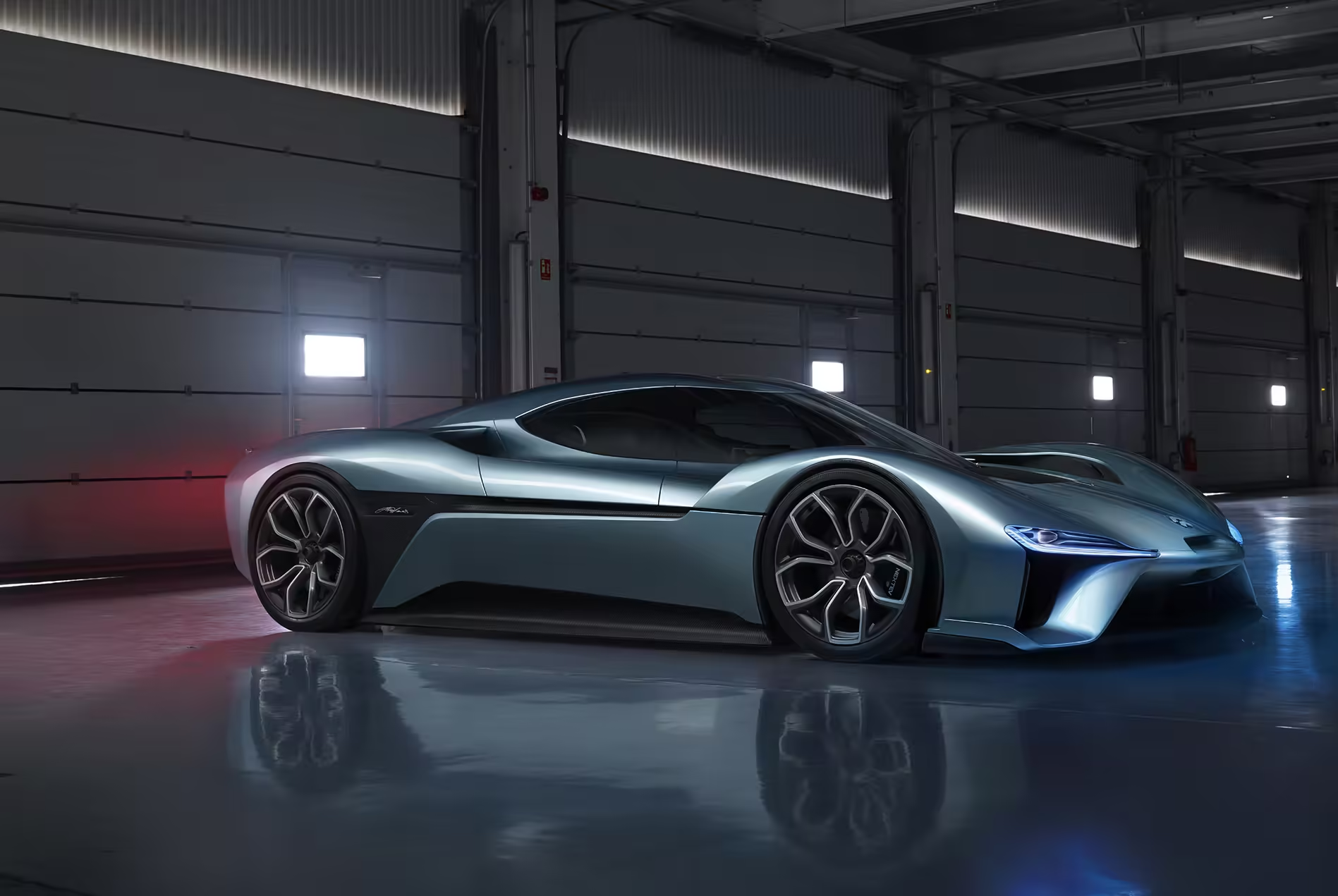
Photos via Unsplash: BYD electric sedan and NIO EL6. Resized and converted to AVIF.