Lucid Makes the Best EV Tech in the Business. It Is Also Fighting to Survive
What is Lucid Motors? Lucid is a California EV maker, majority-owned by Saudi Arabia's Public Investment Fund, that builds the most efficient electric cars on sale. The Air sedan goes up to 512 miles on a charge and the new Gravity SUV up to 450, both on a 900-volt architecture that out-engineers Tesla on paper. The catch is brutal: Lucid still loses money on nearly every car it sells and depends on Saudi cash to keep the lights on.
Put a Lucid engineer and a Tesla engineer in a room, and the Lucid one usually wins the physics argument. Lucid's cars extract more miles from every kilowatt-hour than anything else on the road, they charge on an architecture most rivals are still catching up to, and the Air Sapphire will embarrass supercars off a stoplight. And yet the company that builds them is one of the shakiest names in the industry, kept alive by a nine-billion-dollar-and-counting bet from Saudi Arabia. Lucid is the clearest case in the EV world of great engineering and a hard business colliding. Here is what it builds, why the tech is genuinely ahead, and whether it makes it to the other side.
The pitch: efficiency as a superpower
Most EV makers chase range the expensive way, by stuffing in a bigger battery. Lucid chases it the hard way, by wasting less. Its cars are the efficiency leaders of the industry, with the base Air returning around 5 miles per kWh where a typical electric SUV manages 2.5 to 3. That comes from obsessive aerodynamics (the Air's drag coefficient drops as low as 0.197 Cd, among the slipperiest shapes ever put into production) and from motors and power electronics Lucid designed in-house to be small and power-dense.
Why does efficiency matter to you and not just to an engineer? Because it compounds. A more efficient car needs a smaller battery for the same range, which means less weight, lower cost per mile, and faster charging, since you are refilling fewer kilowatt-hours to go the same distance. Efficiency is the quiet metric that beats raw battery size, a point we made in why 800V architecture matters and in the truth about EV range anxiety. Lucid built its whole brand on it.
The Air: a sedan that shames the range chart
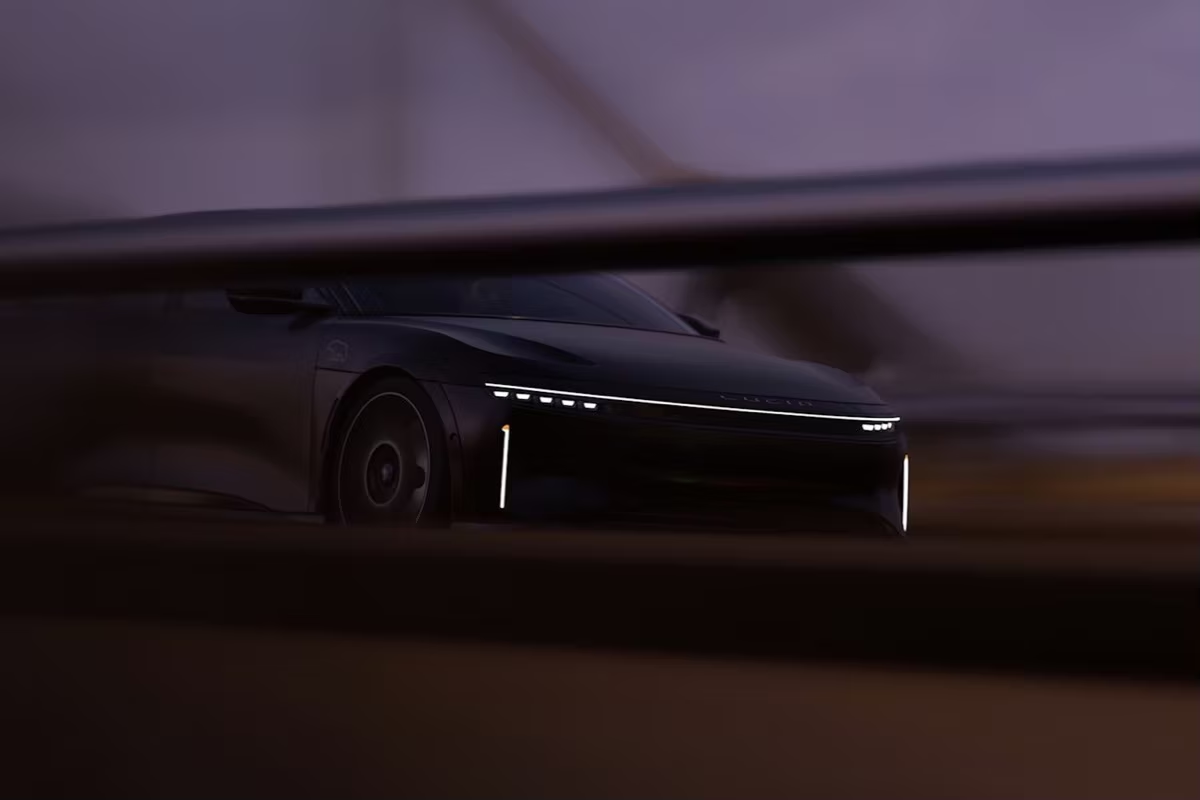
The Air is Lucid's calling card, an Accord-sized footprint on the outside with limousine space inside, and a range chart nobody else touches.
| Air trim | Price (from) | Power | EPA range |
|---|---|---|---|
| Pure | $70,900 | 430 hp | 420 mi |
| Touring | $79,900 | 620 hp | 431 mi |
| Grand Touring | ~$110,000 | 819 hp | 512 mi |
| Sapphire | $249,000 | 1,234 hp | track-focused |
The Grand Touring's 512 miles is the headline: no other EV on sale clears 500 on a single charge. The Sapphire is the other extreme, a 1,234-hp super-sedan that runs with cars costing three times as much. In between, the Pure and Touring are the ones that make the efficiency case in plain numbers, because they deliver 420-plus miles from batteries smaller than what rivals need for less range. Inside, you get a 34-inch curved Glass Cockpit display, a 21-speaker Dolby Atmos system, and the DreamDrive driver-assist suite.
The Sapphire's 920 kW set the mark Tesla had to answer in a sedan; the answer is a two-seater, the 2026 Roadster, and it arrives in 2028 at the earliest.
Tap between range and efficiency. Lucid holds the number-one sedan and SUV range figures and does it with smaller batteries than most rivals, so it wins on efficiency too. EPA figures, top trim of each model, approximate.
The Gravity: the car Lucid bet the company on
The Air proved Lucid could engineer. The Gravity has to prove Lucid can sell. It is a large luxury electric SUV, five seats standard and up to seven with a third row, and it is where the real money is, because the market wants SUVs, not sedans.
| Gravity trim | Price (from) | Power | Range | Tow |
|---|---|---|---|---|
| Touring | $81,750 | 560 hp | 337 mi | 3,500 lb |
| Grand Touring | $100,750 | 828 hp | 450 mi | 6,000 lb |
The Grand Touring's 450 miles again leads its class, and the numbers around it are just as serious: 400 kW charging, a native NACS port for the Tesla Supercharger network, and up to 6,000 pounds of towing. The 2026 addition of the lower-priced Touring trim is the important move, because it drops the entry point and widens the audience. Lucid has said the "vast majority" of its 2026 output will be Gravity, with Air deliveries staying flat. In other words, this SUV is not a side project. It is the plan.
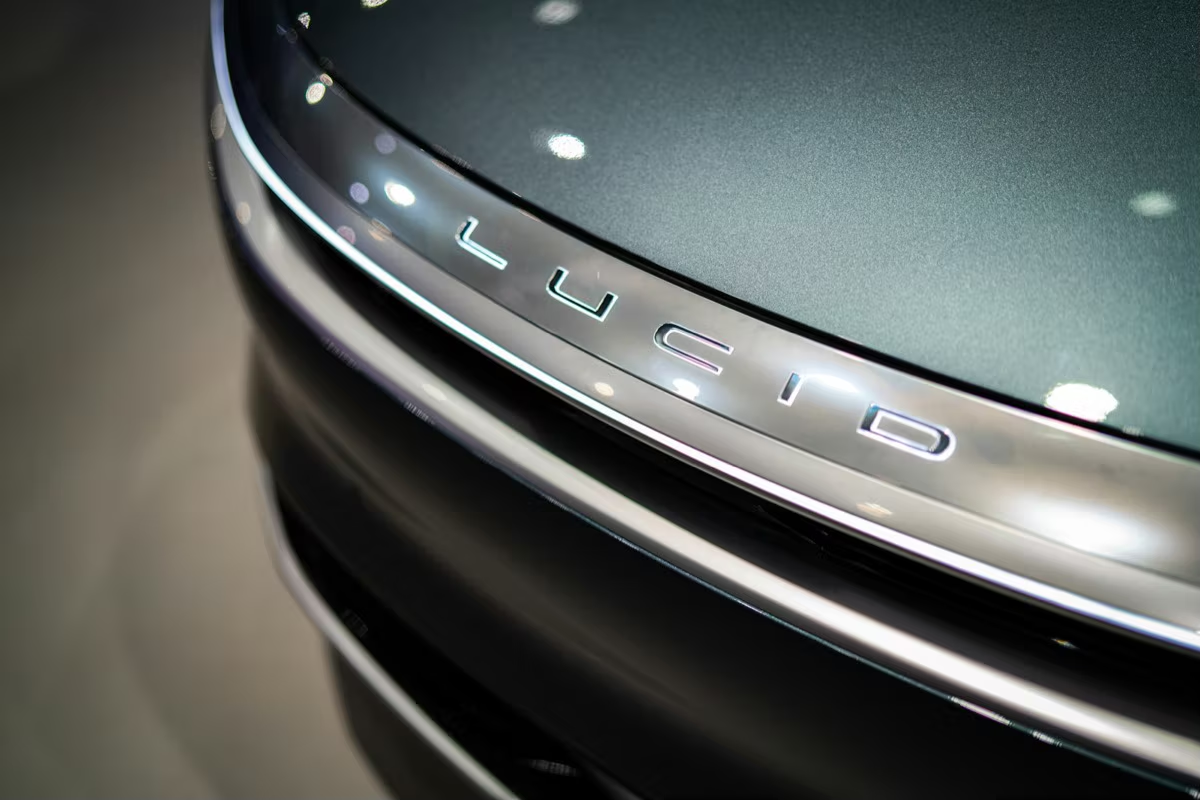
Lucid designs its motors, inverters and software in-house, which is how it leads on efficiency. Photo: Oxana Melis / Unsplash.
The tech that makes it work
Strip away the styling and Lucid's advantage is under the floor. The motors are the story: compact, extremely power-dense units the company builds itself, which is how it fits 819 horsepower and 512 miles into one car. The 900-volt-plus architecture means faster charging with thinner, lighter cables and less heat, and it can add around 200 miles in roughly 12 minutes on a fast enough charger. Its "Wunderbox" onboard unit handles charging flexibly across different stations and even enables vehicle-to-load style tricks. And by adopting NACS, Lucid handed its owners the Supercharger network, closing the one gap where Tesla used to win outright. If you want to sanity-check what any of this means for a real trip, our EV range calculator and guide to the NACS plug put the numbers in your own terms.
The business reality nobody can ignore
Now the hard part. Lucid is a fantastic engineering company attached to a struggling business. It loses money on close to every car it sells, its stock fell roughly 64% over the past year (from about $25 to a 52-week low near $8.32), and it survives on Saudi Arabia's Public Investment Fund, which has poured in more than $9 billion since 2018 and added another $750 million in late June to fund a restructuring. A new CEO, Silvio Napoli, took over on June 1 and is cutting hard. This is not a company coasting on a good product; it is one racing to reach scale before the cash runs low again.
The real prize is still one product away. Lucid's future volume depends on a mid-size platform, cars expected to land nearer $50,000, aimed squarely at the Tesla Model Y and the mainstream. If Lucid can bring its efficiency edge down to that price, it has a business. If the Gravity ramp stumbles or the midsize cars slip, the Saudi lifeline is the only thing between Lucid and the fate of every EV startup that had great cars and ran out of runway. It is the same survival question we asked of Rivian and its make-or-break R2, and Lucid is a year or two behind on answering it.
So should you care about a Lucid?
Yes, on the engineering alone. If you want the longest-range, most efficient, best-charging EV you can actually buy today, Lucid builds it, and the Gravity is the one most people should look at: real range, real space, Supercharger access, and genuinely class-leading tech. The asterisks are the ones you attach to any young automaker. The service and dealer network is thin compared to Tesla's, resale value is uncertain while the company's future is, and buying from a manufacturer that leans on outside cash carries a risk a Toyota does not. Our take: the Gravity is the best-engineered electric SUV on sale, and if that excites you more than it worries you, it is a car worth driving. Just go in knowing you are backing a company still fighting for its life, and keep an eye on that midsize platform, because it is the thing that decides whether Lucid is a footnote or a force. For where it sits against the field, see our ranking of the best electric cars to buy right now.
Recommended EV charging gear
Advertising / affiliate links: as an Amazon Associate, EV-Global earns from qualifying purchases. Prices and availability are set by Amazon; links open in a new tab.
Whatever you drive, a home Level 2 charger is the first thing to sort out, and Lucid now supports the NACS plug, so most work with a simple adapter.
On AmazonHome Level 2 chargersFaster overnight charging at the cheapest home rate.Lucid Motors: frequently asked questions
What is Lucid Motors?
A California EV manufacturer, majority-owned by Saudi Arabia's Public Investment Fund, known for building the most efficient, longest-range electric cars on sale: the Air sedan and the Gravity SUV.
What is the range of the Lucid Air?
From 420 miles on the base Pure to 512 miles on the Grand Touring, the longest range of any EV currently on sale. The Touring sits at 431 miles.
How much does the Lucid Gravity cost?
The Gravity Touring starts around $81,750 and the Grand Touring around $100,750. A third row adds about $2,900. The Grand Touring is rated at 450 miles.
Is Lucid better than Tesla?
On efficiency, range, and charging architecture, Lucid's engineering is ahead. Tesla wins on price, scale, software, service network, and financial stability. They are aimed at different buyers.
Can a Lucid use Tesla Superchargers?
Yes. The Gravity ships with a native NACS port, and the Air gains Supercharger access via an approved adapter, so Lucid owners can use the Tesla network.
Is Lucid going out of business?
Not imminently, but it loses money and relies on repeated Saudi PIF funding to operate. Its survival hinges on the Gravity ramp and a coming lower-cost midsize platform.
Photo: Jacob Shinas / Unsplash. Resized and converted to AVIF.