The Best Electric Cars to Buy in 2026: Our Top 10, Ranked
What is the best electric car to buy in 2026? For most people the Tesla Model Y, now from $39,990 with 321 miles of range, Supercharger access and the deepest used market. The Hyundai Ioniq 5 is the value and charging champion after its $9,800 price cut, the Chevrolet Equinox EV is the best crossover under $37,000, and the new Nissan Leaf puts 303 miles under $30,000. At the top, Lucid's Gravity and BMW's iX3 set the range benchmarks. Every car below is ranked on what it costs to buy and live with now that the federal credit is gone.
This article contains affiliate links. As an Amazon Associate, EV-Global earns from qualifying purchases.
Two things changed since our last ranking. The $7,500 federal credit died on September 30, 2025, which turned every sticker price into the real price overnight, and the industry answered with the biggest wave of EV price cuts and new entry models it has ever produced. A 300-mile electric car now starts under $30,000, native NACS ports make the Supercharger network standard equipment, and 800-volt charging has trickled down from Porsche to Hyundai. This is our pick of the ten best electric cars you can actually buy in the United States in autumn 2026, ranked on price, range, charging, everyday usability and how well each is likely to hold its value. Every entry says who it is for and what the catch is. European readers: your market looks different, and our German edition ranks it separately.
How we ranked them
Five things, in this order. Value: what you get for the sticker now that there is no credit to subtract. Range and charging: EPA miles and the real time of a 10 to 80% stop, because the second number decides road trips. Usability: space, controls, driver assistance and whether the car asks you to change your life. Ownership: warranty, efficiency, battery data and resale. And finally the car itself, because an EV that is boring to drive will be sold early. We did not rank on 0 to 60 times; every car here is quick enough.
Switch to starting price and the chart flips: the two cheapest cars in the list both clear 300 miles, which was unthinkable two years ago. Prices are US starting MSRPs in October 2026, destination charges vary by brand.
1. Tesla Model Y
From $39,990 · 294 to 357 miles EPA · 250 kW charging · Supercharger network
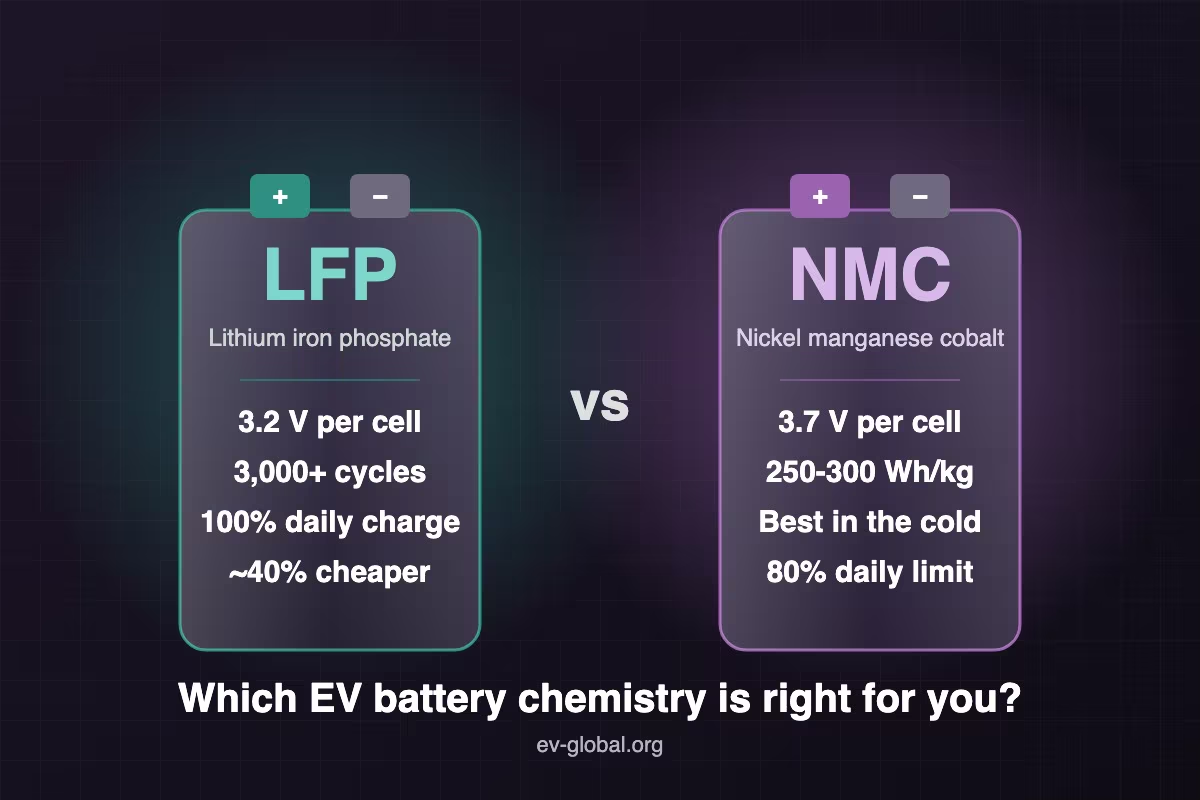
The Model Y is still the default EV for a reason, and the 2026 line-up made the reason cheaper. The new Standard trim starts at $39,990 with 321 miles of range and an LFP battery that likes being charged to 100% every night; the Premium rear-drive car stretches to 357 miles. You get the Supercharger network without an adapter, the best software in the business, the strongest resale values in the segment and the deepest used market when you sell. The 2025 facelift fixed the ride that made early cars tiring. The catches are a cabin that is still more tablet than car, build quality that varies by factory and week, and a brand that polarises dinner tables. We explain the chemistry split between the trims in LFP vs NMC.
Who it is for: anyone who wants the least-compromised electric car and does not want to think about charging on a road trip.
Pros:
- Supercharger access and Plug and Charge, no adapter
- Standard trim under $40,000 with 321 miles
- Best resale values and used market in the class
Cons:
- Minimalist cabin, few physical controls
- Build quality still inconsistent
- Ride is firm on 20-inch wheels
2. Hyundai Ioniq 5
From $35,000 · up to 318 miles EPA · 800-volt, 10 to 80% in 18 minutes · native NACS port
When the credit ended, Hyundai cut the Ioniq 5 by up to $9,800, and the car it already was became a bargain: an 800-volt platform that charges from 10 to 80% in about 18 minutes, a flat-floored cabin that feels a class bigger than its footprint, and from the 2025 facelift a native NACS port and a larger 84 kWh battery. It tops Aviloo's battery-health rankings of popular used EVs, which bodes well for the long term. The XRT trim adds a little off-road attitude. Its sins are a flat seating position for tall drivers, a charging-unit recall that must be done, and range that drops faster than a Tesla's at motorway speed. Read why its voltage matters in 800-volt charging explained.
Who it is for: the buyer who wants the fastest charging and the most car for the money below $45,000.
Pros:
- Fastest charging under $50,000
- Huge cabin and clever packaging
- Price cuts of up to $9,800 for 2026
Cons:
- Motorway efficiency is only average
- ICCU recall history on early cars
- Seats sit high for tall drivers

3. Chevrolet Equinox EV
From $36,495 · 307 to 319 miles EPA · 150 kW charging · Super Cruise available
GM made the car the market asked for: a conventional compact crossover with 319 miles of range for $36,495, no gimmicks, and a cabin with an actual gear selector and climate buttons. Super Cruise, the best hands-free motorway system you can buy, is available. It is quiet, roomy and cheap to run. Charging is the weak spot: 150 kW on a 400-volt pack means 30-plus minutes for a 10 to 80% stop, the 2026 cars still need GM's NACS adapter for Superchargers, and the infotainment leaves out Apple CarPlay by design. As a daily driver that charges at home it is close to unbeatable at the price.
Who it is for: families who want a normal-looking, normal-driving crossover with 300-plus miles for the price of a petrol one.
Pros:
- 319 miles for under $37,000
- Conventional, comfortable, family-sized
- Super Cruise hands-free driving
Cons:
- Slow 150 kW fast charging
- No CarPlay or Android Auto
- NACS adapter needed until 2027 models
4. Nissan Leaf (2026)
From $29,990 · up to 303 miles EPA · 150 kW charging · native NACS port
The third-generation Leaf is the biggest value shift of 2026. Nissan threw away the old hatchback, the air-cooled battery and the CHAdeMO plug, and built a sleek crossover on the Ariya's platform with a liquid-cooled 75 kWh pack, 303 miles of range on the S+ and a native NACS port. At $29,990 it is the cheapest 300-mile EV America has ever had. It is not fast, 150 kW charging is merely adequate, and the base trim is sparse. None of that matters at this price. For context on why the old Leaf's battery was a problem and this one is not, see how long EV batteries last.
Who it is for: anyone who thought a proper electric car was still out of reach.
Pros:
- 303 miles for under $30,000
- Liquid-cooled battery at last, native NACS
- Efficient and quiet
Cons:
- Modest performance
- 150 kW charging
- Base trim is basic
5. Kia EV9
From $56,395 · 230 to 304 miles EPA · 800-volt, 10 to 80% in about 24 minutes · three rows
The EV9 remains the only three-row EV that combines genuine third-row space, 800-volt charging and a price that starts under $60,000 after Kia's 2026 cuts. It drives like a smaller car than it is, the cabin is thoughtful down to the seat-back table, and the Land trim with the long-range battery gets 280 miles with all-wheel drive. The base Light SR trim is a false economy at 230 miles. The three-row Hyundai Ioniq 9 is the same car in a different suit; the Kia is cheaper to get into.
Who it is for: the family that needs seven real seats and will not accept a minivan.
Pros:
- Real seven-seat space
- 800-volt charging in a family bus
- Up to 304 miles
Cons:
- Base trim range is short
- Big and heavy in town
- Options climb past $70,000 quickly
Recommended EV charging gear
Advertising / affiliate links: as an Amazon Associate, EV-Global earns from qualifying purchases. Prices and availability are set by Amazon; links open in a new tab.
Whichever car you pick, the first purchase is the same: a way to charge cheaply at home, a portable backup for the road, and a meter that shows what a charge really costs.
On AmazonHome Level 2 chargersFaster overnight charging at the cheapest home rate. On AmazonPortable EV chargersA compact backup for trips and emergencies. On AmazonPlug-in energy monitorsTrack real running costs once your new EV arrives.6. Rivian R2
From $57,990 (launch trim) · 314 to 335 miles EPA · 210 kW charging · native NACS
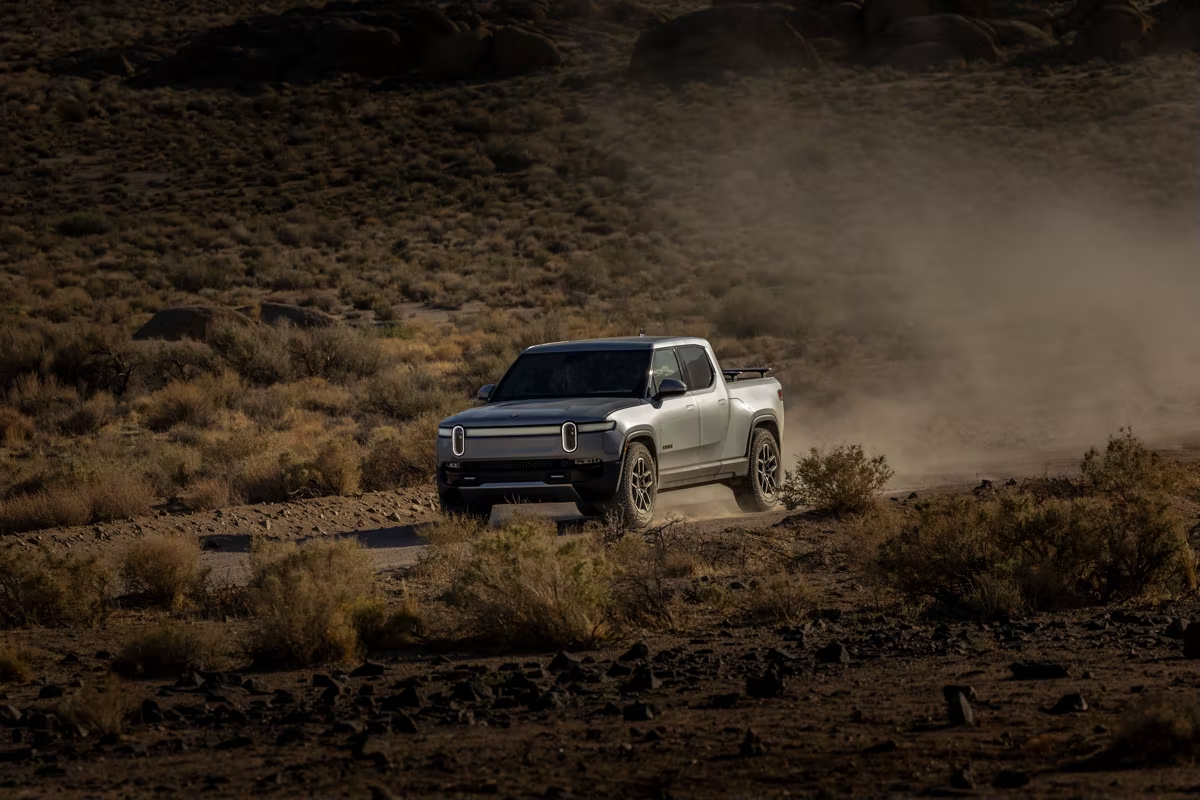
The R2 reached customers in June 2026 and it is the car that decides whether Rivian survives. Launch cars are the 656 hp Performance at $57,990 with an EPA range of 335 miles on 21-inch wheels; the $53,990 Premium follows late this year and the rear-drive Standard, the one that will start around $46,500, in 2027. What you get is Rivian build quality in a Model Y-sized package, 4,400 lb towing, a native NACS port and the most likeable interior in this list. The catch is timing: buy now and you pay the top price, wait and you get the bargain. Our Rivian R2 deep dive has the full trim calendar.
Who it is for: the buyer who wanted an R1S but not the R1S price, and who can wait for the cheaper trims.
Pros:
- Rivian quality and off-road ability at Model Y size
- Native NACS, 4,400 lb towing
- Cheaper trims coming in 2027
Cons:
- Only the $57,990 Performance is on sale now
- Rivian is still burning cash
- Service network is thin outside the coasts
7. BMW iX3 50 xDrive (Neue Klasse)
From $61,500 · 383 to 434 miles EPA · 800-volt, 400 kW charging · on sale from September 2026
The first Neue Klasse car is the most advanced EV on sale at its price. An 800-volt platform with 400 kW charging adds about 230 miles in ten minutes, the cylindrical cells and magnet-free rear motor cut energy losses by 40% against the old iX3, and the EPA rates it at up to 434 miles. The cabin's Panoramic Vision strip replaces the gauge cluster with a projection along the base of the windscreen, which sounds like a gimmick and is not. Early build, new software and BMW option pricing are the risks. We cover the engineering in BMW's Neue Klasse explained and the motor in how an electric car motor works.
Who it is for: the premium buyer who wants the newest technology on the market and a car that will not feel old in 2030.
Pros:
- Up to 434 miles and 400 kW charging
- Magnet-free, highly efficient drivetrain
- The most modern interior on sale
Cons:
- First-year car with all-new software
- Options push it well past $70,000
- Deliveries only started in September 2026
8. Lucid Gravity
From $81,550 · 337 miles (Touring) to 450 miles (Grand Touring) EPA · 900-volt, 400 kW charging · native NACS
Nothing else on sale goes further on a charge. The Grand Touring is EPA-rated at 450 miles, charges at up to 400 kW and seats seven, and the 2026 Touring trim brought the entry price down to $81,550 with 337 miles. Lucid's in-house motors and 900-volt electronics make it the efficiency king, a point we unpack in our Lucid Motors guide. The asterisk is the company: Lucid is losing money on every car, lives on Saudi funding and had a new chief executive in June. The product is superb; the brand is a bet.
Who it is for: the family that wants the longest-range SUV money can buy and accepts the risk of a young manufacturer.
Pros:
- 450 miles of EPA range, class leading
- Supercharger access via native NACS
- Seven seats and a vast cabin
Cons:
- Premium price even in Touring form
- Thin service network
- Manufacturer risk is real
9. Porsche Macan Electric
From $80,350 · 288 to 315 miles EPA · 800-volt, 10 to 80% in 21 minutes · 270 kW charging
Two years in, the Macan Electric has grown into the driver's choice of the segment. The rear-drive base car now does 315 miles, the 800-volt PPE platform charges at 270 kW, and the chassis makes a 2.3-tonne SUV feel smaller than a Model Y at speed. The 2026 cars gained better driver assistance and a usable infotainment update. Options are brutal, the Turbo costs $111,850, and residual values on electric Porsches have been soft, which is why our Macan Electric review still leans toward leasing one.
Who it is for: the driver who wants the best-handling electric SUV and is prepared to pay Porsche prices for it.
Pros:
- Best steering and body control in the class
- 800-volt charging, 21-minute stops
- Four trims from 335 to 576 hp
Cons:
- $80,350 before a single option
- Soft residuals on early cars
- Rear seat is tight for the size
10. Tesla Model 3
From $38,380 · 321 to 363 miles EPA · 250 kW charging · Supercharger network
The only sedan in our ten earns its place on efficiency. The Model 3 Standard starts at $38,380 with 321 miles, the Premium rear-drive car is rated at 363 and the Performance does 0 to 60 mph in 2.9 seconds for $56,380. It is the most efficient car on this list, which means the cheapest to charge, and the 2026 update finally returned a turn-signal stalk. Against it: the cabin is austere, the ride is firm, and sedans are out of fashion. Our Model 3 business case explains why it still sells regardless.
Who it is for: the sedan buyer who values efficiency and software over ride height.
Pros:
- Most efficient car in the ranking
- Supercharger network, strong software
- Performance trim is a genuine sports sedan
Cons:
- Austere cabin
- Firm ride
- Lower seating and smaller boot than a crossover
The top 10 side by side
| Rank | Car | From | Best EPA range | 10 to 80% charge | Best for |
|---|---|---|---|---|---|
| 1 | Tesla Model Y | $39,990 | 357 mi | ~27 min | Doing everything well |
| 2 | Hyundai Ioniq 5 | $35,000 | 318 mi | ~18 min | Value and fast charging |
| 3 | Chevrolet Equinox EV | $36,495 | 319 mi | ~32 min | Family crossover on a budget |
| 4 | Nissan Leaf | $29,990 | 303 mi | ~35 min | Cheapest real-range EV |
| 5 | Kia EV9 | $56,395 | 304 mi | ~24 min | Three rows |
| 6 | Rivian R2 | $57,990 | 335 mi | ~29 min | Adventure in Model Y size |
| 7 | BMW iX3 | $61,500 | 434 mi | ~21 min | Newest technology |
| 8 | Lucid Gravity | $81,550 | 450 mi | ~20 min | Maximum range |
| 9 | Porsche Macan Electric | $80,350 | 315 mi | ~21 min | Driving pleasure |
| 10 | Tesla Model 3 | $38,380 | 363 mi | ~27 min | Efficient sedan |
Starting prices are US MSRPs in October 2026 and exclude destination charges where the maker lists them separately; charging times are typical 10 to 80% stops on a charger that can deliver the car's peak.
Best electric car by use case
- Best overall: Tesla Model Y. Best value: Hyundai Ioniq 5. Best under $30,000: Nissan Leaf.
- Best family car: Kia EV9 for three rows, Chevrolet Equinox EV for two. Best long-distance car: Lucid Gravity, then BMW iX3.
- Best to drive: Porsche Macan Electric. Best for towing and trails: Rivian R2.
- Best used buy: a two- to four-year-old Model Y, Ioniq 5 or Bolt with a verified battery, see our used EV buying guide.
The ones that just missed
The Ford Mustang Mach-E, from $37,795, remains a good car and is often heavily discounted, but 260 miles in base form and 400-volt charging left it behind the Equinox EV. The Cadillac Optiq, from $52,395 with a native NACS port and up to 317 miles, is the best-looking premium crossover in the price band. The Kia EV6, the Hyundai Ioniq 9, the Honda Prologue and the Volvo EX30 are all worth a test drive, and the Chevrolet Bolt returns in early 2026 at about $29,000 as a city-car bargain if you can live with 255 miles and slow charging.
What changed since our 2024 list
Our 2024 ranking was led by the Lucid Air and the Model S Plaid, cars most readers were never going to buy. The 2026 market is different in four ways. The credit is gone, so our prices are real prices; read what is left of the EV tax credit if you are still budgeting for it. Entry prices collapsed, with the Leaf, Equinox EV and Ioniq 5 all under $37,000. The plug war is over: every new car here either has a native NACS port or ships an adapter, as we explain in how Tesla's plug won. And 800-volt charging moved from Porsche to Hyundai, Kia, BMW and Lucid, which makes the Equinox and the Model Y the only cars in the ten that still charge the old way. The one thing that has not changed is the advice to check the winter range and the running costs for your own situation before you sign, which our savings calculator does in a minute.
The EV-Global verdict
If you want one answer, buy the Model Y Standard: it is the car the rest of the list is measured against, and it has never been cheaper. If you want the smartest answer, drive the Ioniq 5 and the Equinox EV back to back and keep the $5,000 you save. If you want the best car regardless of price, the iX3 is the new benchmark and the Gravity is the range king. Whatever you choose, buy the battery chemistry and the charging speed that fit your worst regular week, not your average one, and remember that a new EV without a credit now competes against very good used ones. Our buy or lease and hybrid guides cover the two alternatives worth a look.
Best electric cars: frequently asked questions
What is the best electric car to buy in 2026?
For most buyers the Tesla Model Y, now from $39,990 with 321 miles of range and Supercharger access. The Hyundai Ioniq 5 is the best value after its price cuts, the Chevrolet Equinox EV the best family crossover under $37,000, and the Nissan Leaf the cheapest 300-mile EV at $29,990.
Which electric car has the longest range in 2026?
Among cars you can buy today, the Lucid Gravity Grand Touring at 450 EPA miles and the Lucid Air Grand Touring at 512. The BMW iX3 50 xDrive follows at up to 434 miles, and the Tesla Model 3 Premium leads the mainstream at 363.
What is the cheapest electric car with 300 miles of range?
The 2026 Nissan Leaf S+ at $29,990 with 303 EPA miles, followed by the Hyundai Ioniq 5 from $35,000 with up to 318 miles and the Chevrolet Equinox EV from $36,495 with 319 miles.
Is there still a tax credit for buying an electric car?
No federal one. The $7,500 new and $4,000 used clean vehicle credits ended on September 30, 2025. Several states and utilities still offer rebates, and the car-loan interest deduction applies to US-assembled vehicles, so check your local programmes.
Should I buy an 800-volt EV?
If you road-trip often, yes. The Ioniq 5, EV9, iX3, Gravity, R2 and Macan all use 800-volt or higher architectures and finish a 10 to 80% charge in about 18 to 29 minutes. If you charge at home and rarely fast charge, a 400-volt car like the Equinox EV or Model Y is fine.
Is a used EV a better buy than a new one in 2026?
Often. With no new-car credit, a two- to four-year-old Model Y, Ioniq 5 or Bolt with a verified battery above 90% health can undercut a new car by $15,000 or more. Our used EV buying guide explains how to check the battery and what to pay.
Photos: EV-Global archive and manufacturer press images, resized and converted to AVIF. Prices and ranges are US figures as of October 2026 and change often; confirm with the manufacturer before you buy.