
How to Buy a Used Electric Car in 2026: Battery Health, Prices and the Models Worth Buying
Is a used electric car a good buy in 2026? Yes, if the battery checks out. Used EV prices fell hard through 2025 and only started recovering this summer, so a three-year-old car typically sells for about half its original price. The deal stands or falls on three checks: a measured battery state-of-health report (90% or better is excellent for a three- to four-year-old car), written proof that the battery warranty transfers to you, and a price that reflects a new-car market in which the $7,500 federal credit no longer exists.
The best electric car deal of 2026 is parked on a used lot. Between 2022 and 2024, hundreds of thousands of EVs left showrooms on three-year leases because the leasing loophole passed the full federal credit into the monthly payment. Those cars are coming back now, all at once, into a market where the credit is gone and new-EV discounts are everywhere. The result is a buyer's market with one catch: an EV's value is mostly its battery, and you cannot judge a battery by looking at it. This guide shows you how to read the one number that matters, what to pay, which models have earned their reputation, and the red flags that should end a viewing early.
Why 2026 is the used EV's moment
Three forces lined up. First, supply: the lease returns described above, plus rental fleets selling off EVs after the Hertz experiment, flooded the market with 2022 and 2023 cars. Second, the new-car price war: when Tesla, Ford and Hyundai cut new prices by thousands, every used example repriced overnight. Third, the credit cliff: the $7,500 new and $4,000 used federal credits both ended on September 30, 2025, which pulled a wave of demand forward into last summer and left the autumn quiet.
The quiet did not last. iSeeCars' tracking of one- to five-year-old cars puts the average used EV at $33,305 in June 2026, up 7.4% on a year earlier after three straight monthly rises, while the wider used market slipped. Hyundai's Ioniq 5 led the recovery with prices up 9% in six months, followed by the BMW iX3, the Mustang Mach-E, the BMW i4 and both volume Teslas. Translation: the floor is in. The bargains have not vanished, but the era of a two-year-old Model 3 for the price of a Corolla is closing, and waiting another year is unlikely to help.
Europe runs a few months behind the same curve. In Germany, 2020 and 2021 Model 3s sit 40 to 50% below their original list price, a four-year-old VW ID.3 slips under 20,000 euros, and the cars subsidised by the old purchase premium in 2021 to 2023 are exactly the ones now arriving on dealer lots. Our German edition covers that market in its own Gebrauchtwagen guide.
The battery is the car: how to read state of health
State of health, or SoH, is the usable capacity of the pack today as a percentage of what it had when new. A 77 kWh battery at 90% SoH holds about 69 kWh, so a car rated at 300 miles when new now manages roughly 270 under the same conditions. That single number does more to set a fair price than mileage, age or service stamps, because it describes the one component that costs $5,000 to $20,000 to replace if it fails outside the warranty.
The reassuring part is how well most packs hold up. Aviloo, the Austrian testing firm whose database passed 500,000 battery tests this year, finds that cars at 150,000 km typically still have 87 to 94% of their original capacity, and Geotab's fleet data puts average loss at about 1.8% a year. The sobering part is the spread: Aviloo measured a 13.5% difference in health between identical models at the same mileage, and after 100,000 km the gap between the gentlest and the harshest owners can reach 30 points. A 60,000-mile car that charged at home on a wallbox can be healthier than a 30,000-mile car that lived on DC fast chargers in Phoenix. Ask how the car was charged, not just how far it went.
| SoH | What it tells you | What to do |
|---|---|---|
| 95-100% | Nearly new, or a replaced pack | Pay market price; confirm the pack is original or get the replacement documented |
| 90-94% | Normal for a three- to four-year-old car with gentle use | Buy with confidence |
| 85-89% | Normal for an older or harder-used car | Fair, but price it 5 to 10% under a 90%+ example |
| 80-84% | Noticeable range loss | Negotiate hard and check how much battery warranty is left |
| Below 80% | Heavy wear or a fault | Walk away unless the warranty will replace the pack |
Median values from Aviloo's 2026 study of more than 500,000 battery tests. Switch to 150,000 km and every bar drops only a few points, which is the whole story: mileage matters far less than the first owner's charging habits.
Recommended gear for a used EV purchase
Advertising / affiliate links: as an Amazon Associate, EV-Global earns from qualifying purchases. Prices and availability are set by Amazon; links open in a new tab.
Two things pay for themselves on the first viewing: a Bluetooth OBD2 reader that lets apps such as Car Scanner, LeafSpy or Scan My Tesla pull pack voltage, cell spread and state of health straight from the car, and, if you buy a non-Tesla car in the US, a NACS adapter that opens the Supercharger network from day one.
On AmazonBluetooth OBD2 scannersRead battery state of health and cell voltages before you pay. On AmazonNACS to CCS1 adaptersGive a used CCS car access to Tesla Superchargers.How to get the number
Four ways, in rising order of confidence.
- The car's own menu. Hyundai, Kia and Genesis show state of health in the EV service menu. VW's ID. cars give it up through the app or a dealer printout. Teslas hid it from owners for years; newer software offers a battery-health test in service mode that takes a night on a charger, so ask the seller to run it before you visit.
- A dealer printout. Franchised dealers can pull a battery report from the diagnostic tool. Ask for the sheet, not the verbal summary, and check the date on it.
- An OBD2 app. A $20 to $40 Bluetooth dongle and the right app give you pack SoH, cell-voltage spread and, on many cars, the lifetime split between AC and DC charging. A cell spread above about 100 millivolts at rest is a yellow flag; a single cell far from the others is a red one.
- An independent test. Aviloo's flash test takes a few minutes with a dongle and costs roughly 50 to 100 euros in Europe; its premium test logs a full discharge. In the US, Recurrent produces battery reports from a VIN for many models. Since June 2026 Aviloo even backs its result with a guarantee of up to 3,000 euros, which tells you how confident the testers have become.
Whichever route you take, write the SoH figure into the purchase contract. A seller who will not put the number on paper is telling you something.
Warranty transfer and recalls: the paperwork that protects you
Every EV sold in the US carries at least an 8-year or 100,000-mile battery warranty, and most makers promise to repair or replace the pack if capacity falls below 70% inside that window. California requires 70% retention for 10 years or 150,000 miles on 2026 and newer cars, and several brands apply that nationally. In Europe the norm is 8 years or 160,000 km, again at 70%. These warranties follow the car, not the first owner, with two caveats: a few brands shorten coverage for the second owner, and all of them void it for aftermarket battery work. Get the remaining term in writing from the dealer or the manufacturer's customer line, against the VIN.
Recalls can be a hidden bonus. The Chevrolet Bolt recall of 2021 to 2023 replaced the entire pack on most 2017 to 2022 cars, so a cheap Bolt may carry a battery younger than its odometer. Hyundai's Kona Electric recall did the same for many 2019 and 2020 cars. On the other side of the ledger, confirm that the Ioniq 5 and EV6 charging-unit (ICCU) campaign has been completed, and that any open Tesla campaigns show as closed. Every recall is searchable by VIN on the regulator's website, free, in two minutes.
What a fair price looks like in 2026
Used EV prices still move faster than petrol-car prices, so anchor on depreciation rather than on a single figure. The table shows where the market sits this autumn for clean, average-mileage examples. Treat the bands as a sanity check against at least ten live listings in your area, not as a price list.
| Model (years) | Typical asking price | Share of original price | Why |
|---|---|---|---|
| Tesla Model 3 (2021-2023) | $19,000-26,000 | ~45-55% | Supercharger access, LFP base cars, deep supply |
| Tesla Model Y (2021-2023) | $24,000-31,000 | ~50-60% | The default used EV; prices firmed in 2026 |
| Hyundai Ioniq 5 (2022-2024) | $21,000-29,000 | ~50-60% | Best battery data in the Aviloo study, 800-volt charging |
| Ford Mustang Mach-E (2021-2023) | $20,000-27,000 | ~40-50% | Heavy new-car discounts dragged used values down |
| Chevrolet Bolt EV / EUV (2020-2023) | $13,000-19,000 | ~45-55% | Recall-replaced packs, slow DC charging |
| Volkswagen ID.4 (2021-2023) | $16,000-23,000 | ~40-50% | Cheap space; US cars lack a heat pump until 2024 |
| Nissan Leaf (2019-2022) | $9,000-15,000 | ~30-40% | Air-cooled battery and CHAdeMO plug cap the value |
Indicative dealer asking ranges for clean cars with average mileage in October 2026. Private sales run lower, high-mileage and fleet cars lower still.
Rule of thumb: a three-year-old EV should cost 45 to 55% of its original sticker. Pay more than that only for a documented SoH above 92%, a transferable premium warranty, or hardware you cannot add later, such as a heat pump, 800-volt charging or Supercharger access. And remember that the new-car price itself has moved. The 2026 Nissan Leaf starts under $30,000 and the Chevrolet Equinox EV at about $36,500, which caps what any four-year-old crossover can sensibly ask. Our ranking of the best EVs to buy now lists the new-car benchmarks.
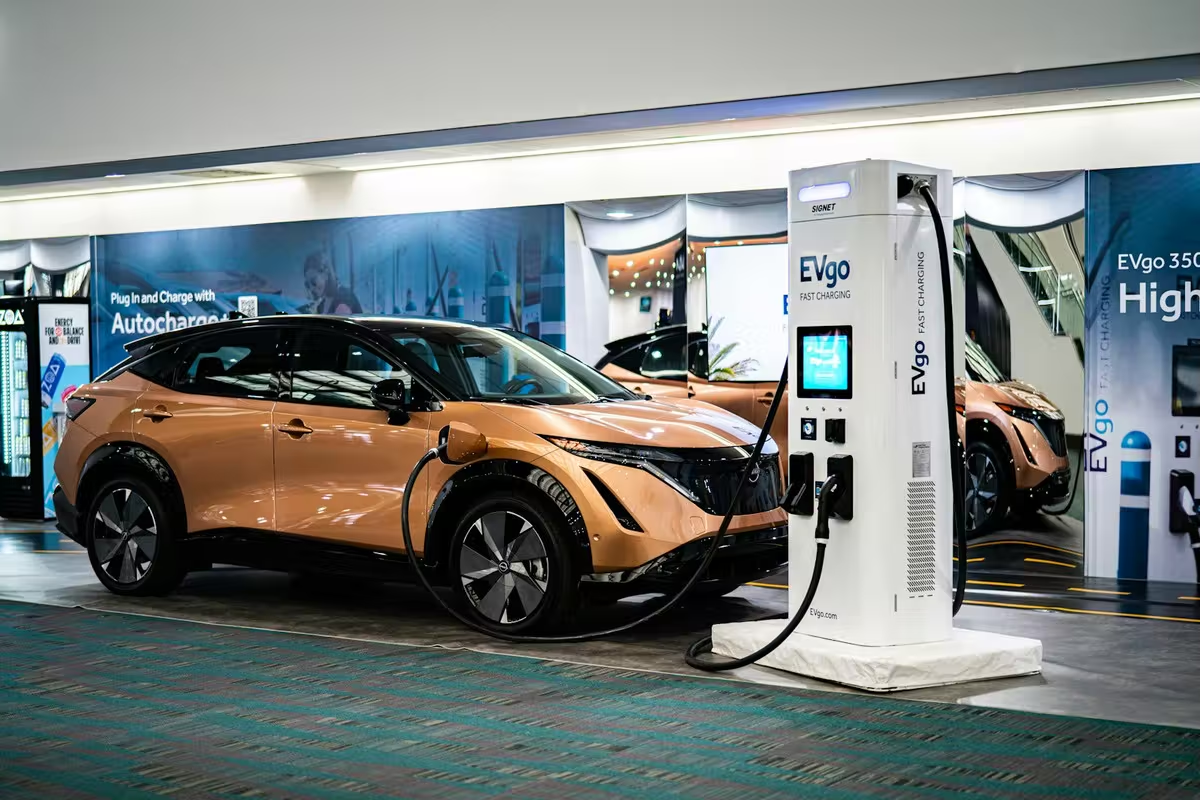
Ten minutes on a fast charger tells you more about a used battery than an hour of talking. Photo: Oxana Melis / Unsplash.
The used EVs worth buying, and the catch with each
| Model | Best years | Why it works used | Watch for |
|---|---|---|---|
| Tesla Model 3 and Model Y | 2021 onward | Heat pump from 2021, the Supercharger network, warranty transfers, strongest resale | FSD does not transfer; early build quality; hidden SoH, so insist on the service-mode test |
| Hyundai Ioniq 5 / Kia EV6 | 2022 onward | 800-volt charging, roomy, top SoH in Aviloo's data | ICCU recall must be done; 12-volt battery drains on early cars |
| Chevrolet Bolt EV / EUV | 2020-2023 | Cheapest real-range EV, many carry recall-new packs | 55 kW DC charging, firm ride, no native NACS port |
| Ford Mustang Mach-E | 2021 onward | Big discounts, good to drive, LFP standard-range cars from 2023 | Infotainment lag on early software; check the 2022 contactor recall |
| Volkswagen ID.4 | 2021 onward | Space and comfort for the money | US cars without a heat pump lose a third of their range in winter; software needs the 3.0 update |
| Kia Niro EV / Hyundai Kona Electric | 2019 onward | Efficient, durable, simple | Kona recall history, modest DC speeds |
| Nissan Leaf | 2018-2022 | Very cheap city car | No liquid cooling, CHAdeMO plug in the US; avoid hot climates |
| Polestar 2 | 2021 onward | Build quality, Google-based software | Early dual-motor cars are thirsty; check tyres and the 12-volt |
One more filter: battery chemistry. Base-model Teslas and the standard-range Mach-E use LFP cells, which tolerate daily 100% charging and age slowly but give up more range in the cold; long-range cars use nickel-based packs with the opposite profile. Our guide to LFP vs NMC batteries explains how to tell them apart and which suits your climate.
Red flags that should end the viewing
- A seller who refuses a battery test or will not put the state of health in the contract.
- A battery, isolation or coolant warning on the dash, or any sign of pack work outside a franchised workshop.
- Fleet or rideshare history with heavy DC fast charging, visible in the car's lifetime charging statistics.
- Open recalls, especially battery or charging-unit campaigns.
- Salvage or flood titles. Water and high-voltage packs do not mix, and insurers price that in.
- Software-locked features sold as present: Tesla's FSD and Acceleration Boost do not transfer, and some makers lock heated seats or capacity behind subscriptions.
- A CHAdeMO port in the US, or any car without liquid battery cooling if you live somewhere hot.
- Tyres worn on the inner edges, rusted brake discs and a tired 12-volt battery. None is expensive alone, but together they say the car was not looked after.
The 30-minute used EV inspection checklist
- Battery: get the SoH report and compare it with the car's age and mileage using the table above.
- Charge history: pull lifetime AC versus DC charging from the app or an OBD2 reader.
- Range check: start the test drive at a known charge level, drive 20 miles of mixed roads and compare consumption with the rating and our real-range guide.
- DC fast charge: plug into a fast charger for ten minutes and watch the kW figure climb toward the car's rated peak. A pack that will not accept power is sick or cold.
- AC charge: plug into a Level 2 unit and confirm the onboard charger takes its rated power, typically 7 to 11 kW.
- Heating and cooling: run the cabin heater and the air conditioning at full for five minutes each. A weak heat pump is a winter range killer.
- Twelve-volt battery: the second most common EV breakdown cause. Ask when it was replaced.
- Recalls and warranty: VIN check, plus written confirmation of the remaining battery warranty.
- Cables and cards: mobile connector, adapters, key cards and both keys. Replacing them costs hundreds.
- Paperwork: SoH in the contract, service history, accident history, and a software version from this year.
Run the numbers before you negotiate
A used EV is cheap to run but not free to own, so finish with the spreadsheet. Put the asking price into our EV savings calculator against the petrol car you would otherwise buy, use the charging cost calculator with your real electricity rate, and project the pack's future with the battery degradation calculator. If you cannot charge at home, read what charging really costs first, because a used EV that lives on public fast chargers loses most of its running-cost advantage. Budget a home charger installation into the purchase; it is the best money you will spend on the car.
Then negotiate like it is 2026, not 2022. The seller knows the credit is gone and that supply is deep. A documented SoH below 88%, an open recall or a missing charging cable are each worth real money off, and if the numbers still do not work, our buy-versus-lease comparison shows when a new lease beats a used purchase.
The EV-Global verdict
For most buyers, a two- to four-year-old EV with a verified battery above 90% health is the best value in the car market today: better than a new EV without a credit, and better than a comparable used petrol car once fuel and maintenance are counted. The caveat is discipline. Treat the SoH report as non-negotiable, buy the chemistry and charging hardware that suit your climate and commute, and pay for the heat pump. Do that, and the depreciation that scared the first owner becomes your discount.
Buying a used EV: frequently asked questions
Is it worth buying a used electric car in 2026?
For most drivers, yes. Used EV prices fell hard through 2025, a three-year-old car typically sells for about half its original price, and real-world data shows batteries lose only around 1.8% of capacity a year. Verify the battery and the warranty first.
What battery health should a used EV have?
Above 90% is excellent for a car three to four years old, 85 to 89% is acceptable with a discount, and below 80% needs a warranty check before you buy. Insist on a measured state-of-health report, not a guess from the dashboard range.
Does the EV battery warranty transfer to a second owner?
In almost all cases yes. US rules require at least 8 years or 100,000 miles of battery coverage and it follows the car. A few brands shorten the term for later owners, so confirm the remaining coverage against the VIN in writing.
How many miles is too many for a used EV?
There is no hard limit. Aviloo's data shows most packs at 150,000 km still hold 87 to 94% of their capacity. Charging habits matter more than mileage, so a high-mileage car charged slowly at home can beat a low-mileage car that lived on fast chargers.
Which used EVs should I avoid?
Cars without liquid battery cooling in hot climates, early Nissan Leafs with CHAdeMO plugs in the US, anything with a salvage title or a battery warning, and any car whose seller refuses a battery test or will not write the state of health into the contract.
Is there a federal tax credit for used EVs in 2026?
No. The $4,000 used clean vehicle credit ended on September 30, 2025 together with the new-car credit. Some states and utilities still offer rebates on used EVs or home chargers, so check your local programmes before you sign.
Photos: Eva Kristensen / Unsplash (hero) and Oxana Melis / Unsplash. Resized and converted to AVIF. Price bands are indicative market observations, not offers; battery data from Aviloo and Geotab.