Slate Truck: The $25,000 Electric Pickup That Strips Out Everything
What is the Slate Truck? It is a small, bare-bones electric pickup from Slate Auto, a US startup backed by Jeff Bezos. The preproduction truck starts at $24,950, has a projected 205-mile range and is scheduled for first deliveries in late 2026. No paint, crank windows, no touchscreen and no speakers are deliberate cost decisions, not missing options.
Every carmaker on earth is racing to put a bigger screen, more horsepower, and more software in your next vehicle. Slate Auto is betting its entire existence that a lot of people want the opposite. Its first product, the Slate Truck, is a small electric pickup with crank windows, unpainted plastic body panels, no infotainment screen, and no speakers. It costs $24,950. In a market where the average new car now sells for nearly $50,000, that is not a price cut. It is a different theory of what a car should be.
And people are listening. Slate reported more than 180,000 reservation holders in June 2026, before any customer delivery. A reservation count measures curiosity, not durable demand, because the original place in line cost $50 and could be refunded. The real test begins when holders must convert that low-friction signal into a configured vehicle, financing and a final purchase agreement.
Who is actually behind it
Slate is not a hobby project. It spent roughly three years in stealth in Troy, Michigan under the name "Re:Car," and it is backed by a who's-who of operators who know how to scale things. Jeff Bezos is an investor. The co-founders came out of Re:Build Manufacturing, and the leadership bench is stacked with Amazon alumni: co-founder Jeff Wilke ran Amazon's entire worldwide consumer business, and the chief executive, Peter Faricy, built Amazon Marketplace across 14 countries. The company has raised about $1.4 billion, including a $650 million round in April 2026, and it is converting a shuttered printing plant in Warsaw, Indiana into a factory that can build up to 150,000 trucks a year.
That Amazon DNA matters, because the Slate playbook is pure Amazon: strip the product down to a cheap, standardized core, then make money on the accessories and the long tail of customization. The truck is the Kindle. The wraps, kits, and add-ons are the e-books.
The price, and the asterisk
The number everyone is chasing is the price, and it comes with a story. When Slate revealed the truck in April 2025, it advertised a net price below $20,000 after a possible $7,500 federal EV credit. The IRS now states that the new clean-vehicle credit is unavailable for vehicles acquired after September 30, 2025. Slate therefore had to prove its affordability without a federal credit.
What is left is the number Slate confirmed in June 2026, after it had already leaked from the company's own website code: $24,950 for the bare "Blank Slate" base truck, before destination and options. That undercuts the Nissan Leaf and the new Chevy Bolt to make it the cheapest new EV in America, and the cheapest new pickup of any kind, gasoline included.
An incentive-adjusted number is not the purchase price. Buyers still need destination, taxes and accessories, and state programmes can open, suspend or change eligibility. Oregon, for example, says its programme expects to reopen in summer 2026 and that purchases made while it is suspended do not qualify. Check the programme on the purchase date rather than subtracting an old rebate from Slate's headline price.
What you get, and what you don't
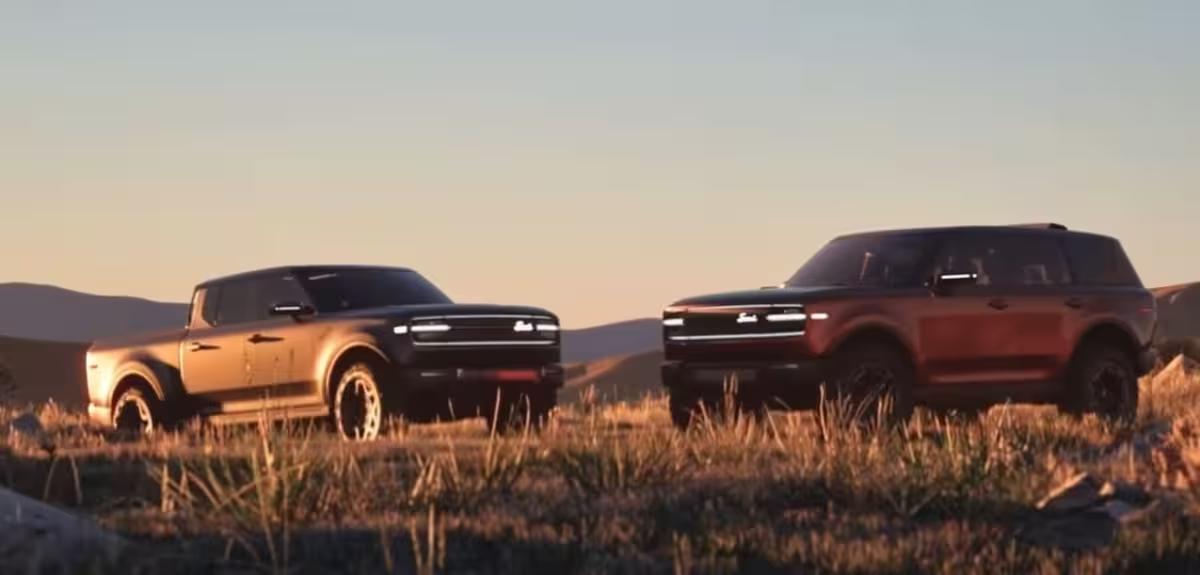
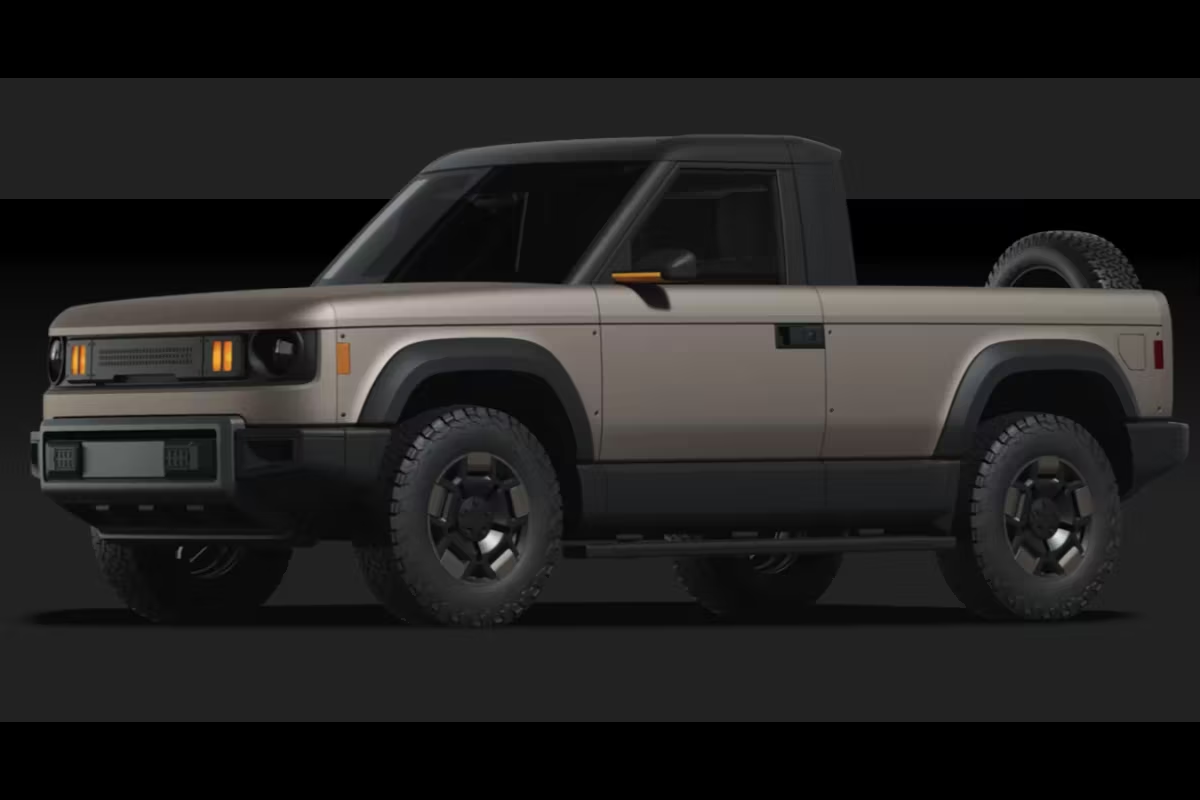
This is where the Slate Truck stops being a normal car review and becomes a philosophy argument. Here is what the base truck does not have: paint, power windows, a touchscreen, speakers, and alloy wheels. The body panels are dyed-through gray polypropylene, so there is no paint shop, which removes one of the most expensive and complex steps in all of car manufacturing. The windows roll up by hand. Navigation and music come from your phone on a mount. There are exactly two seats.
What it does have is the equipment that keeps you alive and legal: automatic emergency braking, forward-collision warning, airbags and air conditioning. Slate now describes the vehicle as having fewer than half the parts of a typical truck. That is a more credible and useful claim than an unexplained component total. Part count depends on whether clips, fasteners, software functions and assemblies are counted separately.
Removing a part saves more than its purchase price. It can delete requirements, drawings, supplier tooling, incoming inspection, assembly work, diagnostics, service stock and warranty exposure. That is why Slate is an unusually clear case study in the automotive product-development process. The remaining parts still need APQP and PPAP evidence, and the theory is not proven until the SOP production ramp can repeat it at rate.
Slate is leaning all the way into that. There are no dealerships; you buy direct. There is a "Slate University" of how-to content, a RepairPal network of 4,000-plus shops from day one, and a clear right-to-repair, do-it-yourself ethos. This is a truck that wants you to wrench on it.
The modular trick
The cleverest idea is that every Slate Truck rolls off the line identical, and you personalize it after you own it. Slate sells more than 100 accessories through a "Slate Maker" configurator, from vinyl wraps (the answer to "no paint") to wheels, lighting, and interior trim. The headline kit is an SUV conversion: for a reported $5,000, a flat-pack box arrives at your door with a hardtop, a roll cage, and a rear bench that turns the two-seat pickup into a five-seat SUV. One vehicle, assembled one way at the factory, becomes a pickup, a fastback SUV, or a square-back SUV in your driveway.
It is IKEA logic applied to a car, and it is genuinely novel. It also makes for irresistible content, which is exactly the kind of free marketing a startup needs.
The specs, and what is still provisional
Slate originally described a 150-mile standard battery and a separate extended-range pack. In June 2026 it replaced that plan with a projected 205 miles from the standard battery while keeping the base price below $25,000. The company says the truck uses a rear motor, a NACS charge port and can charge from 20 to 80% in about 30 minutes at a public fast charger. EPA range certification is pending, and Slate labels the vehicle preproduction, so 205 miles is a target until a production truck is tested.
This change is more interesting than a bigger optional battery. Adding 55 projected miles without raising the headline price suggests Slate found efficiency, cell, usable-energy or sourcing improvements that preserve the low-cost premise. Slate has not published enough pack detail to separate those effects, so attributing the gain to one engineering change would be guesswork.
Owners should judge 205 miles against their own route rather than a segment headline. The EV range calculator shows how speed and temperature change the buffer, while the charging-cost calculator turns local electricity prices into a trip cost. Pack size is still unpublished, so any confident lifetime prediction should wait. The useful framework is our guide to EV battery degradation and lifespan.
How it stacks up against the cheapest trucks
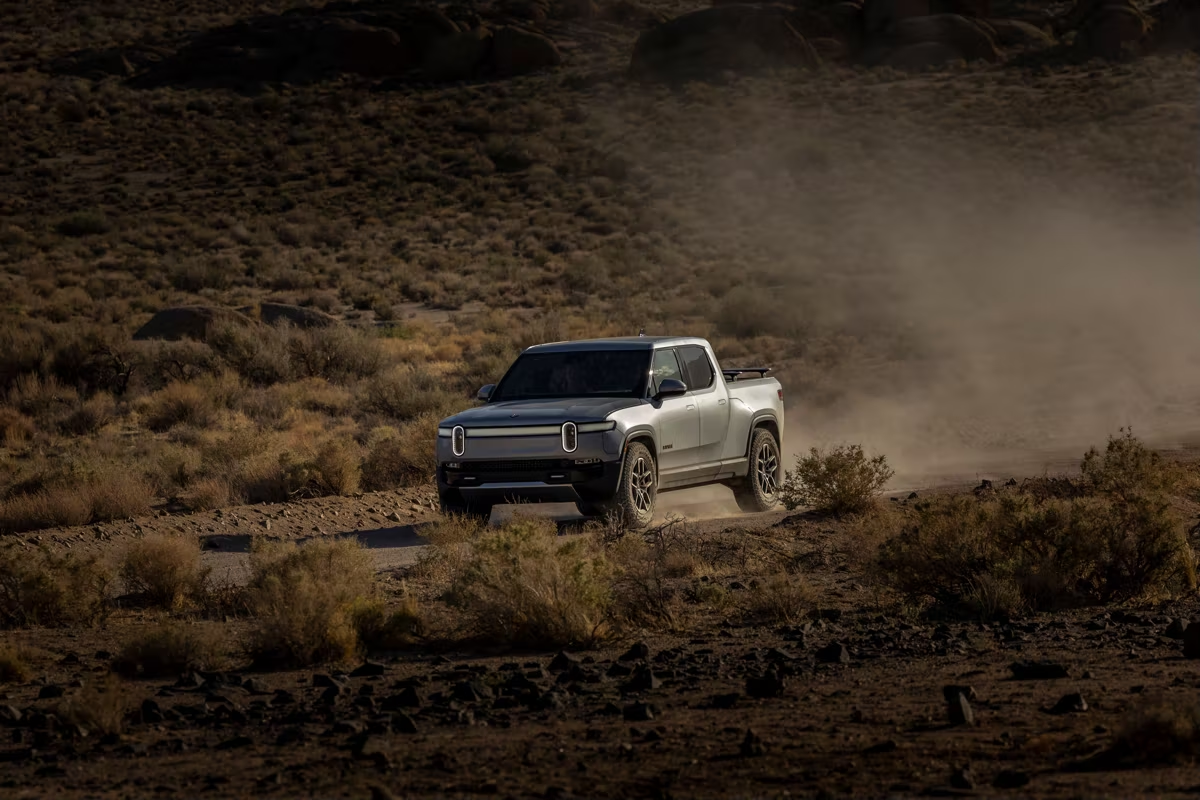
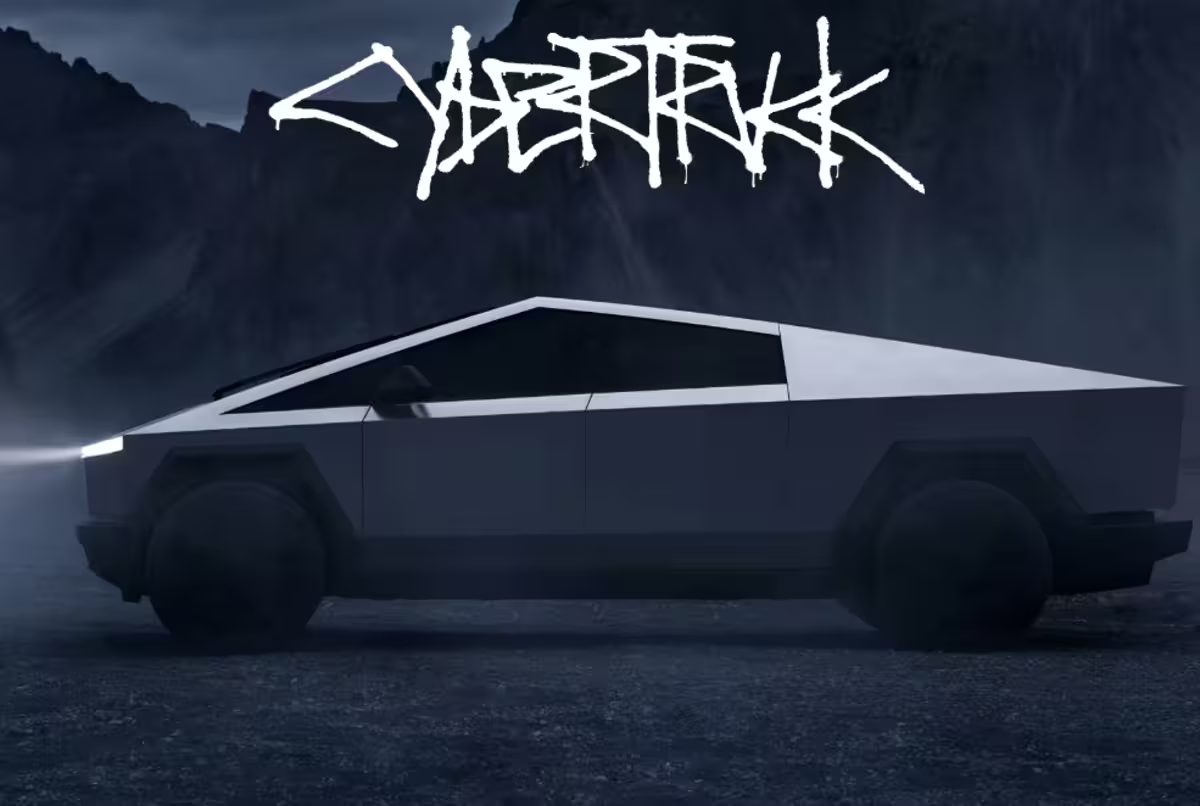
Put the Slate next to the other affordable electric trucks and the trade is obvious: it wins on price by a mile and gives up capability everywhere else. The contrast with the Tesla Cybertruck's high-cost engineering is almost philosophical. Tap the metrics to see it.
On price the Slate is in a different league, roughly half a Lightning and a third of a Cybertruck. Switch to range or towing and the picture flips: this is a city-and-errands truck, not a workhorse. That is the deal you are making.
The wider benchmark is the gas-powered Ford Maverick, the current value champion of small trucks. The Slate undercuts even that, which is the whole point: it is not trying to beat other EVs, it is trying to beat the cheapest new vehicle you can otherwise buy.
| Vehicle | Starting price | Powertrain | Range | Towing | Seats |
|---|---|---|---|---|---|
| Slate Truck | ~$24,950 | Rear-wheel drive | 205 mi projected | ~1,000 lb | 2 (5 as SUV) |
| Ford Maverick | ~$27,145 | Hybrid / gas | n/a (gasoline) | 2,000 to 4,000 lb | 5 |
| Ford F-150 Lightning | ~$50,000 | AWD dual motor | 240 to 320 mi | up to 10,000 lb | 5 |
| Tesla Cybertruck | ~$80,000 | AWD | ~250 mi | 11,000 lb | 5 |
Prices are approximate US starting figures in mid-2026. The Slate figure is the $24,950 base "Blank Slate" price confirmed in June 2026, before destination and options.
The risks, stated plainly
A cheap, simple EV is easy to love on a spec sheet and hard to deliver. Slate reports more than 180,000 reservation holders, but it has not delivered a customer truck. The company targets first deliveries in late 2026. That leaves little schedule margin for production validation, supplier ramp-up and quality containment. EV startups usually fail in this transition, when a promising prototype becomes thousands of repeatable vehicles rather than one convincing vehicle.
The second risk is economic rather than technical. Slate needs enough margin at $24,950 to fund service, warranty work, software support and the next product. Accessories may improve that margin, but a heavily optioned truck can erase the reason buyers noticed it. Residual values will also depend on parts supply and whether the conversion hardware remains supported. Low build cost is not the same as a durable ownership ecosystem.
Why it matters even if it stumbles
Strip away the Bezos headlines and the Slate Truck is a real argument about where EVs went wrong. The industry chased range, horsepower, and screen size, and priced normal buyers out in the process. Slate is the loudest US bet that there is a market below all of that, while China's EV newcomers attack the same affordability problem with scale and feature density. Slate instead asks buyers to add a feature later rather than pay for it now. If it works, it reframes the cheap EV from "a small car with a small battery" into "a simple car you finish yourself."
How Slate got here
From a stealth project to a national talking point in about four years.
Slate is founded in stealth as "Re:Car" inside Re:Build Manufacturing in Troy, Michigan.
The truck is revealed publicly with an "under $20,000" pitch (with the tax credit).
The federal EV tax credit is scrapped; Slate drops the sub-$20k claim from its site.
Reservations pass 150,000, on a refundable $50 deposit.
A $650 million round lifts total funding to about $1.4 billion; ex-Amazon executive Peter Faricy is CEO.
Official price reveal and preorders, with production starting in Indiana late in the year.
The EV-Global Verdict
The Slate Truck is one of the most interesting EVs not yet in customer hands. At $24,950, its no-paint, no-screen and add-it-later concept is a real manufacturing thesis rather than a cheap trim level. But a reservation is not a delivery, and Slate must convert more than 180,000 expressions of interest into repeatable production quality. The decisive numbers are no longer price or projected range. They are first-pass yield, warranty claims, delivery rate and the share of buyers who configure a truck without erasing the price advantage.
Primary sources, checked July 24, 2026: Slate's official FAQ, range explanation and purchase and delivery process. Slate states that the vehicle is in preproduction and specifications remain subject to change.
Slate Truck: frequently asked questions
How much does the Slate Truck cost?
It starts at $24,950 for the base Blank Slate trim (before destination and options), confirmed at Slate's June 2026 reveal. That makes it one of the cheapest new vehicles on sale in the US.
Who makes the Slate Truck?
Slate Auto, a Michigan startup backed by Jeff Bezos and run largely by former Amazon executives. It is building the truck at a factory in Warsaw, Indiana.
What is the Slate Truck's range?
Slate now projects 205 miles from the standard battery, up from its original 150-mile estimate. EPA certification is still pending because the truck remains in preproduction.
Does the Slate Truck really have no screen or paint?
Correct. The base truck has crank windows, unpainted composite body panels, no central touchscreen, and no speakers. You add what you want afterward, including a phone mount and accessories.
Can the Slate Truck become an SUV?
Yes. A reported roughly $5,000 kit adds a hardtop, a roll cage, and a rear bench, converting the two-seat pickup into a five-seat SUV. It ships as a flat-pack you fit yourself.
When can I get a Slate Truck?
Slate says first customer deliveries are scheduled for late 2026. The truck remains in preproduction, so that date and its specifications are still targets rather than completed production results.
Image: Slate Auto. Resized and converted to AVIF.