What Does SOP Mean in Automotive Manufacturing?
What does SOP mean in automotive manufacturing? SOP means Start of Production, the programme milestone when regular series production begins under released manufacturing and launch controls. It follows prototype, pilot and pre-series validation. SOP does not prove that every issue has disappeared, because ramp-up and safe-launch controls continue after the milestone.
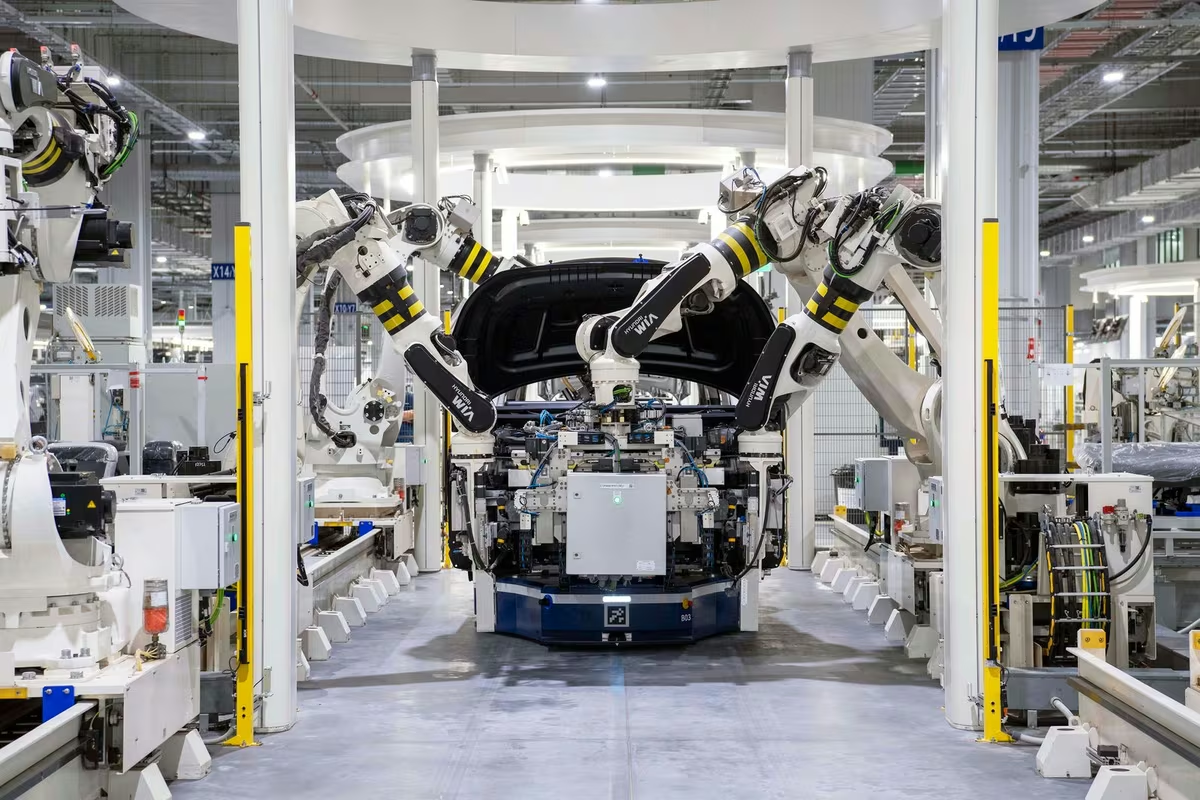
A plant can build complete cars months before SOP. The difference is intent. Early vehicles teach engineers whether the product, tooling and factory agree. At SOP, the organisation accepts that the controlled series process can start producing saleable vehicles.
What does SOP mean in automotive?
Start of Production is a programme decision, not merely a car crossing the end of the line. The released bill of materials, approved software configuration, production tooling, trained operators, logistics routes, measurement plan and quality gates must work as one system. BMW, for example, uses SOP when it announces the start of series production, while its pre-series vehicles are explicitly built to prepare the plant for that point.
Milestone names and decision rights vary by carmaker. The stable meaning is that regular production starts. That is why a schedule labelled only "first build" tells an engineer less than a controlled definition of material, process, approval status and release scope.
What happens before SOP?
Before SOP, teams move from learning about the design to proving the production system. Early mules test functions in borrowed bodies. Engineering prototypes combine more representative parts. Pilot and pre-series vehicles then expose the real plant to production-intent tooling, logistics, work instructions and software flashing.
- Product validation: does the vehicle meet performance, durability, safety and regulatory requirements?
- Process validation: can the line build it repeatedly at the required quality and rate?
- Supply readiness: are parts approved, capacity available and transport loops stable?
- Launch readiness: are operators trained, faults traceable and containment ready?
Automotive development milestones from concept to SOP
| Milestone | What changes | Evidence expected |
|---|---|---|
| Concept and architecture | Vehicle targets become a technical package | Requirements, concepts and programme assumptions |
| Design freeze and tool release | Critical geometry and interfaces stop moving freely | Released data, risks and authorised changes |
| Prototype builds | Parts and systems are integrated and tested | Verification results and issue closure |
| Pilot or pre-series | The intended plant, tooling and work are exercised | Run-at-rate, measurement and process results |
| PPAP and launch release | Parts and processes receive defined approvals | Submission status, capability and open-point controls |
| SOP | Regular series production begins | Released product, process and launch decision |
| Ramp-up | Output rises toward the planned rate | Safe-launch data, yield, quality and capacity |
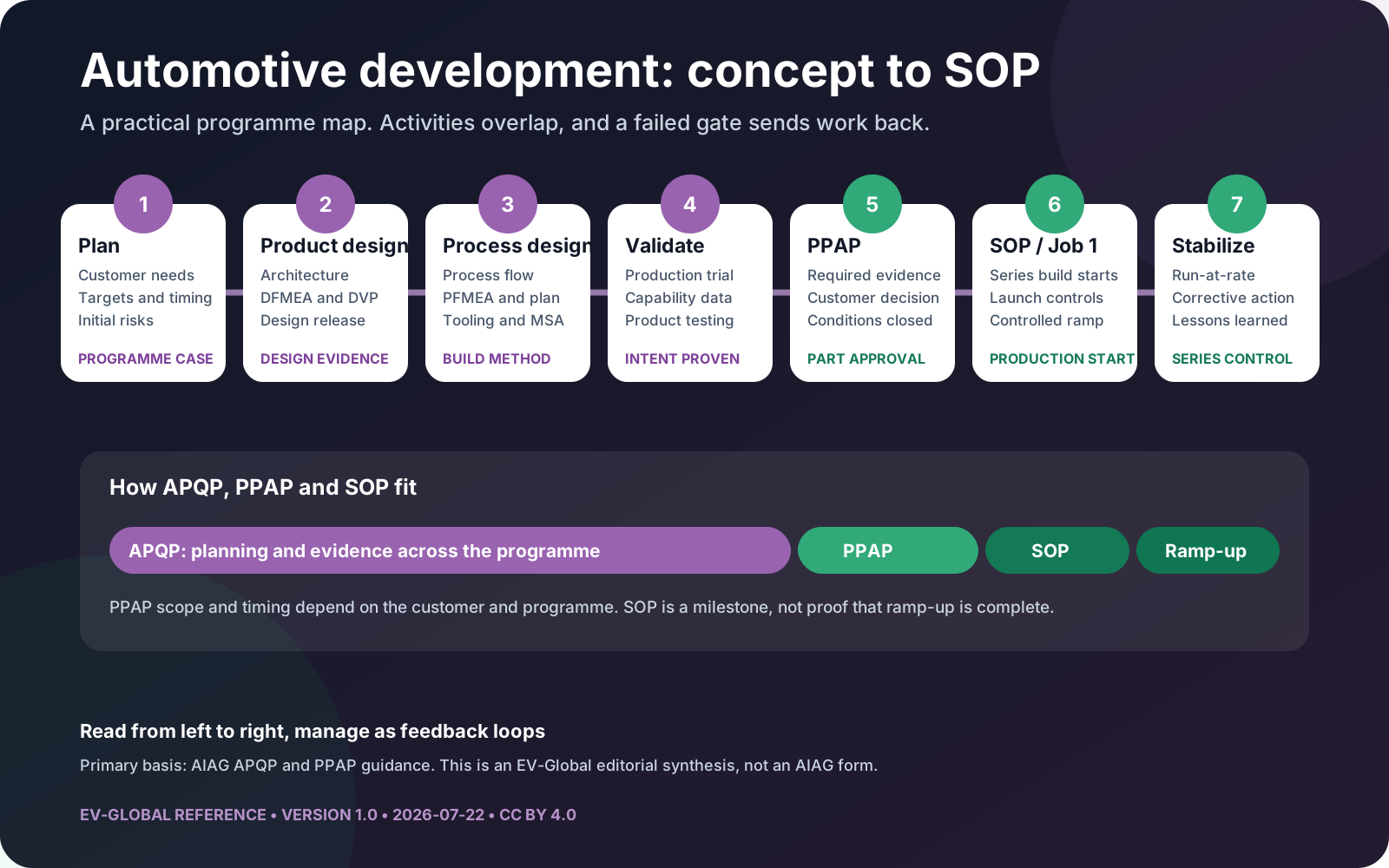
The complete automotive product development process explains these phases in programme order. The APQP and PPAP guide follows the evidence that must survive each gate.
SOP vs Job 1 vs PPAP vs launch
| Term | Meaning | Common mistake |
|---|---|---|
| SOP | Start of regular series production | Treating it as proof that ramp-up is finished |
| Job 1 | First unit in a defined production sequence | Assuming every OEM uses it exactly like SOP |
| PPAP | Approval evidence for a part and its process | Calling it a vehicle-programme milestone |
| Launch | The broader period around SOP and ramp-up | Reducing weeks of controlled work to one date |
These terms overlap in planning meetings, but they are not synonyms. PPAP can be approved before SOP, interim approval can carry explicit restrictions, and a plant may keep safe-launch containment long after Job 1.
What do VFF, PVS and zero-series mean?
VFF, PVS, zero-series and pilot build are pre-production labels used in parts of the automotive industry. They often describe increasingly production-like vehicles, but there is no universal dictionary that maps each label to identical parts, tooling or line conditions at every OEM. A useful build definition states what is representative: design level, tooling, plant, operators, software, material and planned test purpose.
What changes at Start of Production?
The product baseline becomes tighter. Released hardware and software replace experimental combinations. Deviations require controlled approval. Serial numbers, batch data, station results and software versions must support traceability. Supplier deliveries move from project quantities toward production call-offs, while plant quality gates protect the first customer vehicles.
A modern launch also connects mechanics to the vehicle E/E architecture and the software-defined vehicle platform. A correct physical part with the wrong software or configuration is still a launch defect.
What happens after SOP?
Volume rises in steps, not by optimism. Teams watch first-time-through yield, end-of-line faults, rework, supplier escapes, field reports and cycle-time losses. AIAG's current APQP model places Safe Launch in the Start of Production phase and expects defined exit criteria. Containment ends when evidence shows the process is stable, not when the launch calendar gets uncomfortable.
What the launch room watches that a milestone chart cannot show
A launch team does not only count finished cars. It follows defects by station, shift, supplier batch, software version, vehicle option and repair route. One loose connector may look trivial until every occurrence traces to the same harness lot. A failed end-of-line test may be a bad part, a calibration mismatch or a tester that rejects good vehicles. The useful question is not "how many faults?" but "what common condition connects them?"
That is why traceability earns its cost during ramp-up. The team needs to move from a symptom on one vehicle to the affected population before more cars leave the plant. Containment protects the customer, root-cause work fixes the process, and verified corrective action closes the issue. Reworking every failed car without understanding the pattern can make the daily chart green while the factory keeps manufacturing the same defect.
Why build rate and quality can fight each other
Increasing line speed changes the process being proven. Operators have less recovery time, buffers empty faster, material arrives in larger waves and marginal equipment sees a higher duty cycle. A station that was capable at pilot rate may fail at target takt. A responsible ramp therefore raises volume in controlled steps and checks whether yield, capability, downtime and repair hours remain stable after each step.
Why automotive production launches fail
- Parts arrive but capacity does not. Prototype quantities hid a supplier bottleneck.
- The line builds a nominal design. Real variation defeats fixtures, sensors or assembly access.
- Software configurations drift. Hardware, calibration and diagnostic data no longer match.
- Measurements are not trusted. A weak gauge makes good and bad parts look alike.
- Work instructions describe yesterday's design. Late changes never reach the station.
SOP connects the whole automotive engineering stack
The factory is where the systems that make a car work become one repeatable product. That includes the four-stroke engine and driveline, an EV's 800-volt electrical architecture, battery supply from the leading EV battery manufacturers and safety evidence for SAE automated-driving levels. Our automotive engineering hub connects the product, process and software views.
Primary sources, checked July 24, 2026: AIAG's APQP phase and Safe Launch overview; BMW's pre-series production explanation and series-production announcement. OEM milestone definitions remain programme-specific.
SOP in automotive: frequently asked questions
What does SOP stand for in automotive?
SOP stands for Start of Production. It is the programme milestone at which regular series production begins under released manufacturing and launch controls.
Is SOP the first production vehicle?
Not necessarily. Pilot and pre-series vehicles can be built on production tooling and the assembly line before SOP. SOP marks the start of regular series production, not simply the first complete vehicle.
What happens before SOP?
Teams validate production-intent parts, tooling, software, measurement systems, logistics, operator work and process capability. Customer approvals such as PPAP are normally completed before regular shipments.
What is the difference between SOP and PPAP?
SOP is a programme milestone for starting series production. PPAP is evidence and customer approval that a specific part and production process can repeatedly meet requirements.
What is the difference between SOP and Job 1?
Job 1 usually means the first vehicle built in the planned production sequence. Some companies use Job 1 and SOP together, while others separate an internal build event from the formal series-production milestone.
What happens after SOP?
The plant ramps volume while safe-launch checks, containment and rapid problem solving protect customers. The launch ends only when rate, quality and process stability meet their exit criteria.
Original EV-Global illustration, created for this automotive SOP guide.