Lidar vs Cameras vs Radar: How a Self-Driving Car Actually Sees, and Why the $200 Lidar Changes the Argument
Lidar, cameras or radar: which do self-driving cars need? Each sensor measures something different. Cameras see colour, texture and text but infer depth; radar measures distance and speed directly through rain and fog but with coarse angles; lidar measures 3D geometry to centimetres but scatters in heavy rain and used to cost more than the car. Every company running cars with nobody inside, Waymo, Zoox, Baidu, Pony.ai, WeRide, fuses all three. Tesla alone drives on cameras, and in 2026 the economic argument for that choice has gone: a production lidar now costs about $200, and 1.6 million of them shipped last year, 95% of them to Chinese cars.
In April 2019 Elon Musk told investors that "lidar is a fool's errand. Anyone relying on lidar is doomed." At the time the sensor on a Waymo roof cost more than a Model 3, so the sentence had an economic argument hiding inside the engineering one. Seven years on, the economics have inverted. Hesai sells a 230-metre lidar for about $200, shipped 1.6 million units in 2025 at a 42% gross margin, and guides for three million in 2026; BYD puts one on cars that cost $20,000; Rivian's autonomy chief calls lidar "now really comparable to a front-facing radar in price". What is left is the pure engineering question, and that one has real data behind it now: a federal investigation into 3.2 million camera-only Teslas that struggled in sun glare and fog, 271 million driverless Waymo miles with 95% fewer serious crashes than human drivers, and a Chinese market where the best camera-only system and the most sensor-laden one sit in the same price bracket. This is how each sensor works, where it fails, who ships what, and what the evidence says.
What each sensor actually measures
Cameras measure light: colour, texture, text, the shape of a lane line and the state of a traffic signal. What they do not measure is distance; a single camera infers depth from perspective, motion and learned priors, which is why Tesla's whole argument rests on the neural network, not the sensor. Production units run 5 to 8 megapixels (Tesla's current hardware 5 MP, Mobileye's SuperVision seven 8 MP cameras plus four 3 MP surround units), and they have one edge nobody else matches: latency. A camera frame reads out in a couple of milliseconds; a spinning lidar or a radar sweep takes tens to hundreds. For how those frames become a model of the road, see how the AI in a self-driving car works.
Radar at 76 to 81 GHz measures range and, through the Doppler shift, relative speed, directly and in any weather. Its weakness is angle: a conventional automotive radar resolves objects to "tens of degrees", while separating a pedestrian from the kerb at 100 metres needs about one degree. Classic radars also filter out anything with zero Doppler to suppress clutter, which is why they under-report stopped vehicles, and signals bouncing off guardrails create ghost targets. 4D imaging radar fixes most of that with massive antenna arrays: Arbe's Phoenix uses 48 transmit and 48 receive channels for 2,304 virtual channels, 0.7 by 0.9 degrees of resolution, 300 metres of range and a height measurement; Continental's ARS540 reaches 300 metres with height, and Mobileye's imaging radar produces half a million detections a second.
Lidar fires laser pulses and times their return, producing a 3D point cloud with centimetre range accuracy and angular resolution of 0.05 to 0.1 degrees, an order of magnitude finer than the best radar. Hesai's AT128 sees 210 metres at 10% reflectivity with 1.5 million points a second; its ATX does 230 metres from a 100 by 100 by 30 mm box drawing 8 watts; the 2026 ETX reaches 400 metres and is 32 mm tall so it fits behind the windscreen. FMCW lidar adds per-point velocity by chirping the laser instead of pulsing it, which Aeva is shipping to Daimler Truck for 2027. Ultrasonics cover 15 centimetres to about 5.5 metres for parking. Thermal cameras see heat rather than light: Teledyne FLIR's 640 by 512 automotive unit finds a pedestrian well beyond headlight range, which matters because 78% of US pedestrian deaths happen at night and night pedestrian braking becomes mandatory in the US in September 2029.
Where each one fails
Weather and light divide the sensors cleanly. Cameras lose to glare, fog, dust and darkness; the National Highway Traffic Safety Administration's 2026 engineering analysis of Tesla's Full Self-Driving found the system "did not detect common roadway conditions that impaired camera visibility" until "immediately before the crash occurred", in nine reduced-visibility crashes including a fatal one in Arizona sun glare. Radar sails through rain but cannot tell a bridge from a stopped truck, which is how Teslas gained a phantom-braking problem after radar was removed in 2021 and a 416,000-vehicle federal probe followed. Lidar scatters off water droplets: a Finnish fog-chamber study found two 905 nm units lost about half their detection performance, and 1550 nm lasers are absorbed by water far more than 905 nm. Xpeng's engineers justify dropping lidar partly because it "generates excessive noise points in rain and fog". Dirt is democratic: Waymo's co-CEO Dmitri Dolgov uses a leaf stuck on a sensor as the case for overlapping fields of view, and the Insurance Institute for Highway Safety found Waymo's crash rate is higher in the dark than in daylight even with lidar aboard. No single sensor is a solved problem.
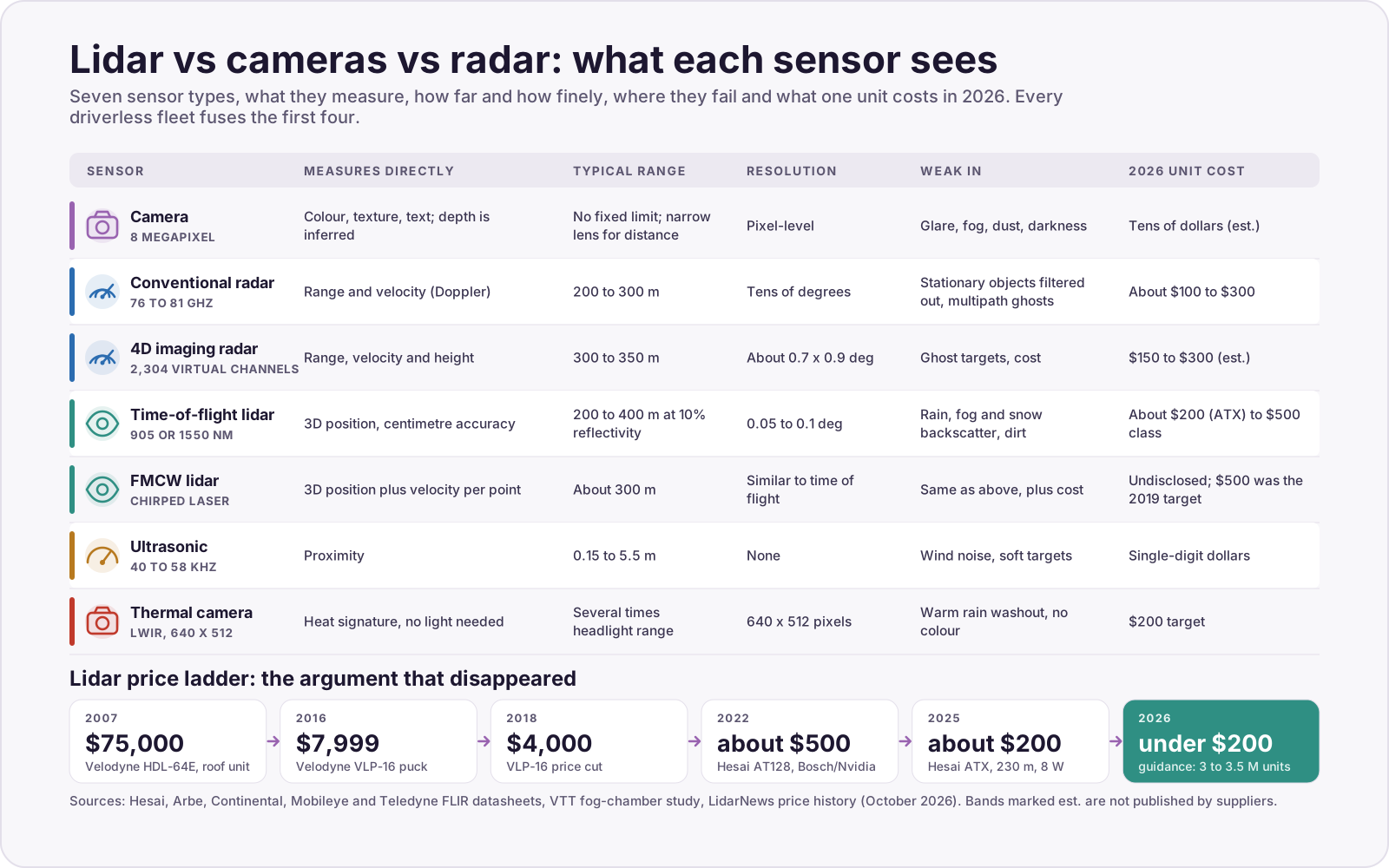
Original EV-Global infographic: what each sensor can and cannot see, and the lidar price ladder. Vector version and the sensor-suite dataset in the reference library.
Who ships what in 2026
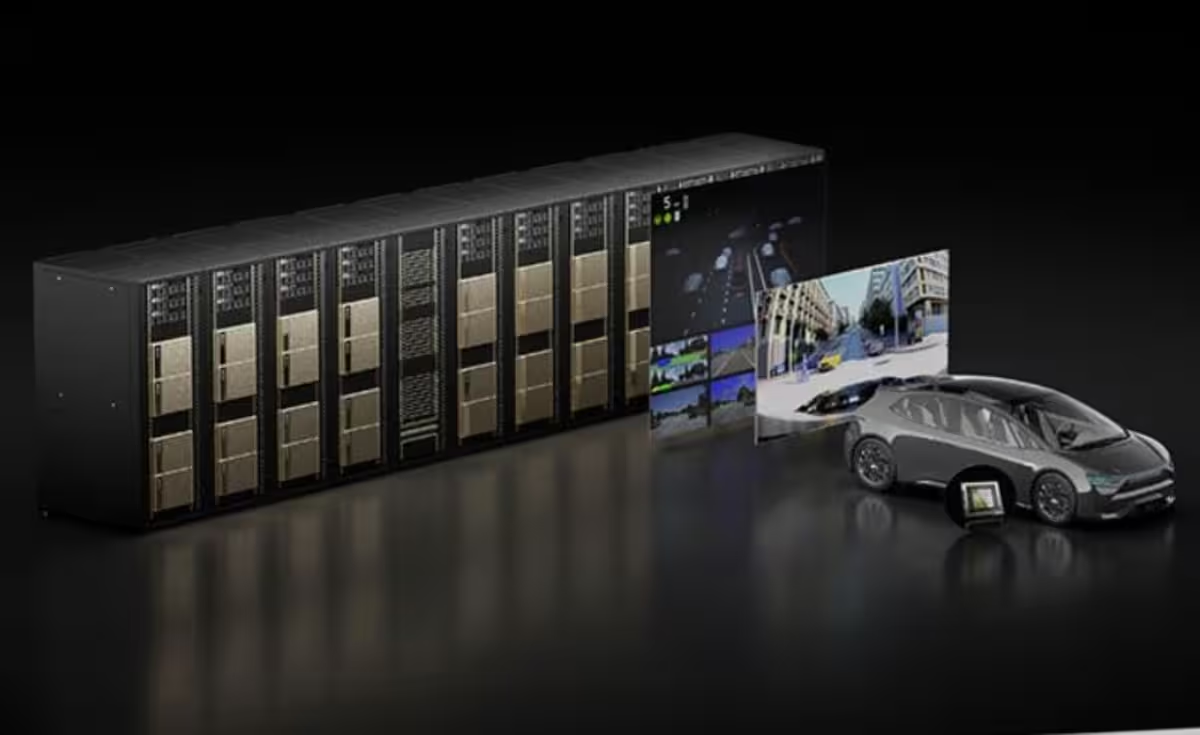
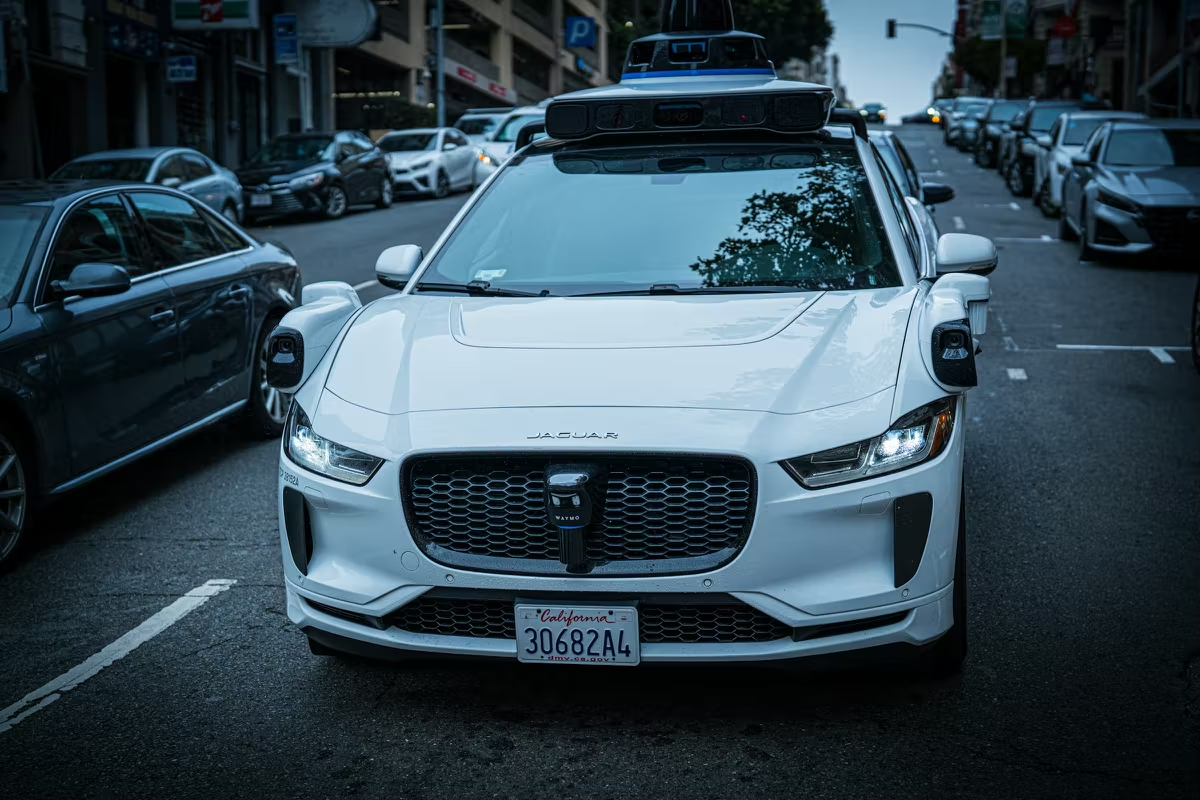
The cleanest way to read the industry is to count sensors per car. Waymo's sixth-generation driver, on the Zeekr-built Ojai, carries 13 cameras, 4 lidars, 6 radars and external microphones, with overlapping coverage out to 500 metres, and that is 42% fewer sensors than the previous generation. Mercedes' Drive Pilot, the only Level 3 system that was ever sold in the West, uses more than 30 sensors including a 200-metre Valeo lidar in the grille, a rear camera for emergency vehicles, microphones for sirens and a wetness sensor in the wheel arch. Mobileye's ladder makes the logic explicit: SuperVision for hands-off Level 2 is eleven cameras and one radar; Chauffeur for eyes-off adds 360-degree imaging radar and a front lidar; Drive for robotaxis adds more of everything. Nvidia's Hyperion 10 reference design, which the next Mercedes stack is built on, specifies 14 cameras, 9 radars, 1 lidar and 12 ultrasonics.
China ships the sensors in volume. BYD's God's Eye comes in three tiers: C with 12 cameras, 5 radars and no lidar on the $10,000 Seagull, B with one lidar on Denza and the flagships, A with three on Yangwang. Huawei's ADS 4 uses one 192-line and three solid-state lidars plus five 4D radars, 36 sensors in all; the Zeekr 9X carries up to five lidars; Li Auto's L9 four. The counter-example is Xpeng, which dropped lidar from every launch since late 2024, runs its VLA 2.0 stack on cameras with radar relegated to a separate safety layer, and started camera-only robotaxi tests in July 2026. Tesla's Cybercab, the only vehicle in the West carrying passengers with nobody aboard on cameras alone, has eight exterior cameras, one cabin camera and no radar or lidar for driving (the detail is in our Cybercab explainer). Rivian's R2 launches on cameras and radar and adds a lidar for customers in 2027.
Tap between lidars, radars and cameras. The driverless fleets sit at the top on every tab; the hands-off Level 2 systems carry eleven to fourteen cameras and one radar; the Cybercab is the only vehicle carrying passengers with nobody aboard on eight cameras and nothing else.
| Vehicle or stack | Cameras | Lidars | Radars | Notes |
|---|---|---|---|---|
| Waymo 6th gen (Ojai) | 13 | 4 | 6 | plus external audio; Level 4 in service |
| Baidu Apollo RT6 | about 30 sensors in total | 5 | yes | 440 m, 1,200 TOPS, car costs about $28,000 |
| Zoox | 28 (2020 figure) | 16 | 20 | four corner pods, 270 degrees each |
| Mercedes Drive Pilot | stereo plus rear | 1 | several | more than 30 sensors incl. microphones and a wetness sensor |
| Nvidia Hyperion 10 reference | 14 | 1 | 9 | plus 12 ultrasonics |
| Huawei ADS 4 | 11 | 4 | 5 (4D) | 36 sensors, 250 m |
| BYD God's Eye B | 12 | 1 | 5 | 300 TOPS |
| Lucid Gravity DreamDrive Pro | 14 | 1 | 5 | plus 12 ultrasonics |
| Mobileye SuperVision | 11 | 0 | 1 | hands-off Level 2 |
| Xpeng VLA 2.0 | cameras only for driving | 0 | safety layer only | camera-only robotaxi tests since July 2026 |
| Tesla Cybercab | 8 | 0 | 0 | cabin radar for airbags only |
The camera-only argument, and what the data says
Tesla's case has three parts. Humans drive with two eyes, so a network trained on enough video should too. Sensors disagree, and "if lidars/radars disagree with cameras, which one wins?", as Musk put it in 2025, calling the problem sensor contention. And cost: a camera is a few dollars, a lidar was a few thousand. The first argument is a research bet; the second is an engineering choice that every fusion stack answers with probabilistic weighting rather than a vote; the third is the one that has collapsed. Musk himself conceded in a 2021 message, published in 2025, that "a very high resolution radar would be better than pure vision, but such a radar does not exist." It does now: it is called 4D imaging radar, and it is in Huawei's and BYD's $20,000 cars.
The other side's argument is about the shape of the safety curve, not about any single sensor. Dolgov's version: "weak sensing just leads to a safety curve that flattens out way too early", and "these different sensing modalities, they're not backups to each other". Mercedes' chief technology officer Markus Schaefer: "Relying on just one type of sensor would not meet Mercedes-Benz's high safety standards." Rivian's James Philbin: "there's a reason you see it on all of the L4 players."
The evidence in 2026 favours fusion for unsupervised driving and leaves the supervised case open. On the fusion side, Waymo's numbers keep compounding: Swiss Re found 88% fewer property-damage and 92% fewer bodily-injury claims over 25 million miles; the Insurance Institute for Highway Safety counted 1.28 police-reportable crashes per million miles against 4.06 for humans over 50 million; Waymo's own September 2026 figure is 271 million driverless miles with 95% fewer serious-injury crashes. On the camera-only side, the federal reduced-visibility investigation covers 3.2 million cars, and Electrek's estimate from crash reports puts Tesla's Austin robotaxi at roughly one reported crash per 57,000 miles against about one per 500,000 for human drivers, with the caveat that Tesla does not publish fleet mileage, so the denominator is an estimate. Tesla's own safety page claims zero injuries over 3.1 million autonomous miles but excludes monitored rides. Meanwhile Xpeng sells hundreds of thousands of camera-only cars whose owners seem satisfied, which is the honest complication: at supervised Level 2, vision is clearly good enough to sell. The question is Level 4 without a human, where nobody but Tesla is trying it on cameras. Where the responsibility sits at each level is in Level 2 vs Level 3; the head-to-head of the two deployed services is in Tesla Robotaxi vs Waymo.
Two more data points deserve mention because they get misquoted. The viral 2025 "wall test" that showed a Tesla driving through a painted wall used basic Autopilot rather than FSD, with Autopilot disengaging 17 frames before impact, and was sponsored by a lidar company; it proved less than either side claimed. And after a fatal Xiaomi SU7 crash on a motorway in March 2025, China's regulator banned "autonomous" marketing and public betas, then wrote GB 47955-2026, a mandatory Level 2 standard effective January 2027 that is performance-based: it specifies warning tiers, driver monitoring and data recording, and does not mandate any sensor type. Regulators, so far, are grading outcomes, not hardware.
The economics flipped, and the West missed it
The Velodyne HDL-64 that Google's first cars wore in 2007 cost about $75,000. The 16-channel puck was $8,000 in 2016 and $4,000 by 2018; the Hesai unit Bosch and Nvidia designed in was $500 in 2022; the ATX launched at about $200 in 2025, and Hesai told Reuters it would halve prices again. Volume followed price: Hesai shipped 1,620,406 units in 2025, 1.38 million of them to production cars, turned a profit, and guides for 3 to 3.5 million in 2026 with a reported backlog above six million for the ATX alone. RoboSense shipped about 912,000. Yole counts more than 120 models with lidar, including cars around $25,000, and puts Chinese suppliers at 93 to 95% of the passenger-car market, a share it expects to grow toward a $3.6 billion market by 2030.
The Western supplier story ran the other way. Volvo built its EX90 around a Luminar roof lidar, cancelled the lidar-dependent features for the 2026 model year, ended the contract in November 2025 and compensated owners roughly $1,500 to $1,900 for a sensor that now sits inert on the roof; Luminar filed for Chapter 11 a month later. Mobileye shut its own FMCW lidar programme in 2024 and buys from Innoviz instead. The lesson is not that lidar failed; it is that a $1,000-plus Western unit lost to a $200 Chinese one, which is the same arc as batteries and the subject of the China shock. The cost line in Tesla's argument is gone; what remains is whether its software can close a physics gap that everyone else bridges with hardware.
| Year | Representative unit | Price | Note |
|---|---|---|---|
| 2007 | Velodyne HDL-64E | about $75,000 | DARPA-era roof unit |
| 2016 | Velodyne VLP-16 | $7,999 | the first "puck" |
| 2018 | Velodyne VLP-16 | $4,000 | price cut |
| 2022 | Hesai AT128 (Bosch and Nvidia design-in) | about $500 | first sub-$1,000 production unit |
| 2025 | Hesai ATX | about $200 | 230 m, 8 W; 1.62 million Hesai units shipped |
| 2026 | Hesai guidance | under $200 | 3 to 3.5 million units guided |
What comes next
Four things change the picture between now and 2028. Lidar moves out of the roof pod and into the glass: Hesai's 32 mm ETX sits behind the windscreen with AGC and Saint-Gobain glazing, and the ATX already hides in headlights. FMCW arrives in trucks first, with Aeva's units shipping to Daimler Truck for the 2027 Freightliner Cascadia and a European passenger-car programme signed. Imaging radar reaches mass-market driver assistance, where it is the cheapest way to add a second modality to a camera stack. And thermal cameras get their mandate: with US night pedestrian braking required from September 2029 and three 2024 production cars failing the night scenarios in a FLIR-sponsored test while a thermal-fused prototype passed them all, long-wave infrared becomes the fourth sensor on the grille. Euro NCAP's 2026 protocol adds night and poor-lane-marking robustness tests, which pushes the same way. The compute side of all this, the chips that have to fuse a dozen streams at 20 frames a second, is in Nvidia automotive and E/E architecture; the cabling that carries a lidar's 25 million points a second is in CAN vs LIN vs Ethernet.
One wrinkle for the end-to-end era: Nvidia's open Alpamayo reasoning model takes four camera streams and nothing else as input, while the Hyperion hardware it ships on carries lidar and nine radars. The industry's answer to "cameras or lidar" is increasingly "cameras for the brain, everything else for the safety case".
What you need at each level
Sensor count tracks responsibility. The further up the SAE ladder a system climbs, the more of the safety case the hardware has to carry, and the table shows what the field actually fits at each step.
| Automation level | What ships in 2026 | Sensor minimum in use |
|---|---|---|
| Level 2, hands on (lane centring, adaptive cruise) | nearly every new car | 1 front camera plus 1 front radar; Tesla Autopilot: cameras only |
| Level 2+, hands off, eyes on (SuperVision, BlueCruise, God's Eye C) | Mobileye, Ford, GM, BYD, Xpeng | 7 to 12 cameras plus 1 to 5 radars; lidar optional |
| Level 3, eyes off (Drive Pilot, Honda, Chinese pilots) | few cars; Mercedes and BMW withdrew in 2026 | cameras plus radar plus front lidar plus driver monitoring |
| Level 4, driverless (Waymo, Zoox, Baidu, Pony.ai, WeRide) | 15 US metros plus 28 Chinese cities | 4 to 16 lidars, 5 to 20 radars, 11 to 30 cameras; Tesla: 8 cameras |
The EV-Global verdict
Read the matrix, not the tweets. Cameras are the only sensor that reads the world's semantics, so every stack is camera-first; radar is the only one that measures speed through rain; lidar is the only one that measures shape precisely enough to put a 2,000 kg car within centimetres of a cyclist at night. For a decade the counter-argument to carrying all three was price, and that argument died somewhere around the $200 ATX. What is left is a genuine scientific disagreement about whether a neural network can infer what a laser measures, and the data so far says: for supervised driving, probably yes; for driving with nobody inside, nobody except Tesla is willing to find out in public, and the one regulator with a file open is not convinced. If you are buying a car with driver assistance today, the sensor count matters less than the driver monitoring and the brand's crash record. If you are betting on who runs the robotaxis of 2030, bet on the companies whose safety curve has not flattened. The rest of our self-driving guides follow that evidence, system by system.
Lidar, cameras and radar: frequently asked questions
Does Tesla use lidar?
No. Tesla removed radar in 2021 and ultrasonic sensors in 2022, and its cars and the Cybercab robotaxi drive on cameras alone, eight exterior units on current hardware. Tesla has bought lidar units for validation testing but does not fit them to production cars.
Does Waymo use lidar?
Yes. The sixth-generation Waymo driver carries four lidars, six radars and 13 cameras, with overlapping coverage out to about 500 metres, and every other company running driverless rides (Zoox, Baidu, Pony.ai, WeRide) also fuses lidar, radar and cameras.
How much does automotive lidar cost in 2026?
About $200 for a mass-production unit such as Hesai's ATX, down from roughly $75,000 for the roof units of 2007 and $500 in 2022. Higher-resolution 400-metre units cost more; suppliers do not publish those prices.
Why did Tesla remove radar from its cars?
Tesla argued that radar and cameras disagreed too often ("sensor contention") and that its vision network had surpassed the low-resolution radar of the time. After the removal, regulators opened a phantom-braking probe covering 416,000 cars, and Musk later conceded that a high-resolution radar would have been better than pure vision had one existed.
Which sensor works best in fog and rain?
Radar. It measures range and speed through rain, fog and dust with little loss. Cameras lose contrast and depth cues, and lidar returns scatter off water droplets; a fog-chamber study found two 905 nm lidars lost about half their detection performance. That is why driverless fleets carry all three.
Do self-driving cars need lidar?
Every car operating without a safety driver today uses it, and Chinese regulators grade performance rather than sensor type. Supervised Level 2 systems such as Xpeng's and Tesla's show cameras can be good enough when a human is responsible; whether they are good enough with nobody aboard is the open question Tesla's robotaxi programme is testing in public.
Hero photo: Sam / Unsplash. Infographic: original EV-Global illustration. Sensor figures from Hesai, RoboSense, Arbe, Continental, Mobileye, Valeo and Teledyne FLIR datasheets and filings, Waymo, Mercedes-Benz, Nvidia and BYD technical pages, NHTSA EA26002, the IIHS and Swiss Re analyses, Yole and LidarNews market data; quotes as attributed in the text.