Tesla Cybercab Explained: The $30,000 Car Built to Be Sold to Nobody
What is the Tesla Cybercab? A two-seat electric robotaxi with no steering wheel, pedals, mirrors or rear window, built at Giga Texas since February 2026 and carrying paying riders in Austin since September 4, 2026. Its EPA filing shows a 47.6 kWh usable pack, a single 163 kW front motor, 1,412 kg and about 293 miles of rated range; it charges primarily by wireless induction and is meant to cost under $30,000 to build. Tesla plans to own most of them rather than sell them, and NHTSA has an open audit into how a car with no brake pedal was certified.
Every car Tesla has built so far was engineered to be sold. The Cybercab is engineered to be used: by Tesla, sixteen hours a day, by strangers, with no one paid to sit in it. That changes every decision in the car. The battery is half the size people expected, because a taxi charges between rides. There is one motor, driving the front wheels, because 163 kW is plenty when the software never floors it. The panels are gold because the pigment is moulded into the polymer and the factory has no paint shop. There is a steer-by-wire system but no steering wheel for it to answer to, which is the detail the federal regulator now wants explained under oath. This is what Tesla has actually built, what it has shown, what it claims and what the people who regulate it, compete with it and ride in it have said, as of late October 2026.
What the Cybercab is, and what it is not
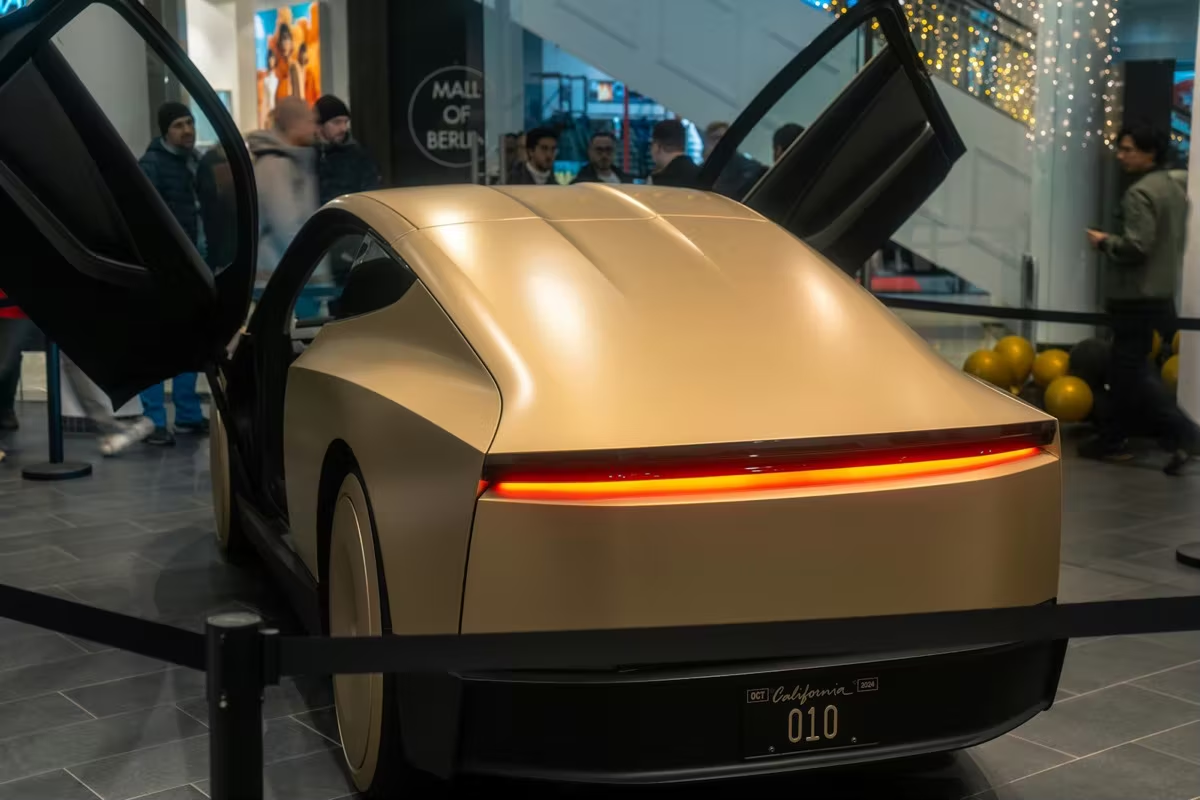
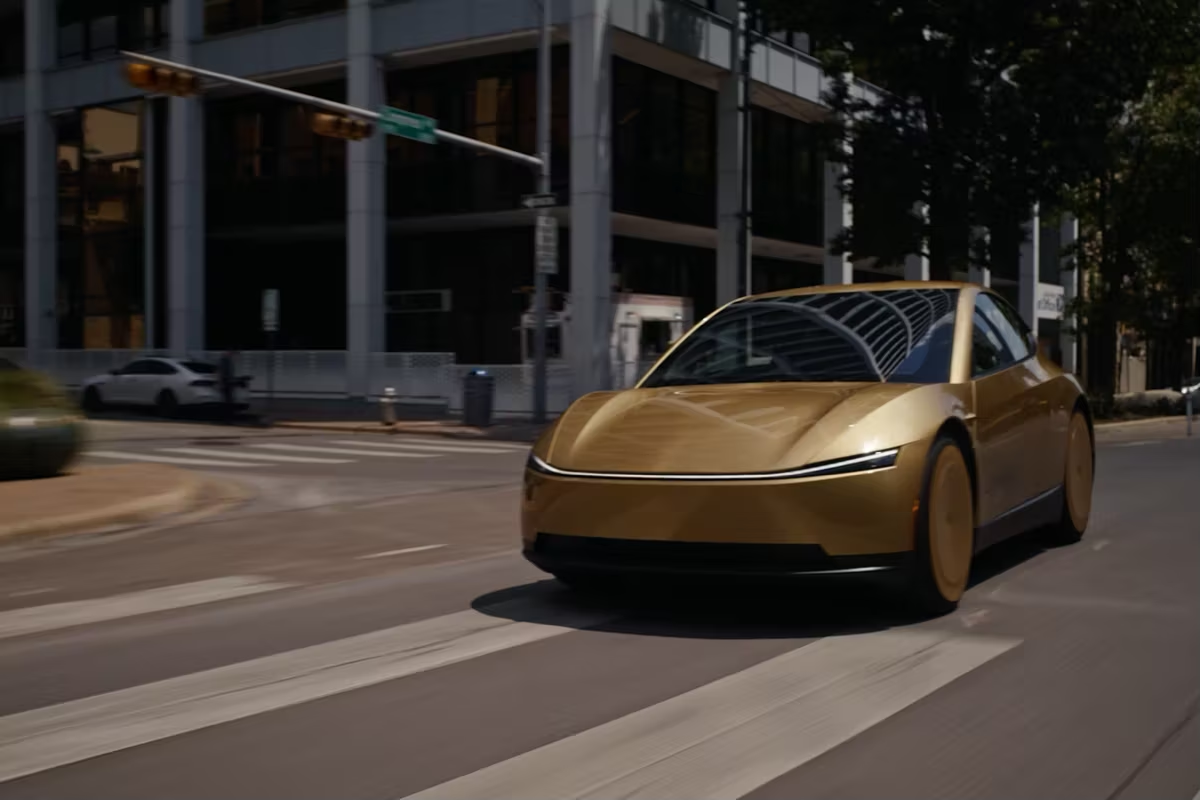
The Cybercab is smaller than it looks in photos. Tesla's rider guide gives a height of 1,408 mm and a width of 1,754 mm, narrower than a Model 3, with 144 mm of ground clearance and a 414 mm step-in. Length and wheelbase have not been published. Inside there is one bench for two people that slides as a unit, backrests that recline separately, 1,103 mm of legroom, a roughly 22-inch screen, two USB-C ports and no child-seat anchors. The trunk takes 572 litres and 100 kg. There is no steering wheel, no pedals, no mirrors and no rear window; the car sees backwards through cameras. The butterfly doors open as you approach.
What it is not is a car you can order. Tesla's own answer, from its chief financial officer and Elon Musk on the October 22 earnings call, is that "the vast majority of the Cybercab stuff will be essentially Tesla-owned and transport-as-a-service". Lars Moravy said customer deliveries could start "by the end of this year", but in the same breath the company described the car as a fleet asset. Treat the sub-$30,000 figure, first stated at the October 2024 reveal and reaffirmed by Musk in February 2026, as a build-cost target rather than a sticker price.
| Spec | Cybercab | Tesla Model 3 Standard | Waymo Ojai (Zeekr) | Zoox robotaxi |
|---|---|---|---|---|
| Seats | 2 | 5 | 5 | 4, face to face |
| Controls | none | wheel and pedals | wheel and pedals retained | none, bidirectional |
| Battery | 47.6 kWh usable | about 69 kWh | about 100 kWh | 133 kWh |
| Motor | 1, front, 163 kW | 1, rear | dual motor | dual motor |
| Curb weight | 1,412 kg | about 1,750 kg | about 2,400 kg | not published |
| Efficiency | 165 Wh/mi unadjusted | about 250 Wh/mi (label) | not published | not published |
| Rated range | about 293 mi (adjusted) | 321 mi | not published | about a 16-hour shift (claim) |
| Charging | wireless induction primary, hidden NACS DC port | NACS, AC and DC | plug | plug |
| Sensors for driving | 8 cameras | 8 cameras | 13 cameras, 4 lidars, 6 radars | cameras, lidar, radar |
| Unit cost | under $30,000 (target) | $36,990 retail | about $125,000 (analyst estimate) | not published |
Engineered for cost per mile, not for a window sticker
Read the EPA certificate and the design philosophy falls out of the numbers. A 326-volt pack of about 48 kWh usable, built from dry-cathode 4680 cells in a structural pack (an 88S6P layout according to teardown reporting), stores less energy than any Tesla since the original Model 3 Standard Range. That is deliberate. A robotaxi does not need to drive 400 miles between charges; it needs to drive cheaply between fares and top up at a depot while demand is low. At 165 Wh per mile unadjusted, or 6.1 miles per kWh, the Cybercab is the most efficient production car on record, and 48 kWh is still a full day's work in a geofenced city. Tesla says the pack is designed for 500,000 miles of DC fast charging, which is the figure that matters for a car that will be charged twice a day for a decade. Our LFP vs NMC guide explains the chemistry trade-offs behind a choice like that; Tesla has not confirmed which chemistry the cells use.
One motor drives the front wheels: 163 kW, permanent-magnet, which Musk says is rare-earth-free and "18% smaller, 25% lighter" than its predecessor. That is a claim worth holding him to, because a magnet motor without rare earths means ferrite or a new magnet chemistry, and both trade power density for cost. For how magnet choice shapes a traction motor, see how an electric car motor works. Curb weight is 1,412 kg, about 350 kg under a Model 3 and 1,000 kg under a Waymo Ojai. Tesla says the drag coefficient is below 0.20; third-party estimates from the body shape land nearer 0.25, and there is no official figure. The electrical architecture is the Cybertruck's 48-volt system with brake-by-wire and steer-by-wire, the same building blocks the Roadster uses, which is why a car with no steering wheel still has a steering actuator.
The body panels tell the same story. They are polymer, moulded by reaction injection with the gold pigment in the material, so the Cybercab line has no paint shop, no colour options and no stone-chip touch-ups. Moravy's summary on the earnings call: "We have 50% less parts than any other vehicle we've ever built, so that's 50% less things to go wrong."
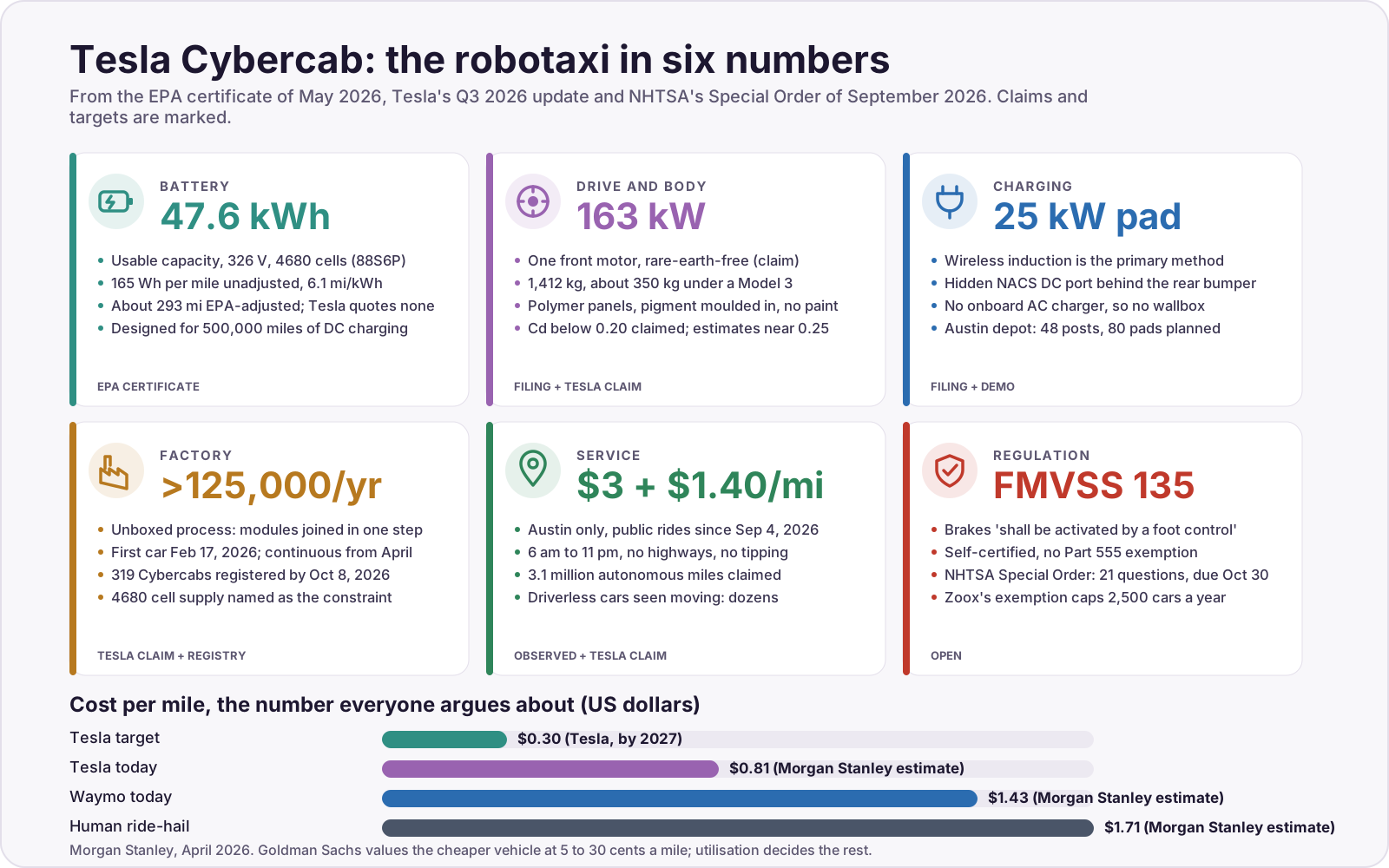
Original EV-Global infographic: the Cybercab in six numbers, with the status of each one. Sources: EPA certificate (May 21, 2026), Tesla Q3 2026 update, NHTSA Special Order (September 10, 2026), Texas DMV registry, Morgan Stanley.
Charging without a plug, mostly
The EPA certificate lists the primary charging method as wireless induction, a first for a production car. Tesla demonstrated a 25 kW pad in 2024 and targets 90% transfer efficiency; the FCC granted a waiver in February 2026 for the ultra-wideband radios that align the car over the pad. The Austin depot on St. Elmo Road was filed with 48 V4 Supercharger posts in phase one and 80 wireless pads in phase two. Pad power in service has not been published.
The reality in October 2026 is more conventional. The Cybercab has no onboard AC charger, so it cannot use a wallbox, but it does have a hidden NACS port behind a door in the rear bumper, and observers have filmed depot staff plugging robotaxis in by hand. That is the right call for a ramp: a plug is known hardware, a pad network is not. It also means the economics of the fleet run on DC electricity bought at depot rates, not on the home tariffs in our charging cost breakdown; at 165 Wh per mile, even public fast-charging prices give an energy cost near 9 cents a mile, and depot power will be cheaper. For why every North American robotaxi now carries the same plug, read how NACS won.
Free toolCharging cost calculatorSee what a 48 kWh pack costs to fill at your own tariff, at home or at a fast charger.The unboxed factory
The Cybercab is the first car built with the process Tesla has talked about since 2023: body modules assembled in parallel, each with its wiring and trim already fitted, then joined into a car in one step at the end. Tesla's robotaxi account says that halves the length of the line; Musk says production is "more than five times faster" than a conventional line, with a ten-second cycle time as the goal. The first car came off the line on February 17, 2026, continuous production started in April, and 245 cars were counted in a staging lot in July.
Tesla's third-quarter update lists installed Cybercab capacity as "more than 125,000 a year", with Moravy adding that the number is "a rate at which we're capable of running today" rather than the ceiling; Musk's 2024 figure of two million a year remains an ambition. The same document names 4680 cell supply as a constraint on the ramp, which is consistent with the Roadster and the Semi queuing for the same cells. The Texas registry gives the only hard output number: 319 Cybercabs registered to Tesla Robotaxi LLC on October 8, 2026, alongside 420 Model Ys. For how a start of production usually goes, see SOP explained.
Where it actually drives today
Austin is the only city where you can ride a Cybercab, and only in part of it. The timeline: Model Y robotaxis with safety monitors from June 22, 2025; the first rides with nobody aboard on January 22, 2026; unsupervised service across the metro from June 3; Dallas and Houston on April 18, Miami on July 3, Orlando and Tampa on July 21, all with Model Ys; Cybercab invitation rides on September 3 and public rides from 2 pm on September 4. Service runs from 6 am to 11 pm (Tesla's deck says midnight; the call said 11 pm, with 2 am as the year-end target), avoids highways, and the Cybercab's own geofence is a subset of the Model Y's. MotorTrend's first rides noted drop-offs a three-minute walk from the destination. The app is open to any Tesla account on iOS and Android.
Scale is where the numbers diverge. Tesla reports about two million cumulative unsupervised miles at the end of the third quarter, eight times the previous quarter, and its safety page lists 3.1 million autonomous miles between January 22 and October 18, 2.1 million of them in Austin, 862,000 after dark and 113,000 in rain. The Texas registry shows 739 robotaxis. Trackers who count cars actually moving without a driver put the live fleet "in the dozens", and a February test found a car available 19% of the time over 48 hours. Tesla does not publish ride counts, fleet size or the ratio of remote operators to cars.
Fares are the one place the Cybercab already beats the field: $3.00 plus $1.40 a mile for the Model Y service since April, and on launch day a 15-minute Cybercab trip cost $9.65 against $16.99 in a Model Y. MotorTrend averaged $2.93 a mile over five rides with surge pricing, and a 2.25-mile Dallas trip cost $6.15 against $13.93 in a Waymo. Next: Dallas Cybercabs in November, then Las Vegas (where the state transport authority granted a permit for up to 5,000 vehicles in August, a ceiling Tesla's Cybercab chief engineer says will not be reached within a year), Jacksonville, Phoenix and San Antonio. The Bay Area service still runs with safety drivers under a charter permit, because Tesla does not hold the California driverless permits. The full comparison with Waymo is in Tesla Robotaxi vs Waymo.
The regulator's question: no wheel, no pedals, no exemption
Federal safety standard 135 says a car's service brakes "shall be activated by means of a foot control". Zoox dealt with that the slow way: in July 2026 it received the first commercial Part 555 exemption, covering eight standards, capped by statute at 2,500 vehicles a year for two years. Tesla took the other route and self-certified the Cybercab under the existing standards with no exemption, which means no cap.
On September 3, the day of the first Cybercab rides, NHTSA opened audit query AQ26002 covering about 1,000 vehicles. On September 10 its chief counsel issued a Special Order with 21 questions to be answered under oath: whether temporarily attached controls underpinned the certification, whether touchscreen controls can move the car, and how the car complies with standards 101, 102, 108, 111, 126 and 135 "without any exemption under 49 CFR Part 555". Civil penalties run to $27,874 per violation per day, up to about $139 million. Tesla asked for more time; the response is due October 30, 2026, and has not been published. Administrator Jonathan Morrison's line: "As the federal regulator, we need to ensure that all of our laws are followed." A second file, defect petition DP26010, opened on October 9 over four reports of robotaxis speeding in school zones; no crashes, decision due around January.
The crash record so far is small and contested in both directions. Tesla's robotaxi safety page reports zero injuries, zero airbag deployments and zero pedestrian contacts against a human benchmark of 9.1 injury crashes per million miles, but it excludes rides with safety monitors aboard and two disputed incidents. NHTSA's standing general order holds 36 Tesla robotaxi crash reports through October 15, five of them involving a remote operator's intervention, with one hospitalisation; the first Cybercab crash, in August, was a 5 mph bump into a flooded pothole with a monitor aboard. The Austin American-Statesman counts 26 Tesla crashes in Austin since June 2025 against 140 for Waymo across Texas, on a far larger Waymo fleet. Texas authorised Tesla Robotaxi LLC in May 2026 under a law that accepts the company's own attestation of Level 4 capability and requires no state driving test; Austin's fire department has raised concerns, and Tesla published a first-responder guide and hotline on October 21. Where that leaves responsibility is the subject of Level 2 vs Level 3 and the SAE levels guide; the Cybercab is Level 4 by Tesla's attestation, with the federal rulebook still unwritten and the SELF DRIVE Act stuck in committee.
The economics everyone is arguing about
Tesla's targets have moved from 20 cents a mile at the reveal to "under 30 cents" by 2025 to a CFO who, asked on October 22 whether 30 cents is still the plan, said "yes, we do" see a path. Independent estimates are less kind to the present and kinder to the structure. Morgan Stanley puts Tesla's cost today at $0.81 a mile against $1.43 for Waymo and $1.71 for human ride-hail; Goldman Sachs calculates that a $20,000 to $30,000 vehicle against a $50,000 to $100,000 one is worth 5 to 30 cents a mile; ARK models Cybercab operating costs about 40% below Waymo's next generation at equal utilisation. Deutsche Bank cut its price target in October because the ramp is slower than it expected. Utilisation is the number none of them has: a 48 kWh car only pays off if it is moving most of the day. The scale of the competition, starting with Waymo's roughly 4,000 cars, is in the chart.
Tap between fleet size and cities. Waymo runs the most cars and Baidu covers the most cities; Tesla's 739 registrations place it fourth on paper, but the cars actually seen driving without anyone aboard number in the dozens, which is why the Cybercab ramp, not the registry, is the figure to watch.
| Operator | Vehicles | Cities | Vehicle cost (estimate) | Notes |
|---|---|---|---|---|
| Waymo | about 4,000 | 15 metros | about $125,000 (Ojai), about $200,000 (I-Pace) | 500,000 paid rides a week (March 2026) |
| Tesla Robotaxi | 739 registered in Texas (319 Cybercabs) | 6 metros driverless, Bay Area with drivers | under $30,000 (Cybercab target) | live driverless fleet observed "in the dozens" |
| Baidu Apollo Go | 1,000-plus (last official, 2025) | 28 cities | about $28,600 (RT6) | 23 million cumulative rides |
| Pony.ai | 1,975 (Q2 2026) | 4 Chinese cities plus pilots | not published | target 3,500 by year end |
| WeRide | 1,800-plus (July 2026) | 10-plus cities | not published | robotaxis, robobuses and shuttles |
| Zoox | about 100 | Las Vegas paid; SF, Austin, Miami testing | not published | average fare $22.62 |
| Nuro, Lucid and Uber | about 100 testing | Bay Area, late 2026 | Lucid Gravity base about $80,000 | plan: 20,000 vehicles over six years |
What is demonstrated, what is claimed, what is a target
| Figure | Status | What to know |
|---|---|---|
| 47.6 kWh, 163 kW, 1,412 kg, 165 Wh/mi | Regulator filing | EPA certificate of May 21, 2026; Tesla has not published its own spec sheet |
| About 293 mi of EPA range | Derived | 418 mi unadjusted on the certificate; Tesla quotes no range for a fleet car |
| Wireless charging as primary | Filing plus demo | 25 kW shown in 2024; the Austin fleet is observed charging by plug |
| Under $30,000 | Target | Build cost, not a price; "by 2027" per Musk |
| 50% fewer parts, 5x faster line, 10 s cycle | Tesla claim | No independent teardown of a production car yet |
| Over 125,000 a year of capacity | Tesla claim | Output evidence: 319 Cybercabs registered by October 8 |
| 3.1 million autonomous miles, zero injuries | Tesla claim | Excludes monitored rides and two disputed incidents; NHTSA holds 36 crash reports |
| Legal without wheel and pedals | Open | Self-certified; NHTSA Special Order response due October 30, 2026 |
| 30 cents a mile | Target | Morgan Stanley estimates 81 cents today |
| Dallas in November, Las Vegas next | Tesla claim | Nevada permit granted; the 5,000-vehicle ceiling "will not be reached" within a year |
The EV-Global verdict
As a piece of engineering the Cybercab is the most honest car Tesla has made: every spec is sized for a fleet operator's spreadsheet rather than a buyer's ego, and 165 Wh a mile from a 1,412 kg two-seater is a number the rest of the industry should study. As a business it is still a bet on three things nobody outside Tesla can verify: that the unboxed line really runs five times faster, that a camera-only driving stack can be unsupervised in rain and darkness at scale (our sensor comparison weighs that evidence), and that a regulator will accept a car with no brake pedal without an exemption. The 739 registrations and the dozens of cars seen driving themselves are both true at once. Waymo's co-CEO Tekedra Mawakana put the standard well: "'Safe enough' isn't good enough." The Cybercab will be judged on the NHTSA response on October 30 and on how many of those gold cars are moving in Dallas in December, not on the price it will never carry.
Tesla Cybercab: frequently asked questions
Can you buy a Tesla Cybercab?
Not yet, and possibly not in volume. Tesla says the vast majority will be owned by Tesla and run in its robotaxi service; Lars Moravy mentioned customer deliveries "by the end of 2026" but gave no price or process. The sub-$30,000 figure is a build-cost target, not a sticker price.
How much does a Cybercab ride cost?
In Austin the robotaxi service charges $3.00 plus $1.40 a mile with no tipping; a 15-minute Cybercab trip on launch day cost $9.65 against $16.99 in a Model Y. Surge pricing applies at peak times, and MotorTrend averaged $2.93 a mile over five rides.
How does the Cybercab charge?
Its EPA filing names wireless induction as the primary method, using a pad the car parks over; Tesla has shown 25 kW. It also has a hidden NACS port for DC charging behind the rear bumper, which the Austin fleet actually uses, and no onboard AC charger, so it cannot use a home wallbox.
Where can I ride a Cybercab?
Only in parts of Austin, Texas, from 6 am to 11 pm, since September 4, 2026, through the Tesla Robotaxi app. Dallas is announced for November 2026, with Las Vegas, Jacksonville, Phoenix and San Antonio named next.
Is a car without a steering wheel legal in the US?
Federal standards still assume a wheel and a foot brake. Zoox obtained an exemption capped at 2,500 vehicles a year; Tesla self-certified the Cybercab instead, and NHTSA opened an audit on September 3, 2026, with a Special Order whose answers are due October 30, 2026.
How far does the Cybercab go on a charge?
The EPA certificate shows 418 miles unadjusted, roughly 293 miles on the adjusted rating, from a 47.6 kWh usable pack at 165 Wh per mile. Tesla publishes no range figure because the car is designed to charge at a depot between fares.
Hero photo: Tesla. Infographic: original EV-Global illustration. Figures from the EPA certificate of May 21, 2026, Tesla's Q3 2026 update, rider guide and robotaxi safety page, NHTSA's Special Order of September 10, 2026, the Texas DMV registry, and reporting by Electrek, MotorTrend, TechCrunch and the Austin American-Statesman; claims are labelled as such.