Sodium-Ion Batteries in Electric Cars: Which Cars Have One, How Far They Go, and Why Salt Will Not Replace Lithium
Are sodium-ion batteries coming to electric cars? Yes, at the small end of the market and slowly. CATL's Naxtra cell stores 175 Wh/kg, about 15% less than the best LFP cell, keeps roughly 90% of its capacity at -40°C in CATL's own tests, and needs no lithium or cobalt, no copper foil and little or no nickel. The first sodium car from a major brand, Changan's Nevo A06 with a 45 kWh CATL pack and 405 km of CLTC range, was unveiled in February 2026, missed its mid-2026 launch and is now expected late in the year; only a few thousand sodium cars from JAC are on the road. Sodium-ion will power cheap city cars, swap packs, vans, scooters and grid storage. It will not power your long-range SUV.
The raw material in the newest EV battery costs about 4,000 yuan a tonne, and it has cost about that for decades. The raw material in every other EV battery, lithium carbonate, went from 50,000 yuan a tonne in 2021 to 600,000 in November 2022, back under 60,000 in June 2025, over 200,000 in May 2026 and 93,600 on 6 November 2026. Most sodium-ion announcements of the past five years line up with a peak on that chart, and the bankruptcies line up with the troughs. The salt battery is a hedge against lithium as much as it is a new chemistry, and the hedge now exists as hardware: CATL has 40 GWh of sodium capacity allocated at Fuding, a 60 GWh storage order from HyperStrong, a 45 kWh pack certified to China's traction-battery safety standard and a car to put it in. What it does not yet have, as of early November 2026, is a sodium passenger car that a customer has driven home.
The same battery with a bigger, heavier ion
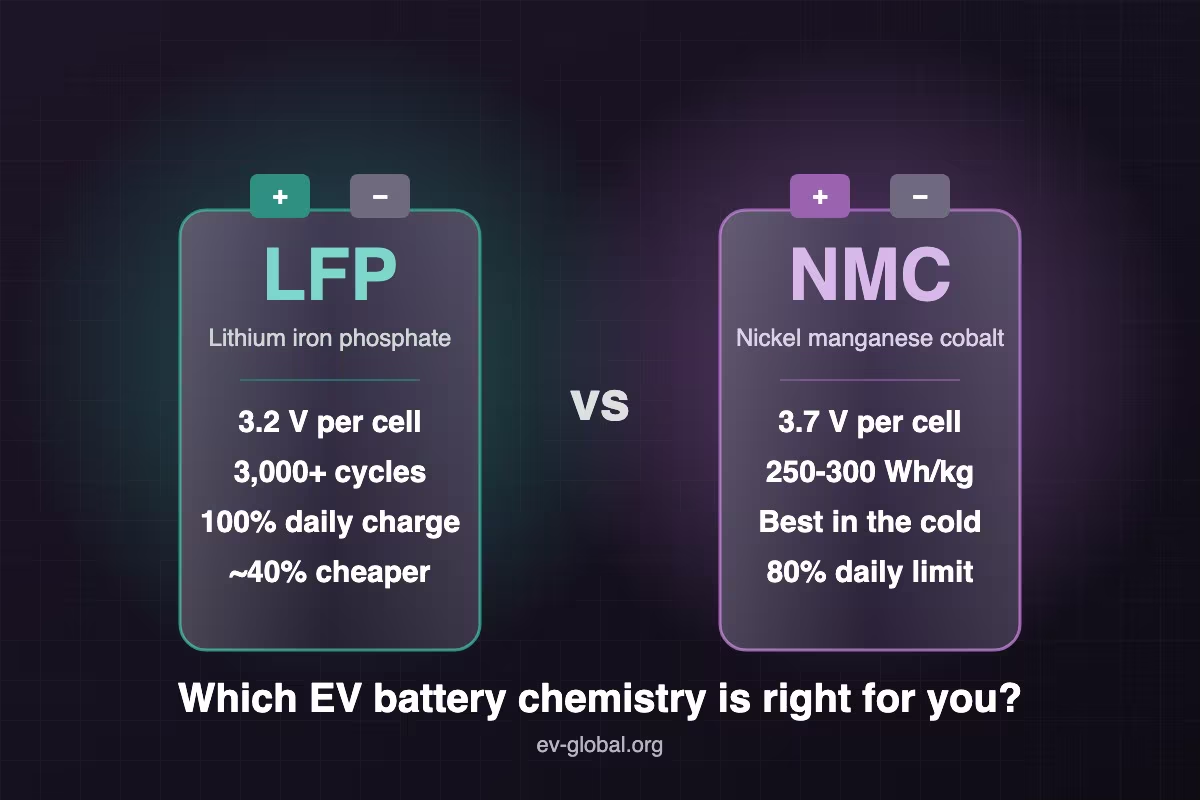
A sodium-ion cell is built like a lithium-ion cell: cathode, anode, electrolyte, separator, and ions shuttling between the electrodes as the cell charges and discharges. The pack hardware is so similar that CATL's cell-to-pack designs and battery management systems can run sodium and lithium cells side by side in one vehicle. The difference is the ion. A sodium ion is about 30% larger than a lithium ion, the atom weighs three times as much, and sodium's electrode potential sits about 0.3 volts higher, so a sodium cell runs at 3.0 to 3.3 volts nominal against 3.2 to 3.3 for LFP and 3.6 to 3.7 for NMC. More mass, more volume and less voltage per unit of charge is the whole energy-density penalty in one sentence, and no cathode trick removes it.
The cathodes come in three families. Layered transition-metal oxides (iron, manganese, copper, some nickel) give the highest energy density and are what HiNa, Farasis and BYD's denser cells use. Polyanion cathodes, mainly sodium iron pyrophosphate, store less but last far longer and dominate Chinese production, with about 91% of cathode output in January 2026. Prussian white, an iron hexacyanoferrate framework, is cheap and fast but dislikes moisture; CATL's first cell in 2021 used it, as did Northvolt's 160 Wh/kg cell. CATL has never said which cathode is inside Naxtra and the trade press contradicts itself, so neither will we.
The anode has to change too. Graphite, the standard lithium anode, barely accepts sodium, so every sodium cell uses hard carbon, a disordered carbon made today mostly from coconut shell and increasingly from coal or other biomass. Hard carbon cost about 120,000 yuan a tonne in 2021 and roughly 27,000 in the first half of 2025, which is one reason the cells got cheaper quickly; gas generation in hard carbon was one of the four production problems CATL says it solved in 2026.
Two engineering bonuses come with the chemistry. Sodium does not alloy with aluminium at low potentials, so both current collectors can be aluminium foil instead of copper on the anode side, which saves about 15% in materials cost and removes the copper price from the bill. And because there is no copper to dissolve, a sodium cell can be discharged to zero volts for shipping and storage, which a lithium cell does not survive. Researchers who tested it warn that the zero-volt tolerance depends on the exact chemistry, so it is a design option that some cells have and others do not.
CATL Naxtra, dated: what was promised and what shipped
CATL has worked on sodium since 2016, says it has spent close to 10 billion yuan and built about 300,000 test cells, and has announced the result in stages.
CATL Naxtra: what was promised, and when
Read in order, the pattern is a company that has not moved its technical numbers and misses its calendar ones by two to four quarters. The 175 Wh/kg figure has held since April 2025. The December 2025 production start became "large-scale production in the fourth quarter of 2026", and the mid-2026 car became a fourth-quarter car. For a buyer that gap is the difference between an announcement and a test drive, and it is worth remembering when the next sodium headline arrives.
Which cars actually have a sodium-ion battery
| Vehicle | Pack | Range | Status, November 2026 |
|---|---|---|---|
| JAC Yiwei E10X | HiNa cylindrical cells, 140 Wh/kg, 23.2 kWh | 230 km CLTC | Deliveries since January 2024; 5,000 sodium cars exported to Latin America in 2024. The only sodium car customers have actually taken home. |
| JMEV EV3 Youth Edition | Farasis layered-oxide cells, 140-160 Wh/kg | 251 km CLTC | Optional sodium pack offered in 2024; volumes undisclosed. |
| Changan Nevo A06 sodium | CATL Naxtra, 45 kWh, 800 V | 405 km CLTC | Unveiled February 2026, mid-2026 launch missed, expected Q4 2026, no price yet. The LFP versions cost 109,900 to 149,900 yuan. |
| GAC Aion UT Super sodium | CATL Naxtra swap pack | n/a | Announced for Q2 2026; no launch found. |
| Chery iCAR 03 | CATL or Chaowei sodium cells | n/a | Promised since 2023, launched with lithium; Chaowei's 2 GWh sodium line started in June 2026. |
| BYD Seagull and Dolphin | FinDreams | n/a | Reported in testing, no date. |
| Any model in Europe or North America | n/a | n/a | None. InsideEVs notes that the A06 "is not coming to the U.S." |
That leaves one production sodium car with customers (the JAC), one optional pack (the JMEV) and one headline car that has been three months from launch since February. Passenger-car sodium installations in China were under 4 MWh in the first half of 2025, roughly 200 cars' worth, according to one Chinese industry research house. The 10,000 to 20,000 cars CATL expects for 2026 would be a fifty-fold jump on 2025's domestic rate and still about 0.1% of China's EV market. Changan's lithium A06 has been on sale since November 2025 in three versions, so when the sodium car does arrive it will be judged against a 510 km LFP sibling in the same showroom. BYD, whose Blade battery made LFP respectable, has a sodium plant in Xuzhou and sodium Seagulls in testing, and has said vehicle production "will depend on market conditions and customer demand", which is the most candid line anyone in this story has delivered.
Cold is where sodium-ion wins
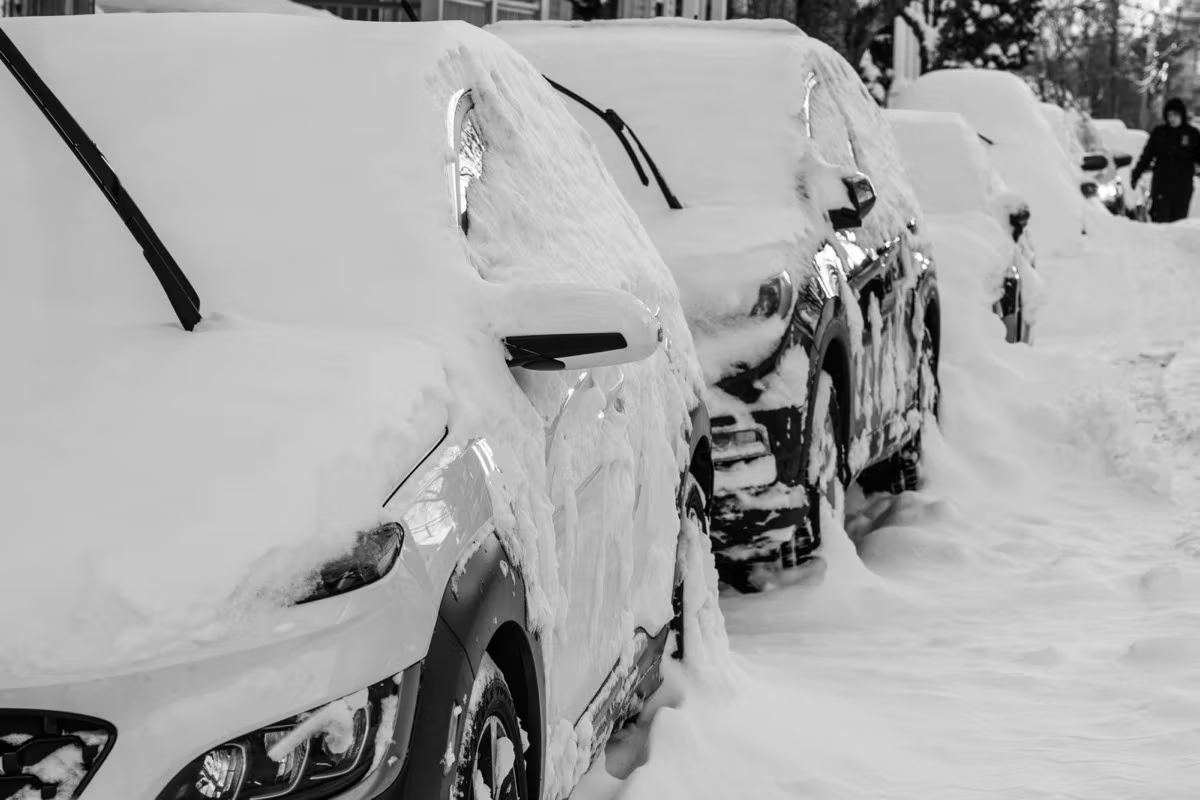
Every lithium pack loses range in the cold and refuses to fast-charge until it has warmed itself up; our guide to why EVs lose range in winter puts the typical loss at 20 to 30%, with LFP at the worse end. Sodium ions bind more weakly to the solvent in the electrolyte, so the charge-transfer resistance that chokes a lithium cell at -20°C stays low. The numbers CATL publishes: more than 92% usable capacity at -20°C and 90% at -40°C for its Tectrans II van pack, charging down to -30°C, nearly three times the discharge power of an equal LFP pack at -30°C in the A06, and stable discharge at -50°C. The IEA's 2026 outlook repeats the 90% at -40°C figure. These are manufacturer tests, and the LFP comparison points (50 to 70% at -20°C) come from vendor material, so discount them. Even discounted, the gap is the size of a winter.
That is why the A06 was unveiled in Yakeshi at -30°C and not in Shanghai. Changan's lithium A06 is rated at 510 km, and a lithium pack at -25°C can deliver about half of its rating. On a January morning in Harbin, Oslo or Minneapolis, a car whose 405 km sodium pack keeps 90% of its capacity goes further than its 510 km lithium sibling, and cabin heat and denser air cost both of them. The same logic argues for the 24-volt starter battery for trucks (one-click start at -40°C, starts after a year idle) and CATL's idea of mixing sodium and lithium cells in one pack so the sodium cells carry the cold start, a concept the company has shown but has not confirmed in any production car.

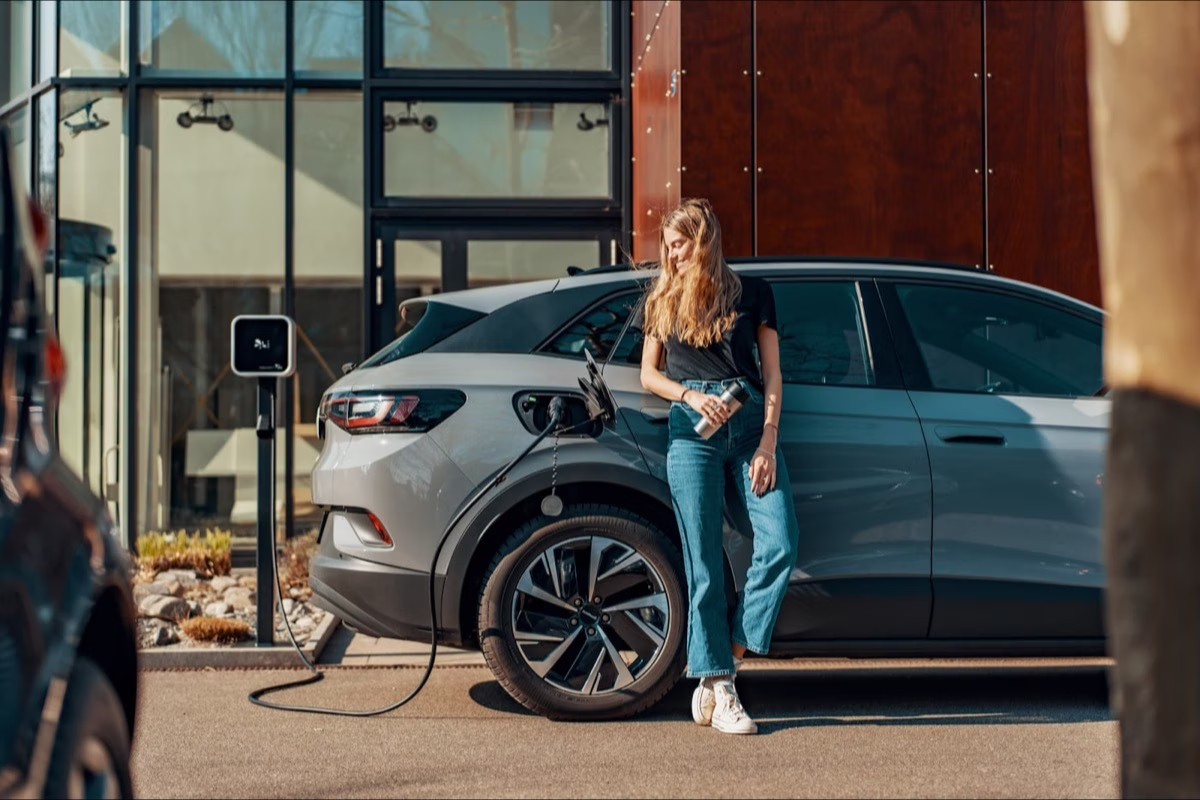
Charging in the cold is the job sodium-ion was built for: CATL claims 90% usable capacity at -40°C, where a lithium pack has to heat itself before it accepts a charge. Photo: Maik Poblocki / Pexels.
Flip through the tabs and the shape of the market appears: lithium wins the two energy tabs, which decide range and packaging, and sodium wins the two tabs that decide what a battery is like to live with in a cold country or a high-cycle job. The sodium cold and cycle figures are manufacturer claims and the lithium cold figures are vendor ranges, so read them as directions rather than decimals.
Cheaper in theory, not yet at the cell
On paper sodium should be the cheap battery. Battery-grade sodium carbonate costs about 4,000 yuan a tonne, about 4% of the lithium carbonate price even now and under 1% of it at the 2022 peak; both current collectors are aluminium; the cathode is iron, manganese and copper instead of nickel and cobalt; the cell bill of materials works out 20 to 30% below LFP in the models. In practice the Chinese price lists said something else through 2026: sodium cells at 0.35 to 0.50 yuan per Wh against 0.30 to 0.40 for LFP, a storage tender in September 2026 in which the sodium lot cost 1.03 yuan per Wh against 0.53 for LFP, and Wood Mackenzie's global average of $229 per kWh for sodium storage against about $200 for LFP. MIT Technology Review's January 2026 summary still holds: today's sodium cells are not meaningfully cheaper than lithium-ion.
The reason is scale, and scale is arriving. Bernstein puts the sodium cell cost at $57 per kWh in 2025, down 24% in a year, with parity in 2027 and a $15 to 20 advantage after that; CATL and CITIC say cell-level parity by the end of 2026; Wood Mackenzie agrees on cells but puts module and system parity after 2030, because the packaging, the integrators and the standards all exist for lithium already. Chinese policy adds a thumb on the scale: from 1 September 2026 lithium-ion cells carry a 2% consumption tax, rising to 4% in 2027, while sodium-ion, solid-state and fuel cells stay exempt until the end of 2028. For context on where LFP itself stands, read LFP vs NMC, and for who makes what, the battery manufacturers.
What nobody controls is the lithium price, and that is the table every sodium business plan is really about.
| Date | Lithium carbonate, yuan per tonne | What it meant for sodium-ion |
|---|---|---|
| 2021 | about 50,000 | CATL shows its first sodium cell. |
| November 2022 | about 600,000, the record | Every large cell maker opens a sodium programme. |
| June 2025 | under 60,000 | Bedrock Materials returns its seed money (April); Natron closes (September). |
| January 2026 | about 170,000 | Sodium cells modelled about 15% cheaper than LFP at this lithium price, though market cell prices had not followed; CATL says the lithium rally pulled its rollout forward. |
| 12 May 2026 | 201,000, a two-year high | Peak of the sodium capacity announcements. |
| 6 November 2026 | 93,600 | Below the roughly 150,000 yuan break-even that Chinese analysts cite for sodium. |
At 93,600 yuan the case has to be made on hedging, the tax exemption and cold performance, because the spot price no longer makes it, and the 2025 trough shows what happens to companies without a hedge of their own: Natron closed with $25 million of orders unfilled and a $1.4 billion factory plan on paper. CATL can afford to wait for the next lithium spike. Start-ups cannot.
Where the salt battery goes first
China shipped 8 to 9 GWh of sodium-ion cells in 2025, up about 150%, and more than 60% of that went into stationary storage, then two-wheelers and swap cabinets, then cars, then starter batteries. Shipments of 25 GWh or more are expected for 2026 across all Chinese makers, HiNa, BYD, Chaowei and CATL among them. The order of that list will hold for years, for one reason: storage and scooters do not care about volumetric density, and cars do.
Grid storage first
CATL's TENER Sodium storage system, launched in Munich in June 2026, is rated for 15,000 cycles at 25 to 30°C and 10,000 at 45°C, keeps 92% of its capacity below -20°C and carries a 30-year warranty. HyperStrong signed for 60 GWh over three years, about half of CATL's entire 2025 storage sales; Alfen took 5 GWh for the Netherlands and Western Europe, Solarpro 2 GWh for Central and Eastern Europe, INTILION 3 GWh for Germany, Switzerland and Austria. BYD's polyanion storage cells have been in scaled production since January 2025, and BYD claims up to 10,000 cycles for its third-generation cell with a 20,000-cycle target, while HiNa projects 25,000 for its newest cell. In the US, GM is developing sodium cells with Peak Energy for grid storage while saying out loud that the energy density is too low for its cars. Our vehicle-to-grid guide explains why a stationary pack values cycles over kilograms.
Scooters and swap stations
Yadea sold its first sodium scooters in January 2025 at 3,299 to 4,299 yuan, with 145 Wh/kg packs that keep more than 92% of their capacity at -20°C and charge to 80% in about 15 minutes; one projection has 15% of China's roughly 55 million annual e-scooters on sodium by 2030. CATL's Choco-Swap network, 1,470 stations in April 2026 with a target of 4,000 by year end, will carry Naxtra packs, and a swap station is the one place where a heavier pack costs the driver least. NIO's battery-swap model shows how that arithmetic works.
Vans, forklifts and the 24-volt starter
CATL's Tectrans II is a 45 kWh sodium pack for light commercial vehicles that charges at -30°C and, CATL says, takes 5C with less than 5°C of cell heating, which would let the van shed most of its cooling hardware; it was winter-tested in JAC trucks and Zhongtong vans with production planned from July 2026. BYD launched the first mass-produced sodium forklift in January 2026, rated from -40°C to 60°C; Jungheinrich began customer trials of sodium forklifts in Germany in May 2026; HiNa is putting about 200 sodium heavy trucks on Chinese roads this year. The least glamorous application may turn out to be the biggest: a 24-volt sodium starter battery that replaces lead-acid in trucks, starts at -40°C and, CATL says, costs 61% less over its life.
What sodium-ion will not fix
Energy density has a ceiling that no roadmap moves far. The best mass-production sodium cell is at 175 Wh/kg; Farasis targets 180 to 200 and BYD 180 for its layered oxide, while LFP has reached 205 and CATL's own hybrid LFP cell 230. CATL's chief scientist says LFP is near its theoretical limit, that NMC keeps the density crown, and places sodium in "extreme temperatures and energy storage". By volume the gap is worse: 290 to 350 Wh/L against about 500 for LFP, about 600 for today's NMC cells and up to 965 for silicon-blend NMC, which is why the IEA's 2026 outlook treats volumetric density as the larger handicap and models a sodium SUV at up to about 350 km. The Chinese trade press draws the line at micro and A0-class cars under 100,000 yuan, a segment of about 2.35 million cars in 2025, or 15% of China's new-energy sales. It is a large segment, and for now it is almost the whole addressable market; the A06 itself sits a class above it.
The supply chain is young and almost entirely Chinese. Usable hard-carbon capacity in China was under 100,000 tonnes in January 2026, coconut-shell prices spiked, the sodium electrolyte salt still costs more than its lithium equivalent, and the IEA puts China at more than 95% of sodium capacity through 2030. Of about 276 GWh of sodium capacity planned in China by the end of 2025, about 13% had been commissioned. Manufacturing is not a copy of an LFP line either: CATL lists more than 100 engineering problems it had to solve, four of them large enough to call bottlenecks, from moisture control to aluminium foil adhesion, and one Chinese outlet described the job as rebuilding the entire kitchen.
Then there is the execution record outside CATL. Northvolt's 160 Wh/kg sodium cell died with the company in 2025, and its buyer Lyten makes lithium-sulfur cells. Natron, with its 50,000-cycle Prussian blue chemistry, closed in September 2025. Tiamat's French gigafactory, with Stellantis as a shareholder, was suspended in September 2026 for want of 200 million euros. Every -40°C and 10,000-cycle figure in this article is a manufacturer claim awaiting independent data. Sodium-ion is real; it is also a technology whose public numbers are written by the people selling it. Solid-state batteries went through the same phase a few years earlier, with less to show for it.
Europe gets the storage before the cars
No sodium-ion car or e-bike is on sale in the EU, and JAC's sodium exports went to Latin America. What Europe gets first is CATL's storage: TENER Sodium deliveries from June 2027 under the Alfen, Solarpro and INTILION agreements, after more than 30 CATL-INTILION storage projects in Germany since 2022. Clarios is validating low-voltage sodium cells from Altris and InoBat in its Hannover labs for serial production before 2030, which would put a sodium 12-volt battery under the bonnet of European cars long before a sodium traction pack sits under the floor. The EU Battery Regulation treats a sodium pack like any other: a battery passport from 18 February 2027, carbon-footprint disclosure once the methodology is adopted, and recycled-content quotas for cobalt, lithium and nickel from 2031 that an iron-manganese sodium cathode simply does not carry. For a European buyer the practical advice is short. The sodium car you can buy before 2028 does not exist, and the first sodium battery you own will probably be a 12-volt one under the bonnet. How the chemistry you do buy holds up over eight years is covered in how long EV batteries last, and the charging side in 800-volt charging explained.
Free toolBattery degradation calculatorSee how cycles, fast charging and age change an EV's range over the years. These are the numbers a 10,000-cycle sodium claim is up against.The EV-Global verdict
Sodium-ion is the most useful battery chemistry you will probably never drive. Its physics cap it around 175 to 200 Wh/kg and 350 Wh/L, which rules out every long-range EV, and its economics only beat LFP when lithium is expensive or the application is cold, cyclical or indifferent to size. Those applications are enormous: grid storage, scooters, swap packs, delivery vans, forklifts and the 24-volt battery in every truck, plus a few million small Chinese cars a year. CATL has the cells, the certificates and the orders; what it has missed, twice, is the date on the first car. Watch the price of the Changan A06 sodium when it finally appears and the lithium carbonate chart next to it, and if you live where January means -20°C, watch both closely. Our guide to LFP versus NMC covers the two chemistries you will actually be choosing between in 2027, and the battery hub has the rest.
Sodium-ion batteries: frequently asked questions
Which cars use sodium-ion batteries?
As of November 2026: the JAC Yiwei E10X (HiNa cells, 23.2 kWh, 230 km CLTC, on sale in China since January 2024 and exported to Latin America), the JMEV EV3 with an optional Farasis sodium pack (2024), and the Changan Nevo A06 sodium version with a 45 kWh CATL Naxtra pack and 405 km CLTC, unveiled in February 2026 and expected to go on sale in the fourth quarter. GAC Aion UT and Chery iCAR sodium versions have been announced and not launched. No sodium-ion car is sold in Europe or North America.
Are sodium-ion batteries better than lithium-ion?
Better in the cold, in cycle life and in raw-material cost; worse in energy per kilogram and especially per litre. CATL's Naxtra cell stores 175 Wh/kg against up to 205 for LFP and 265 for NMC, and about 350 Wh/L against roughly 500 and 600. That makes sodium the better battery for small cars, vans, scooters and grid storage, and lithium the better battery for anything that needs range in a limited space.
What range does a sodium-ion electric car have?
The JAC Yiwei E10X manages 230 km on China's CLTC cycle; the Changan Nevo A06 sodium version is rated at 405 km CLTC from 45 kWh. CATL projects 500 to 600 km cars as the supply chain matures, while the IEA models up to 350 km for a sodium SUV. In deep cold the comparison flips: CATL claims about 90% of capacity at -40°C, where a lithium pack can lose half its range.
Are sodium-ion batteries cheaper than LFP?
Not yet at the cell. In 2026 Chinese sodium cells cost 0.35 to 0.50 yuan per Wh against 0.30 to 0.40 for LFP, and Wood Mackenzie puts sodium storage at $229 per kWh against about $200 for LFP. CATL and CITIC expect cell-level parity by the end of 2026, Bernstein in 2027; Wood Mackenzie expects system-level parity only after 2030. The case depends on lithium carbonate staying above roughly 150,000 yuan a tonne, and it was at 93,600 on 6 November 2026.
How long do sodium-ion batteries last?
CATL claims more than 10,000 full cycles for the Naxtra passenger cell and 15,000 for its storage cell, BYD claims up to 10,000 with a 20,000-cycle target, and HiNa projects 25,000 for its newest cell. Typical LFP EV cells manage 2,000 to 3,000 cycles and NMC about half that. All sodium figures are manufacturer claims; no independent long-term data has been published yet.
Can I buy a sodium-ion EV in Europe or the US?
No. No sodium-ion passenger car is on sale in either market, and Changan has said the A06 is not coming to the US. The first sodium products Europeans will see are CATL's TENER Sodium grid storage, due from June 2027, and low-voltage 12-volt batteries that Clarios plans to build before 2030. In the US, Natron Energy closed in 2025 and GM is developing sodium cells with Peak Energy for grid storage only.
Hero photo: Drew Rae / Pexels. Charging photo: Maik Poblocki / Pexels. Both resized and converted to AVIF. Data from CATL releases (April 2025, April and October 2026), CnEVPost, CarNewsChina, Electrive, ESS News, Wood Mackenzie (November 2026), BloombergNEF (December 2025), the IEA Global EV Outlook 2026, SMM, Mysteel, Bernstein and Trading Economics; manufacturer performance figures are claims, not independent tests.