Range-Extender EVs Explained: How an EREV Works, Why China Sells a Million a Year, and Why Detroit Is Building Them While Europe Says No
What is an EREV? An extended-range electric vehicle is an electric car with a petrol generator. Only the electric motor drives the wheels; the engine never touches them, it only recharges a battery that is typically 30 to 90 kWh, good for 150 to 450 km on its own. That makes an EREV a battery EV for daily driving and a petrol car on long trips, at the cost of a second powertrain's weight, a fuel economy on the generator that is no better than a good petrol SUV, and a regulatory status in Europe that treats it as a plug-in hybrid. China sold 1.17 million of them in 2025; Scout, Ram, Jeep, Hyundai and Ford are bringing them to the US from late 2026; Volkswagen says they make no sense in Europe.
The range extender was supposed to be a bridge technology, and the West burned the bridge early. Chevrolet killed the Volt in 2019, BMW dropped the i3 REx the year before, and Mazda's rotary MX-30 R-EV sold 678 cars in Britain before it was withdrawn this January. Then two things happened. China turned the idea into a 1.2-million-a-year segment of large, luxurious SUVs with 50 to 75 kWh batteries and 1,400 km of total range, and American truck buyers refused to pay $70,000 for a battery pickup that towed for 150 miles. Ford took a $19.5 billion charge in December 2025 and replaced its electric F-150 with a range-extended one; Ram cancelled its battery truck and kept the generator version; 85% of Scout's reservation holders ticked the box for a petrol engine in an electric truck. This is the engineering behind that choice: what a series hybrid actually does with the fuel, where it beats a plug-in hybrid and a battery car, where it loses, and why the same drivetrain is booming in China, arriving in Detroit and being refused in Wolfsburg.
What an EREV is, and what it is not
The vocabulary matters because regulators and marketers use it loosely. In a battery EV the pack drives the motor, full stop. In an EREV (also REEV, REx or "series hybrid with a plug") the pack drives the motor and an engine-generator set recharges the pack; the engine has no mechanical path to the wheels. In a parallel or power-split plug-in hybrid the engine can drive the wheels directly, through a clutch or a planetary gear, which is more efficient at motorway speed but means a smaller battery, a gearbox and a combustion engine sized to move the car. Two hybrids complicate the picture: the second-generation Chevrolet Volt was marketed as an extended-range EV but clutched its engine to the wheels at speed, and Nissan's e-Power system arriving in the US this November is a pure series hybrid with a 2.1 kWh battery and no plug, which is not an EREV at all, whatever the brochure implies. Zeekr's 9X, often listed as an EREV, lets its 2.0-litre turbo drive the wheels too.
The regulators draw their own lines. Europe types an EREV as an "off-vehicle-charging hybrid", the same box as any plug-in hybrid, with the same utility-factor arithmetic that is about to turn against it. China counts EREVs inside its plug-in hybrid category for credits but gives them the green plates and purchase-tax exemption that built the segment. California's old BEVx rule required at least 75 miles of electric range and a petrol range no longer than the electric one, which is why the US i3 REx had its tank software-limited to 7.2 litres until 2017, a restriction that drew a class action in 2016.
| Architecture | Engine drives wheels? | Typical battery | Electric range | Examples |
|---|---|---|---|---|
| Battery EV | no engine | 50 to 120 kWh | 300 to 800 km | Model Y, Ioniq 5, Rivian R2 |
| EREV (series, plug-in) | no | 28 to 92 kWh | 145 to 505 km | Li Auto L9, Ram 1500 REV, Scout Harvester, Leapmotor C10 REEV |
| Plug-in hybrid (parallel or power-split) | yes | 10 to 30 kWh | 50 to 150 km | Toyota RAV4 PHEV, VW Tiguan eHybrid, BYD Seal U DM-i |
| Series hybrid, no plug | no | 1 to 2 kWh | 0 | Nissan Rogue e-Power, Nissan Qashqai e-Power |
The physics: where the fuel goes
The case for a series drivetrain is that the engine never has to do what engines are bad at. It does not idle, it does not lug at 1,500 rpm in top gear, and it does not rev to 6,000 to merge; it runs at one or two operating points where its thermal efficiency peaks. Li Auto's 1.5-litre turbo generator is rated at 40.5% thermal efficiency, Nissan's three-cylinder e-Power engine at 42%, and Horse Powertrain's methanol range extender at 47% fuel-to-electricity. A petrol engine driving a car directly spends most of its life between 20 and 30%. That is the whole argument, and it is a good one, until the electricity has to get to the wheels.
Because it has to get there through a chain: generator, rectifier or inverter, battery, inverter, motor. Each stage is 94 to 97% efficient, which sounds harmless until you multiply: a 2025 simulation study puts series-mode drivetrain efficiency at 12 to 41% against 60 to 75% in battery mode, with the worst numbers coming from frequent short engine starts, which is exactly how a small battery gets used in winter. The real-world numbers confirm it. Li Auto's L9 has improved its charge-sustaining consumption from 7.8 to 6.3 L/100 km across three generations; Transport & Environment measured Chinese EREVs at about 6.7 L/100 km on the generator, "similar to some European petrol SUVs"; the Ram 1500 REV is quoted at 20.5 mpg, 11.5 L/100 km, once its 70 usable kWh are gone, which is what a petrol Ram does. An EREV on petrol is a petrol car carrying a 500 kg battery and a second drivetrain. It saves fuel only in proportion to the kilometres it drives on the plug, and the only large dataset we have, BNEF's for China, puts that at around 70% of distance.
Then there is sizing. The generator is small because it has to be: 105 to 130 kW in most designs, against motors of 300 to 600 kW. The Ram's 130 kW V6 cannot sustain its 663 hp; on a long grade with 14,000 lb on the hook the road load will exceed what the generator supplies and the battery drains until the truck slows to what 130 kW can hold, the same "turtle mode" i3 REx owners met on mountain passes with a 25 kW scooter engine behind them. Ram has published no sustained-towing figure; that is the number to ask for. Weight is the other tax: the current L9 weighs 2,835 kg, the Ram 3,405 kg (7,507 lb). What has changed since the Volt era is charging: Li Auto's new L9 charges at 420 kW (5C), Zeekr's 9X at 6C, the Ram at 145 kW, so an EREV can now be driven like a BEV between fuel stops rather than as a hybrid with a long cord. For the motor side of the chain see how an electric car motor works; for what the generator is doing at its sweet spot, how a car engine works; for why 800 volts makes the fast-charging half of the equation possible, 800V explained.
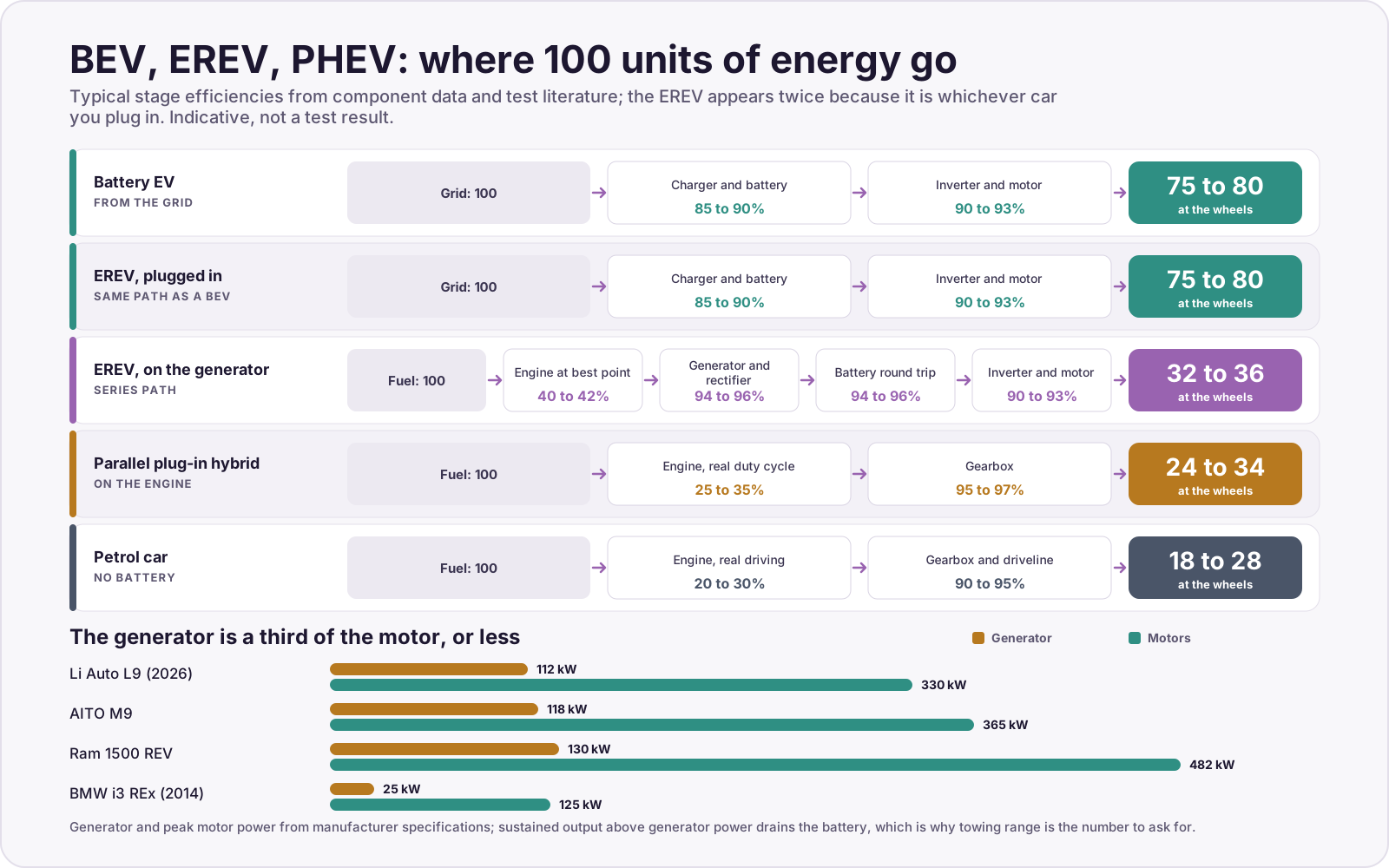
Original EV-Global infographic: where 100 units of energy go in a BEV, an EREV and a PHEV, and how small the generator is next to the motors. Vector version and the ten-vehicle dataset in the reference library.
Why the West dropped it, and why it is back
The first generation lost on the wrong trade. The Chevrolet Volt was a genuinely good car, 53 miles of electric range from 18.4 kWh and 42 mpg after that, and GM sold 157,054 of them in the US before killing it in February 2019 to spend the money on battery EVs. The BMW i3 REx took 60% of i3 sales in Britain at a 3,150-pound premium, then BMW dropped it in Europe in 2018 when a 42 kWh pack arrived, saying demand had shifted to pure electric; it lasted in the US until 2021. Mazda's MX-30 R-EV, with a 55 kW rotary generator, 17.8 kWh and 85 km of range, was withdrawn from Europe in January 2026 after reviewers described the rotary as "a laboured, rather monotonous blare". The pattern: small batteries, small engines, odd compromises, sold into markets where a bigger battery was always one model year away.
What brought it back is the full-size truck. A battery pickup with 150 miles of towing range needs 150 to 200 kWh of cells to be honest, which is $15,000 to $25,000 of battery before the truck exists, and buyers noticed: F-150 Lightning sales fell 72% in November 2025 once the credit expired, and Ford's Jim Farley said "the very high-end EVs, the $50K, 70K, $80,000 vehicles, they just weren't selling". Ram's Tim Kuniskis puts the EREV's cost basis "anywhere from $8,000 to $14,000 less" than the battery alternatives. Scott Keogh at Scout expected a 60/40 split between battery and range extender and got 85/15 the other way: "Did I think it was 85/15? No." (Scout publishes no official split; later statements put it at "over 50%" and "about three to one", so treat 85% as the early-reservation peak.) AutoForecast Solutions' Sam Fiorani: "It makes a lot more sense to target the EREV, especially when you're looking at trucks." Ford's Andrew Frick makes the consumer case in one line: "The typical customers will get through nine out of 10 days on electricity alone." That sentence is the EREV's entire value proposition, and it is also its test, because a truck that is never plugged in is a heavy petrol truck. The wider story of buyers retreating to hybrids is in why hybrids are surging again.
China: a million a year, and the first signs of a peak
The numbers. China's retail market took 1.17 million EREVs in 2025, up 6%, which is 9.1% of 12.81 million new-energy cars. The segment was built by Li Auto, whose L-series SUVs made it the first profitable Chinese EV start-up, and by Huawei's AITO brand, whose M9 sold about 110,000 units in 2025 and passed 280,000 cumulative deliveries in March 2026. The recipe is specific: big three-row SUVs priced above 250,000 yuan (more than 60% of 2024 EREV sales were), 50 to 75 kWh packs, a 1.5-litre turbo generator around 110 kW, 1,400 to 1,700 km of total range, green plates that bypass city licence lotteries, and a purchase-tax exemption that was full until the end of 2025 and is halved for 2026 and 2027. The regulator even wrote a dedicated standard, QC/T 1086-2026, effective November 1, 2026, which specifies generator power control, noise, electromagnetic compatibility and a durability test of 750 hours plus 100,000 engine start-stop cycles.
And the peak. Through September 2026 Chinese EREV retail sales are down 10.5% to 698,000 while new-energy penetration hit a record 67%; September alone was down 19.3%. Li Auto's deliveries fell 18.8% in 2025, its L-series dropped more than 60% year on year last October while its new i6 and i8 battery SUVs sold 6,000 a month each, and the 2026 plan to "reclaim EREV leadership" with new L9, L8 and L6 models has so far delivered a flat year. The reason is the thing EREVs were a workaround for: with 12.8 million charge points, public and private, and 5C charging, the Chinese buyer who can plug in no longer needs the generator. The counter-signal is just as loud. Xiaomi launched its Sky Nomad EREV SUVs on September 7, 2026 (52 to 76 kWh, 351 to 505 km CLTC electric, up to 1,705 km total, 20 to 80% in 18 minutes) and took 10,000 locked orders in four minutes and 70,000 in a month; Lei Jun's justification was that "peers including Li Auto continue to demonstrate that consumers are willing to pay for well-designed extended-range vehicles." Volkswagen's China joint venture sells the ID. ERA 9X and 8X EREVs, more than 10,000 in two months, and AITO plans a European launch in autumn 2027. For the companies behind those names, see the China shock and Xiaomi's EVs.
United States: trucks first, from late 2026
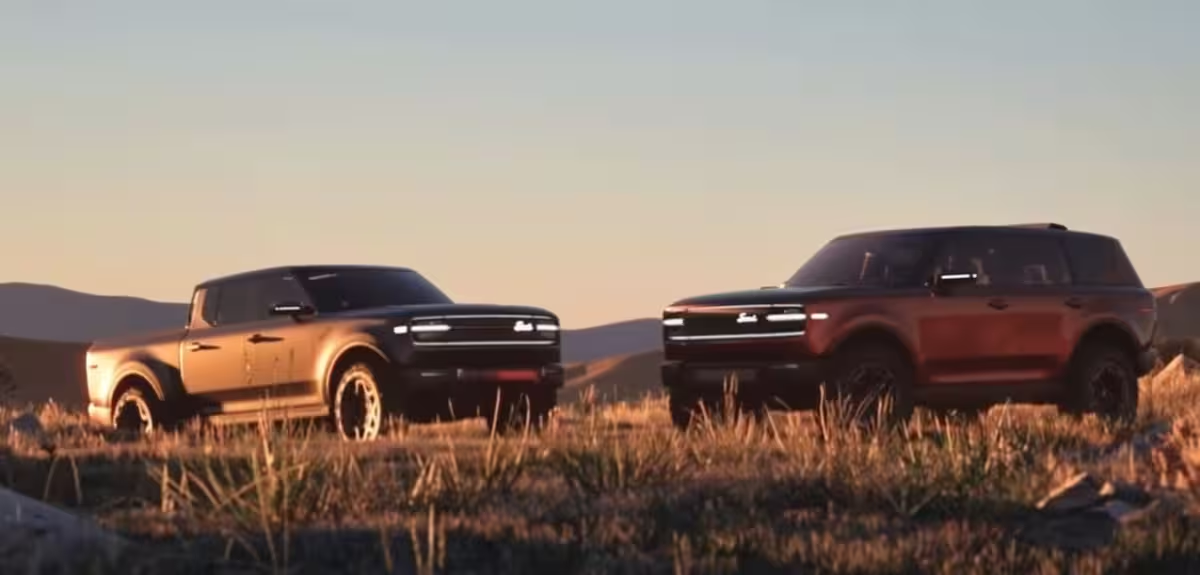
The American EREV wave is a truck wave, and the dates have moved. Jeep's Grand Wagoneer EREV (92 kWh, 3.6-litre V6, 647 hp, 500-plus miles) starts production at Warren in November 2026 and will be the first out. Ram's 1500 REV, the renamed Ramcharger, follows in April 2027 at Sterling Heights with the same 92 kWh pack, 145 miles electric, 690 miles total, 14,000 lb of towing and no price yet; it was supposed to arrive in 2026, and the battery-only Ram 1500 REV was cancelled in September 2025 because "demand for full-size battery electric trucks slows". Scout's Traveler and Terra Harvester (about 63 kWh of LFP by reports, roughly 150 miles electric, 500-plus total, a naturally aspirated Volkswagen four-cylinder as generator, 0 to 60 in 4.5 seconds, under $60,000) start production at Blythewood, South Carolina, in 2027 with deliveries in 2028; forecasters expect September 2028 for the SUV and 2030 for the pickup. Hyundai's Santa Fe EREV comes from Alabama in the first half of 2027 with more than 600 miles of range and a 1.6-litre generator, and a Genesis EREV follows with 640-plus. Ford's range-extended Lightning, promising 700 miles, is "a few years away". GM has no North American EREV confirmed. Nissan's Rogue e-Power arrives in November 2026 at $35,490, but as a series hybrid without a plug it belongs in the hybrid article, not here.
Policy has made this a pure market test. The $7,500 and $4,000 credits ended on September 30, 2025, the EPA rescinded its vehicle greenhouse-gas standards in February 2026 and NHTSA rewrote the fuel-economy rules in September; there is no federal thumb on the scale for or against the generator. McKinsey found 13 to 18% of buyers in Germany, Britain and the US would consider an EREV, which is a niche with a long order book. The Scout story is in Scout Motors EV; what the end of the credit means for every EV purchase is in the 2026 tax credit guide.
Europe: the regulation says no before the market can
Europe has exactly one volume EREV on sale, Leapmotor's C10 REEV: 28.4 kWh (38.7 in the 2026 facelift), 145 km WLTP, 950 km total, 65 kW DC charging, from 37,400 euros, with a B10 REEV added in May and production in Tychy, Poland, from late 2026. Leapmotor's European registrations grew 706% in the first quarter of 2026, but one trade source says the REEV version "has not yet fully resonated" and the brand publishes no split. Horse Powertrain, the Renault-Geely engine company, now sells a drop-in range extender, the C15, that packages a 1.5-litre engine, generator, inverter and cooling into a 50 by 55 by 28 cm block at 70 or 120 kW, plus a methanol variant at 47% efficiency; Renault is reported to be adapting its next EV platform for it. Audi's Gernot Döllner calls the architecture "future-oriented" for China, BMW's Bernd Körber says "no decisions have been made" on an X5 or 7 Series REx, and Volkswagen's Thomas Schäfer closed the door in March: "The European CO2 rules don't give you any benefit [for range extenders]. And it's expensive technology. We could bring it but it's nothing that makes sense." VW will sell 150 km parallel plug-in hybrids instead.
Schäfer is right about the rules. European fleet CO2 for plug-in hybrids, EREVs included, rests on a utility factor that assumes how much driving is electric, and the assumption is being cut because reality disagreed: Transport & Environment's analysis of fuel-consumption data from 800,000 plug-in hybrids found real emissions of 135 g/km against an official 27, with 27% of distance electric instead of the assumed 84%, and the International Council on Clean Transportation puts the gap for 2023 cars at 4.6 times, up from 3.5 for 2021 cars. So the utility-factor distance moves from 800 km to 2,200 km in 2025-26 and to 4,260 km from 2027-28: a 70 km plug-in hybrid drops from an assumed 80%-plus electric share to 54% and then 34%. A long-range EREV is hit less, which is the one regulatory point in its favour, and T&E's own definition of a "good EREV" is a useful buyer's checklist: a motor at least three times the engine's power, at least 200 km of electric range, at least 100 kW of DC charging and a tank no larger than 15 litres. Germany's company-car tax grants the 0.5% rate to plug-in hybrids and EREVs only with 80 km of WLTP range or 50 g/km, against 0.25% for a battery car. As for 2035: the Commission proposed in December 2025 to cut the target from 100% to 90% with credits for green steel and fuels, and two Parliament committees backed 95% with a 7.5-point credit on October 23, 2026, with the plenary due in December. On any of those paths a range-extended car remains legal to register after 2035, which is more than it had a year ago.
Range-extender EVs compared
Tap between battery, electric range and total range. The Chinese SUVs and the US trucks carry packs a Model 3 would recognise; the European entries, the Leapmotor and the departed Mazda, are the small-battery first generation. On total range everything on the list beats any battery car on sale.
| Vehicle | Battery | Electric range | Generator | Total range | System power | Price | Market and status |
|---|---|---|---|---|---|---|---|
| Li Auto L9 (2026) | 72.7 kWh | 420 km CLTC | 1.5 T, 112 kW | 1,650 km CLTC | 330 kW | 410,000 to 440,000 yuan (2024 model) | China, on sale; previous generation 52.3 kWh, 280 km |
| AITO M9 EREV | 52 kWh | 266 to 290 km CLTC | 1.5 T, 118 kW | 1,417 to 1,474 km | 365 kW | about 470,000 to 570,000 yuan | China, on sale; Europe autumn 2027 |
| Xiaomi Sky Nomad N90 Max | 76 kWh | 462 km CLTC | 1.5 T, 112 kW | about 1,700 km | 310 kW | 269,900 to 299,900 yuan | China, launched September 7, 2026 |
| VW ID. ERA 9X | 51.1 or 65.2 kWh | 267 or 400-plus km CLTC | 1.5 T, 105 kW | 1,190 to 1,260 km WLTC | 220 or 380 kW | from 299,800 yuan | China, on sale since April 2026 |
| Leapmotor C10 REEV | 28.4 kWh (38.7 facelift) | 145 km WLTP | 1.5 L, naturally aspirated | 950 km | 158 kW | from 37,400 euros | Europe and China, on sale since March 2025 |
| Mazda MX-30 R-EV | 17.8 kWh | 85 km WLTP | 830 cc rotary, 55 kW | about 680 km | 125 kW | 35,990 euros | withdrawn from Europe January 2026 |
| Ram 1500 REV | 92 kWh (about 70 usable) | 145 mi | 3.6 V6, 130 kW | 690 mi | 647 to 663 hp | est. $70,000 to $80,000 | US, production April 2027 |
| Jeep Grand Wagoneer EREV | 92 kWh | not published | 3.6 V6 | 500-plus mi | 647 hp | not published | US, production November 2026 |
| Scout Terra / Traveler Harvester | about 63 kWh LFP (reported) | about 150 mi | naturally aspirated four-cylinder (VW) | 500-plus mi | not published | under $60,000 | US, production 2027, deliveries 2028 |
| Hyundai Santa Fe EREV | not disclosed, "about half a BEV" | not disclosed | 1.6 I4 | 600-plus mi | dual motor | not published | US (Alabama), first half 2027 |
Is an EREV the right car for you?
Yes, if three things are true: you can plug in at home or work most nights, so the generator is for the trips not the commute; you regularly drive beyond the battery's range with a load, a trailer or in territory where fast chargers are thin; and you are in a market that prices the car fairly, which today means China and, from 2027, the US. No, if you can charge daily and rarely tow: a battery car of the same size is lighter, cheaper to run and now charges in 20 minutes, and our charging cost breakdown will show the generator never pays for itself. Also no, if you will not plug in at all: then you are buying a heavy petrol car with worse fuel economy than a parallel hybrid, which is what the European real-world data is really describing. And in Europe, do the tax arithmetic before the engineering: the utility-factor cuts, the 80 km company-car threshold and the lack of a purchase incentive for anything with a tank mean the honest comparison is usually against a 150 km plug-in hybrid or a 600 km BEV, not against a petrol car; buying or leasing changes that arithmetic again. Winter changes the maths too: the generator runs the heater without draining the pack, which is the one place an EREV owner is happier than a BEV owner in January; see why EVs lose range in winter.
Free toolEV savings calculatorPut your own mileage, fuel price and electricity tariff in and see whether the generator ever pays for itself.The EV-Global verdict
The range extender is good engineering in search of the right market, and in 2026 it has found two very different ones. In China it is a luxury-SUV format that is past its peak because charging won; in the US it is the only credible way to sell an electric pickup to someone who tows, and the launch calendar from November 2026 to 2028 (Jeep, Ram, Hyundai, Scout, Ford) is the most serious combustion-plus-battery programme Detroit has run since the Volt. Europe will get it from Chinese brands and from Horse's drop-in modules rather than from VW, and the regulation will keep it a niche. The engineering rule for buyers is simple: treat the battery as the car and the engine as the insurance, insist on 200 km of electric range, 100 kW of charging and a generator that can hold motorway speed with your load, and plug it in. An EREV that is plugged in is 90% an electric car. One that is not is the heaviest petrol car you can buy. More on the hardware behind both halves in our automotive engineering guides.
Range-extender EVs: frequently asked questions
What is an EREV?
An extended-range electric vehicle: an electric car whose wheels are driven only by electric motors, with a petrol (or methanol) engine on board that works purely as a generator to recharge the battery. Typical batteries are 28 to 92 kWh with 145 to 500 km of electric range, and total range with the generator runs 700 to 1,700 km.
What is the difference between an EREV and a plug-in hybrid?
In a plug-in hybrid the engine can drive the wheels directly through a gearbox, so the battery is small (10 to 30 kWh) and the engine must be big enough to move the car. In an EREV the engine never drives the wheels; it only generates electricity, so the battery is large and the engine can be small and run at its most efficient point. Regulators in Europe and China nevertheless classify EREVs as plug-in hybrids.
Do range-extender EVs save fuel?
Only in proportion to the kilometres driven on the plug. On the generator an EREV uses as much fuel as a petrol car of the same size, 6 to 8 L/100 km for Chinese SUVs and about 11.5 L/100 km for the Ram 1500 REV, because the energy passes through the generator, battery and motor before reaching the wheels. Owners who charge nightly drive 70 to 90% of their distance electrically.
Which EREVs can you buy in the US and Europe?
In Europe, the Leapmotor C10 and B10 REEV; the Mazda MX-30 R-EV was withdrawn in January 2026. In the US, the Jeep Grand Wagoneer EREV starts production in November 2026, the Ram 1500 REV in April 2027, the Hyundai Santa Fe and Genesis EREVs in 2027, Scout's Harvester models in 2027 with deliveries in 2028, and a range-extended Ford F-150 Lightning later.
Are EREVs allowed in the EU after 2035?
On every proposal currently on the table, yes. The Commission proposed a 90% CO2 cut instead of a full ban in December 2025, and Parliament committees backed 95% with credits in October 2026; both leave room for plug-in hybrids and EREVs with compensation. The plenary vote is due in December 2026.
Is the Nissan Rogue e-Power an EREV?
No. It is a series hybrid: the engine only generates and the motors only drive, like an EREV, but the battery holds 2.1 kWh and there is no charging port, so it cannot run on grid electricity. It is a hybrid that drives like an electric car, priced from $35,490 in the US from November 2026.
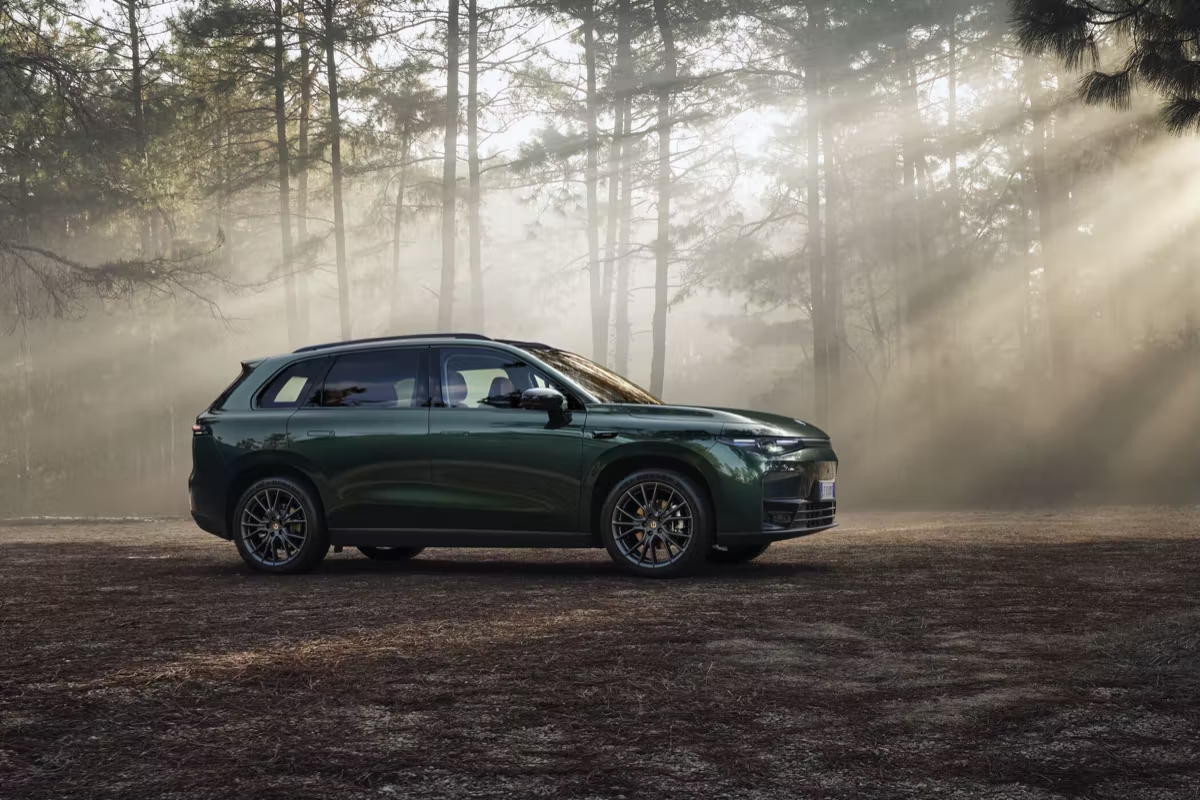
Hero photo: Leapmotor. Infographic: original EV-Global illustration. Sales data from CPCA via CnEVPost, Li Auto and Seres filings; vehicle figures from Li Auto, AITO, Xiaomi, Volkswagen, Leapmotor, Mazda, Stellantis, Scout Motors, Hyundai and Nissan; efficiency and policy data from Transport & Environment, the ICCT, Fraunhofer ISI, Horse Powertrain and Engineering Transactions 73(3), 2025; quotes as attributed in the text.